
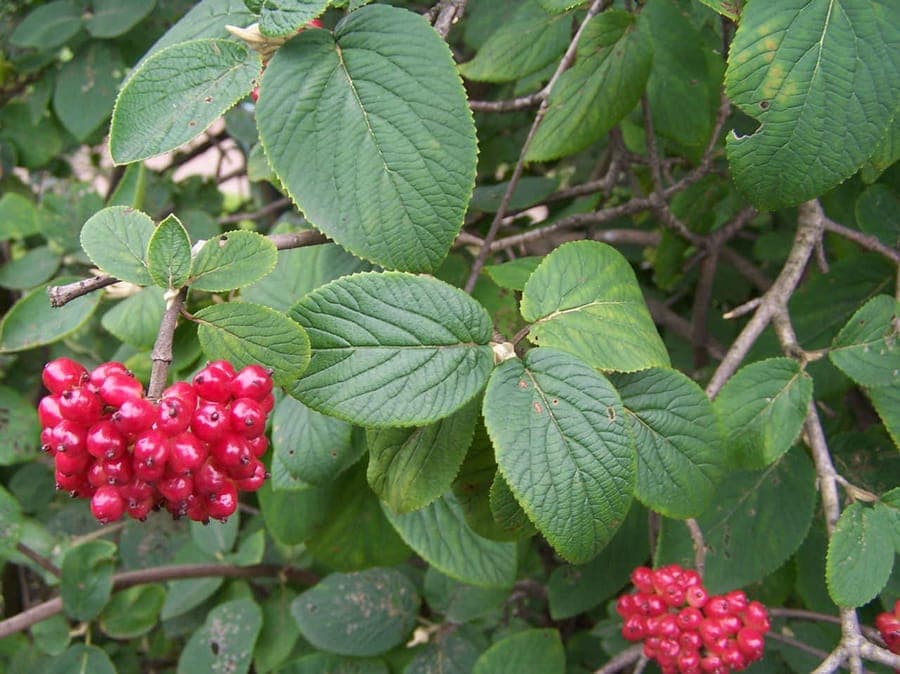
Opioła Jerzy / CC BY 2.5, via Wikimedia Commons
Mealytree: complete guide
Viburnum lantana
Want to see Mealytree: complete guide in your garden?
1 minute, no credit card
Overview
Viburnum lantana, commonly known as Mealytree, is a rugged, deciduous shrub that thrives in temperate gardens across Europe and North America. Native to countries like France, Germany, and Great Britain, it's adapted well to USDA hardiness zones 6 through 8, tolerating winter lows down to -23°C. Reaching heights of 2.5 to 4 meters with a spread of up to 2 meters, this shrub is ideal for hedges, mixed borders, or as a standalone feature in naturalistic garden designs. On gardenworld.app, you can map out a garden layout that integrates Mealytree with companion plants and shade zones for optimal growth.
Belonging to the Viburnace在玩家中 family, Viburnum lantana stands out for its dense foliage, interesting bloom cycle, and wildlife value. It's not just ornamental - birds feed on its berries, and pollinators flock to its spring flowers. The plant grows at a moderate pace and establishes well within two to three years when given proper conditions.
Appearance & bloom cycle
The Mealytree gets its name from the distinctive whitish, mealy coating on the undersides of its leaves. The leaves themselves are oval to broadly lanceolate, dark green above, and felt-like below, giving a soft, textured look. In autumn, foliage turns yellow to reddish-brown, offering subtle seasonal interest.
Flowering occurs from April to May, producing flat-topped clusters of creamy-white flowers about 8–12 cm across. These are highly fragrant and attract bees, hoverflies, and early butterflies. After blooming, green berries form and gradually ripen to deep purple or near-black by late summer. While toxic to humans, these berries are a valuable food source for birds like blackbirds and thrushes.
The bark on older stems becomes rough and slightly fissured, adding winter texture when the plant is leafless. The overall habit is upright and slightly arching, making it a strong structural plant in the garden.
Ideal location
Mealytree performs best in a spot with partial sun to light shade - a light rating of 7 out of 10. Full sun is acceptable in cooler climates, but in hotter regions, afternoon shade helps prevent leaf scorch. A site with morning sun and afternoon shade is ideal for most gardens in zones 6–8.
Space plants at least 1.5 meters apart to allow for air circulation and prevent overcrowding. It's an excellent choice for woodland edges, informal hedges, or as a backdrop to herbaceous borders. When planning placement, use gardenworld.app to visualise how mature specimens will fit into your garden's footprint, including future shading and growth spread.
Soil requirements
This shrub is adaptable to a range of soil types but prefers moist, well-drained soils rich in organic matter. The ideal pH range is 5.5 to 7.5 - slightly acidic to neutral. Avoid waterlogged or compacted clay soils, as these can lead to root rot.
At planting time, amend the hole with well-rotted compost or manure to boost fertility and improve soil structure. A layer of organic mulch (like leaf mould or bark chips) applied in spring helps retain moisture and suppress weeds. Avoid piling mulch against the stem to prevent rot.
Free design
Want to see Mealytree: complete guide in your garden? Make a free design now.
Watering
During the first growing season, water deeply once a week, especially during dry spells. Established plants are drought-tolerant but benefit from occasional deep watering during prolonged dry periods in summer.
Use a soaker hose or drip irrigation to deliver water directly to the root zone. Overhead watering can promote fungal diseases, particularly in humid conditions. Once established, Mealytree rarely needs supplemental watering except in extreme drought.
Pruning
Pruning is optional but recommended to maintain shape and encourage healthy new growth. The best time to prune is immediately after flowering, between late May and early June. This avoids cutting off next year's flower buds, which form on old wood.
Remove up to one-third of the oldest stems at ground level to rejuvenate the plant. Thin out crowded or crossing branches to improve airflow. For hedge use, light annual trimming in June keeps the shape neat. Use sharp, clean tools to prevent disease transmission.
Avoid heavy pruning in late summer or winter, as this can stimulate new growth vulnerable to frost damage.
Maintenance calendar
- January: Check for storm damage. Remove any broken branches.
- February: Inspect for pests. No pruning.
- March: Apply a thin layer of compost around the base. Loosen compacted soil.
- April: Flowers emerge. Monitor for aphids or powdery mildew.
- May: Peak bloom. Prune right after flowering ends.
- June: Water during dry spells. Mulch if needed.
- July: Minimal care. Watch for berry development.
- August: No routine tasks. Clean up fallen berries if messy.
- September: Begin preparing soil for autumn planting.
- October: Leaves drop. Leave leaf litter as natural mulch.
- November: Add compost. Check for overwintering pests.
- December: Dormant period. Avoid disturbing roots.
Winter hardiness
Mealytree is reliably hardy in USDA zones 6–8. In zone 6, it may suffer minor tip dieback in harsh winters but usually recovers fully in spring. No winter protection is needed in zones 7 and above. Young plants in exposed sites may benefit from a windbreak but don't require wrapping.
In colder microclimates, avoid planting in frost pockets or open, windy areas. The plant's natural resilience makes it a low-fuss choice for year-round structure.
Companion plants
Pair Mealytree with spring-flowering shrubs like Forsythia or Philadelphus for sequential interest. Underplant with shade-tolerant perennials such as Pulmonaria, Brunnera, or Epimedium. Later in the season, tall grasses like Calamagrostis or flowering perennials like Echinacea complement its form.
Avoid aggressive groundcovers like ivy, which can smother young shoots. Instead, use slower spreaders like Pachysandra or Alchemilla mollis.
Closing
Viburnum lantana is a dependable, multi-season shrub that earns its place in any well-balanced garden. With minimal care, it delivers spring fragrance, summer berries, and autumn colour. Available at garden centres across the UK and US, including major retailers, it's an accessible option for both new and experienced gardeners. Plan smart, plant right, and enjoy decades of reliable performance.
Want to see Mealytree: complete guide in your garden? Make a free design now.
Upload a photo, pick a style, and get a photorealistic design with plant list in under a minute.
No credit card required


Similar plants
Squashberry: complete guide
Viburnum edule
Grow mooseberry (Viburnum edule): ultra-hardy North American shrub with fragrant white flowers and red autumn berries. Perfect for boreal gardens. Zone 3.
Witherod: complete guide to this elegant North American shrub
Viburnum cassinoides
Discover Viburnum cassinoides: an elegant North American shrub with white flowers, yellow fall foliage, and blue berries. Perfect for temperate garden zones.
Buddlejaleaf viburnum: complete guide
Viburnum buddleifolium
Elegant evergreen shrub with delicate foliage and white spring flowers. Perfect for sheltered borders in temperate gardens.