
Wikimedia Commons / CC BY 2.5, via Wikimedia Commons
Viburnum ellipticum: complete guide to Pacific viburnum
Viburnum ellipticum
Want to see Viburnum ellipticum: complete guide to Pacific viburnum in your garden?
1 minute, no credit card
Overview
Viburnum ellipticum, the Pacific viburnum, is a graceful shrub from western North America combining elegant oval foliage with white-cream flower clusters and glossy dark blue fruits. This versatile plant offers extended seasonal interest: spring bloom, summer greenery, autumn colour, followed by plentiful bird food. Ideal for designers seeking structure combined with wildlife value.
Appearance and bloom
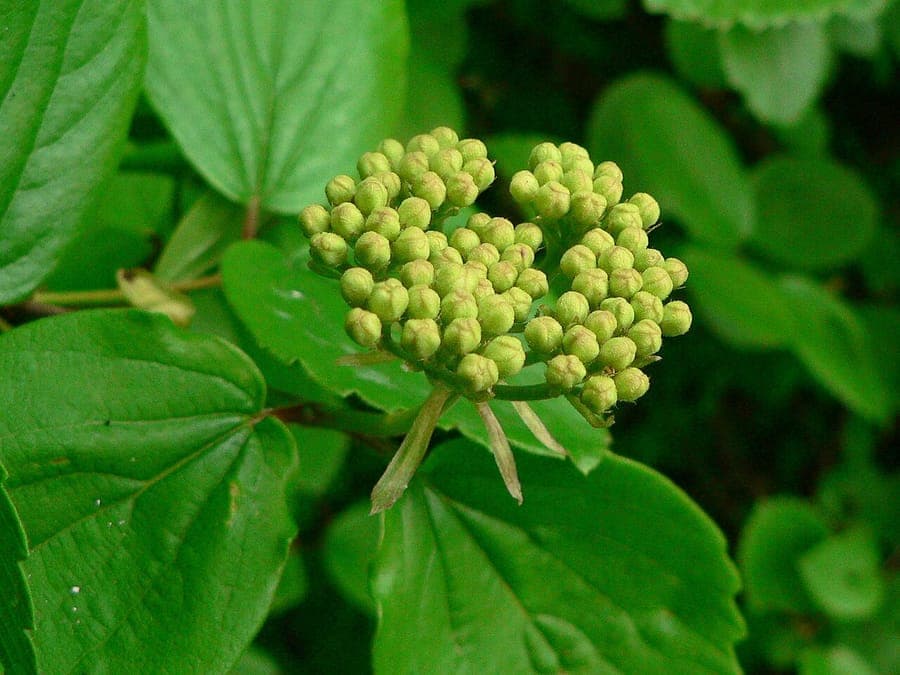
The shrub grows to approximately 2-3 metres tall and wide with moderately upright to arching form. Leaves are elliptical, 4-8cm long, dark green with fine ridging. Creamy-white flower clusters appear May through June at twig tips - sterile marginal flowers frame fertile central flowers in classic Viburnum fashion. Fruits ripen from red through blackish-blue (August-October), highly attractive to jays, thrushes and songbirds.
Ideal location
Viburnum ellipticum performs well in light to half-shade, particularly where afternoon sun is too intense. Plant as a specimen in natural borders, hedgerow margins along water features, or mixed shrub beds. Offers varied architectural interest through seasonal changes. Suitable for small to medium spaces.
Soil
This plant is soil-flexible, tolerating pH ranges and textures from sand to clay loam. No special soil preparation required but prefers moderately fertile, well-draining conditions. In heavy clay, improve drainage with sand and compost incorporation. Avoid perpetually dry locations; moisture stress limits growth potential.
Watering
Once established (first 1-2 years past), minimal supplemental watering needed except during drought. Young plants water twice weekly until deep rooting (approximately 6 months). Mulch 5-8cm deep around base to improve moisture retention. Mature specimens in temperate climates need only emergency watering during extended dry spells.
Free design
Want to see Viburnum ellipticum: complete guide to Pacific viburnum in your garden? Make a free design now.
Pruning
Minimal pruning required. Remove dead or damaged wood in early spring. Light heading-back of dense twigs after flowering encourages bushier forms. Selectively remove old, weak branches at ground level to stimulate fresh growth. Avoid aggressive rejuvenation - this costs years of flowering.
Maintenance calendar
March: Inspect for winter damage. Remove deadwood. May: Full bloom display. White flower clusters prominent. July: Fruit set begins. Monitor for birds. August-October: Berries colour, wildlife visits. Prime observation period. November-December: Leaf drop. Plant dormancy. January: Winter structure revealed.
Winter hardiness
Viburnum ellipticum is hardy to approximately -15 to -20 degrees Celsius. This West Coast native experiences no difficulties with UK winters. No special protection required. Mature specimens exceptionally reliable in standard garden climates.
Companion plants
Pair with native and non-native shrubs: Mahonia aquifolium (Oregon grape), Sambucus nigra (elder), Ilex verticillata (winterberry). For colour: Acer palmatum (Japanese maple), Hamamelis x intermedia (witch-hazel). Understorey planting: shade-tolerant perennials like Helleborus, low ornamental grasses.
Closing
Viburnum ellipticum brings bird-friendly, organic wildlife sustenance and year-round seasonal change to front and back gardens. Perfect for ecologically-minded designers valuing natural bird food sources. This North American native brings wildland character to cultivated spaces. Source from specialist nurseries stocking native shrubs.
Happy planting!
Want to see Viburnum ellipticum: complete guide to Pacific viburnum in your garden? Make a free design now.
Upload a photo, pick a style, and get a photorealistic design with plant list in under a minute.
No credit card required


Similar plants
Squashberry: complete guide
Viburnum edule
Grow mooseberry (Viburnum edule): ultra-hardy North American shrub with fragrant white flowers and red autumn berries. Perfect for boreal gardens. Zone 3.
Witherod: complete guide to this elegant North American shrub
Viburnum cassinoides
Discover Viburnum cassinoides: an elegant North American shrub with white flowers, yellow fall foliage, and blue berries. Perfect for temperate garden zones.
Buddlejaleaf viburnum: complete guide
Viburnum buddleifolium
Elegant evergreen shrub with delicate foliage and white spring flowers. Perfect for sheltered borders in temperate gardens.