
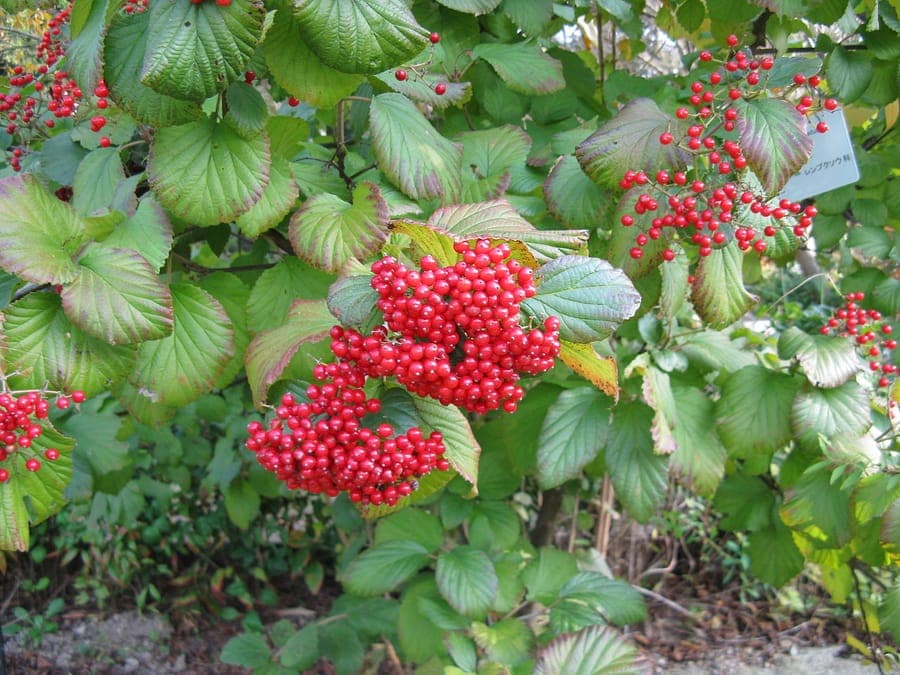
KENPEI / CC BY 3.0, via Wikimedia Commons
Viburnum dilatatum: complete guide
Viburnum dilatatum
Want to see Viburnum dilatatum: complete guide in your garden?
1 minute, no credit card
Overview
Viburnum dilatatum, commonly known as linden viburnum or linden arrowwood, is an attractive deciduous shrub native to central and eastern Asia. This elegant shrub is valued for its festive red berries that persist for a long time and its refined white flowers in spring. The plant combines seasonal beauty with hardiness and is an excellent choice for gardens of all styles.
The shrub belongs to the Viburnaceae family, the same family as many other flowering shrubs. This means it grows stably and tolerantly under many different conditions. It usually reaches 2-3 meters in height and width, depending on the variety.
Appearance and Bloom
Viburnum dilatatum reaches 1.5-3 meters in height with a broad, rounded form. The leaves are broad, line-shaped, and slightly wrinkled, with dark green summer color that turns red-purple in fall. This provides beautiful autumn color.
The white flowers appear in May-June in flat panicles. The flowers are small but numerous, creating an impressive display. After flowering, pale red berries follow, growing in clusters and persisting into fall. These berries attract birds and decorate the garden for a long time.
Ideal Location
Linden viburnum grows best in full sun to partial shade. At least 4 hours of direct sunlight per day is ideal. In hot climates, partial shade may be preferred. The plant can tolerate full shade but will flower and fruit less.
Perfect locations include: shrub groups in borders, as specimen plant, at woodland edges, and along yards. The plant works well as an informal hedge.
Soil
Viburnum dilatatum grows in virtually all soil types as long as they are moderately well-drained. The plant tolerates acidic to neutral soil (pH 5.5-7). Heavy, wet soil can lead to root rot, so improve drainage where needed.
At planting, add humus-rich compost. The plant grows well in average to rich soil. Moderate feeding gives better flowering than very poor soil. Ensure good drainage by mulching with organic material.
Free design
Want to see Viburnum dilatatum: complete guide in your garden? Make a free design now.
Watering
After establishment, Viburnum dilatatum is moderately drought-tolerant. During the growing season, water when the top layer feels dry. In dry periods, water regularly, especially in the first season after planting.
In containers, water more frequently. The plant tolerates gentle drought but flowers better and forms more berries with regular moisture. In winter, water minimally. Avoid water stagnation.
Pruning
Viburnum dilatatum requires minimal pruning. After flowering, dead, damaged, or crossing branches can be removed. This promotes open growth habits.
Steady pruning of about 1/3 of the older branches after flowering promotes dense, young growth. Much aggressive pruning reduces flowering and berry production the following year.
Maintenance Calendar
May-June: Flowering, observe for good display. July-September: Berries ripen, minimal watering. October-November: Fall color, berries for birds. December-February: Dormant period, minimal care. March-April: Before season growth, light pruning.
Winter Hardiness
Viburnum dilatatum is persistently winter hardy to about -15 to -20°C (USDA zone 5-6). In most European regions, it survives winters without problems. The plant does not die off and regrows each spring.
In very severe winters, some branch damage may occur, but the plant usually recovers well. Protect young plants their first winter with some mulch around them.
Companion Plants
Viburnum dilatatum combines well with:
- Hydrangea (Hydrangea) - similar flowering time and moisture needs
- Mountain laurel (Kalmia latifolia) - simultaneous spring blooming
- Japanese holly (Ilex crenata) - contrasted green foliage
- Forsythia - yellow spring bloomer first.
Closing
Viburnum dilatatum is a versatile shrub that provides year-round beauty. From spring blooms to fall color and red berries, it adds structure and beauty to any garden. Once established, it requires minimal maintenance and provides years of joy.
Use gardenworld.app to find the perfect spot for this shrub in your front yard. Design, visualize, and plant your dream garden now.
Want to see Viburnum dilatatum: complete guide in your garden? Make a free design now.
Upload a photo, pick a style, and get a photorealistic design with plant list in under a minute.
No credit card required


Similar plants
Squashberry: complete guide
Viburnum edule
Grow mooseberry (Viburnum edule): ultra-hardy North American shrub with fragrant white flowers and red autumn berries. Perfect for boreal gardens. Zone 3.
Witherod: complete guide to this elegant North American shrub
Viburnum cassinoides
Discover Viburnum cassinoides: an elegant North American shrub with white flowers, yellow fall foliage, and blue berries. Perfect for temperate garden zones.
Buddlejaleaf viburnum: complete guide
Viburnum buddleifolium
Elegant evergreen shrub with delicate foliage and white spring flowers. Perfect for sheltered borders in temperate gardens.