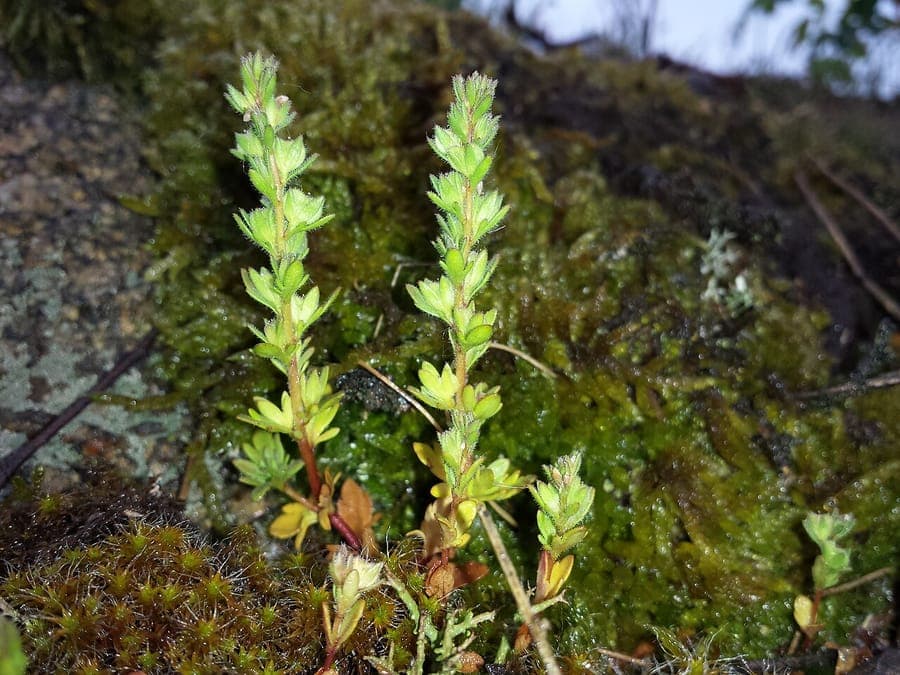
Stefan.lefnaer / CC BY-SA 4.0, via Wikimedia Commons
Veronica verna: complete guide
Veronica verna
Want to see Veronica verna: complete guide in your garden?
Full design in HD: €7.99
Look after your Veronica verna with the GardenWorld app
Identify plants with your camera and get a care calendar with reminders for this plant.


Overview
Veronica verna, commonly known as Spring Speedwell, Vernal Speedwell, or Early Speedwell, is a delicate, small-growing plant at home in alpine, rocky settings and natural gardens. This plant originates from Morocco, Europe through Southwest Siberia and the West Himalayas. With its tiny, fine leaves and abundant blue springtime flowers, it's a delightful herald of the gardening season.
Appearance and Bloom
Veronica verna is a very compact grower, usually no taller than 10 to 20 centimeters. The growth habit is dense, almost cushion-forming. The leaves are very small, narrow, and fine, closely spaced, giving the plant an almost moss-like appearance. The plant remains largely evergreen through winter.
The flowering period is relatively short but very striking, usually from April through May. The flowers are very tiny (approximately 4-5mm diameter), abundant, and bright blue, sometimes with white eyes or white centers. They arise along the stems in loose, staggered racemes, beginning from the bottom.
Ideal Location
Veronica verna flowers best in sunny spots with at least four to six hours of direct sunlight daily. The plant tolerates partial shade, though blooming may be less profuse. The plant appreciates well-positioned locations receiving wind protection and with excellent drainage. In alpine situations, such as rock gardens, it feels at home.
Soil Requirements
This plant is not fussy about soil. It grows in virtually all soil types provided drainage is excellent. The plant prefers slightly leaner, well-draining soils. Heavy clay soils should be improved with gravel, sand, or perlite. The plant accepts both acidic and alkaline soils, with pH range 5.5 to 7.5. For container culture use garden soil mix with added sand and small gravel.
Free preview
Want to see Veronica verna: complete guide in your garden? Make a free preview of your design.
Watering
Once well established, Veronica verna is reasonably drought-tolerant. During the first growing season provide regular moisture for good root establishment. Thereafter, normal rainfall usually suffices, though you can water during very dry spells. However, ensure water doesn't stagnate, as this can lead to rot.
Pruning
Veronica verna requires no regular pruning. The plant naturally forms a compact, cushion-like growth habit. After blooming in May you can gently remove spent flower stems for neater appearance. This can also encourage self-seeding.
Maintenance Calendar
March: First growth becomes visible; check for winter damage. April-May: Flowering period - enjoy! Provide regular moisture. June: After blooming, spent tops can be removed. July-August: Seed formation; let seeds mature. September-October: Seeds disperse; plant can self-seed. November-February: Dormancy; plant usually remains green.
Winter Hardiness
Veronica verna is very winter hardy, suitable for temperatures to approximately minus 20 degrees Celsius. In temperate climates it requires no winter protection. The plant usually remains green or grey-green through winter. Only in extremely cold winters may above-ground parts suffer damage.
Companion Plants
Veronica verna combines beautifully with other small alpine plants like Saxifrage, Sempervivum (Houseleek), and dwarf Sedum varieties. For color contrast plant alongside yellow-flowering alpines like Basket-of-Gold or Draba. In rock gardens it works well with small grasses and other dwarf speedwell species.
Conclusion
Veronica verna is a perfect plant for those who love small, delicate alpine plants and want to add an early spring flower color to their rock garden or alpine borders. With its compact growth, extended winter greenery, and reliable blooming, it's highly valuable. Seeds are available from specialized seed suppliers. At gardenworld.app find more about designing alpine and rock gardens. Visit gardenworld.app for more customized garden inspiration.
Frequently asked questions about Veronica verna
Is Veronica verna winter hardy?
Veronica verna is very winter hardy, suitable for temperatures to approximately minus 20 degrees Celsius. In temperate climates it requires no winter protection.
When and how do you prune Veronica verna?
Veronica verna requires no regular pruning. The plant naturally forms a compact, cushion-like growth habit.
How much water does Veronica verna need?
Once well established, Veronica verna is reasonably drought-tolerant. During the first growing season provide regular moisture for good root establishment.
Where does Veronica verna grow best?
Veronica verna flowers best in sunny spots with at least four to six hours of direct sunlight daily. The plant tolerates partial shade, though blooming may be less profuse.
What soil does Veronica verna need?
This plant is not fussy about soil. It grows in virtually all soil types provided drainage is excellent.

See it in your garden
See Veronica verna in your garden
One photo of your garden and a few questions. You see the result in about a minute.
Try it with a photoIdentify this plant in your own garden. Identify a plant
Similar plants
Finger Speedwell: complete guide
Veronica triphyllos
Discover Finger Speedwell (Veronica triphyllos): growing guide, ideal conditions, soil requirements and care. A practical reference for gardeners of all levels.
Thyme Speedwell: complete guide
Veronica serpyllifolia
Learn about Thyme Speedwell, a compact plant with blue flowers and thyme-like foliage. Guide for cultivation and maintenance in your garden.
