
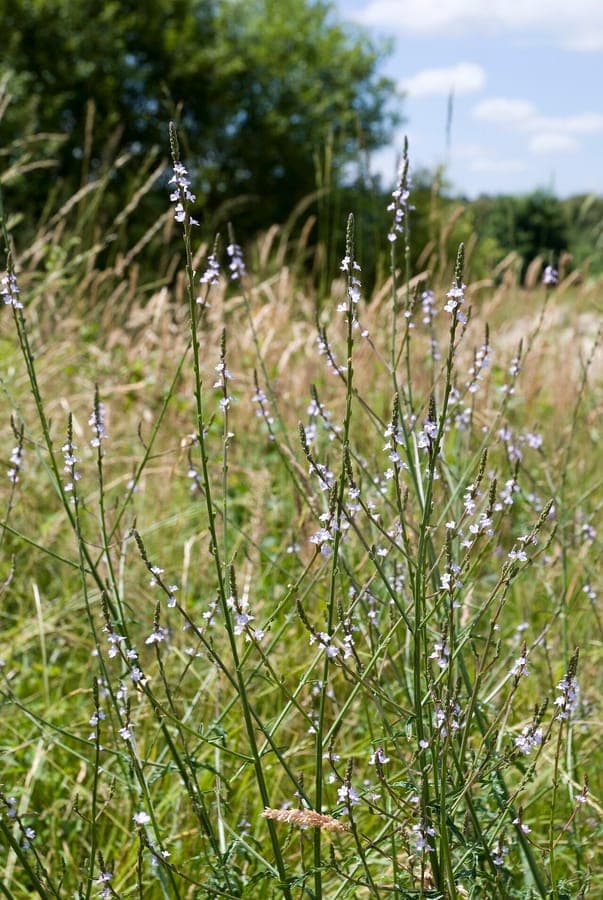
Olivier Pichard / CC BY-SA 3.0, via Wikimedia Commons
Official vervain: complete guide
Verbena officinalis
Want to see Official vervain: complete guide in your garden?
1 minute, no credit card
Overview
Verbena officinalis, commonly known as official vervain, is a hardy perennial herb that thrives in tough conditions with minimal care. Native to parts of Europe and Asia - including Austria, Belarus, and Algeria - it's a plant that's equally at home in wild meadows and modern cottage gardens. It's not flashy, but its quiet resilience and long flowering season make it a solid choice for low-maintenance, ecologically sound planting schemes. On gardenworld.app, you can design a garden layout that highlights vervain's role in supporting pollinators during late summer.
This member of the Verbenaceae family has been used historically in herbal medicine, but today most gardeners grow it for its ornamental and ecological value. It forms upright clumps, reaches 30–60 cm in height, and spreads modestly through seed dispersal. It's not invasive, but you may spot a few seedlings in gravel paths or between stones - a sign it's happy.
Appearance & bloom cycle
Official vervain has slender, square stems and deeply toothed, lance-shaped leaves that feel rough to the touch. From June through October, it produces narrow spikes of small, rich blue flowers. Each bloom is tiny - about 5 mm across - but they cluster tightly in dense, upright racemes that rise above the foliage. The color is a soft violet-blue, standing out beautifully against silvery or green foliage.
The flowering period is impressively long, especially if you cut it back after the first flush. Deadheading isn't essential, but pruning boosts a second, bushier round of blooms in late summer and autumn. On gardenworld.app, you can explore companion planting ideas that pair vervain with goldenrod, rudbeckia, or nepeta for a dynamic late-season border.
Ideal location
Verbena officinalis loves full sun - aim for a light score of 8 out of 10, meaning at least 6 hours of direct sunlight daily. South- or southwest-facing borders are ideal. It tolerates partial shade, but flowering drops significantly, and stems may flop.
It performs best in open, airy spots with good airflow. Think dry borders, rock gardens, or gravel beds. Avoid shady, damp corners. This plant dislikes competition, so give it space to grow without being crowded by vigorous spreaders or dense groundcovers.
Soil requirements
Well-drained soil is non-negotiable. Vervain handles sandy, loamy, or stony soils with ease, as long as water doesn't pool. The ideal pH is neutral to slightly alkaline: 7.0 to 7.5. If you have heavy clay, amend the planting hole with grit or sharp sand to improve drainage.
Don't enrich the soil too much. Vervain prefers poorer, low-fertility ground - too much organic matter leads to leggy growth and fewer flowers. It's a great fit for xeriscaping and low-input gardening.
Free design
Want to see Official vervain: complete guide in your garden? Make a free design now.
Watering
Once established, official vervain is highly drought-tolerant. During the first few weeks after planting, water weekly to help roots settle. After about six weeks, it should fend for itself. In extreme droughts, a deep soak every few weeks may help, but overwatering is a bigger risk.
Soggy soil leads to root rot, especially in winter. A gravel mulch works well - it suppresses weeds, reflects heat, and keeps the crown dry. Avoid organic mulches that hold moisture against the stem.
Pruning
Cut back the plant by half in late July or early August after the first bloom wave. This encourages a second flush in September and October. Use clean, sharp shears and cut just above a leaf node.
In autumn, you can leave the stems standing for winter texture and insect habitat. Cut them back to 5–10 cm in early spring before new growth emerges.
Maintenance calendar
- January – February: Minimal action. Remove old stems if desired for tidiness.
- March: Clear dead growth. Watch for early seedlings.
- April – May: No feeding needed. Keep young plants weed-free.
- June – October: Main bloom season. Water only in prolonged drought. Prune after first flowering.
- November – December: Leave standing for winter interest or cut back in mild areas.
Winter hardiness
Hardy in USDA zones 5 to 9 (down to -20°C). The top growth dies back in winter, but the roots survive under snow or a light mulch. The real threat isn't cold - it's wet soil. Ensure drainage is excellent, especially in cold, wet winters.
Companion plants
Pair official vervain with drought-tolerant perennials like yarrow (Achillea), little bluestem (Schizachyrium scoparium), sedum 'Autumn Joy', and catmint (Nepeta). The blue flowers contrast well with yellows and whites. Avoid overcrowding with aggressive spreaders like mint.
Closing
Official vervain is a quiet achiever - it doesn't demand attention, but it delivers reliable blooms, supports pollinators, and asks for little in return. It's perfect for sunny, dry areas where other plants struggle. You'll find Verbena officinalis at garden centres across the UK and North America, often in the native or medicinal plant section. Use gardenworld.app to plan a wildlife-friendly garden where vervain plays a supporting but essential role.
Want to see Official vervain: complete guide in your garden? Make a free design now.
Upload a photo, pick a style, and get a photorealistic design with plant list in under a minute.
No credit card required


Similar plants
Bigbract verbena: complete guide
Verbena bracteata
Full guide to Verbena bracteata, the creeping North American vervain. Growth habit, care, soil needs, and use as ground cover in drought-tolerant gardens.
Purpletop vervain: complete guide
Verbena incompta
Verbena incompta, a South American charmer. Discover long blooming period and care for sunny borders.
Verbena canescens: complete guide
Verbena canescens
Discover the elegant American gray vervain with purple flowers and exceptional drought tolerance. Perfect shrub for sunny, dry borders.