
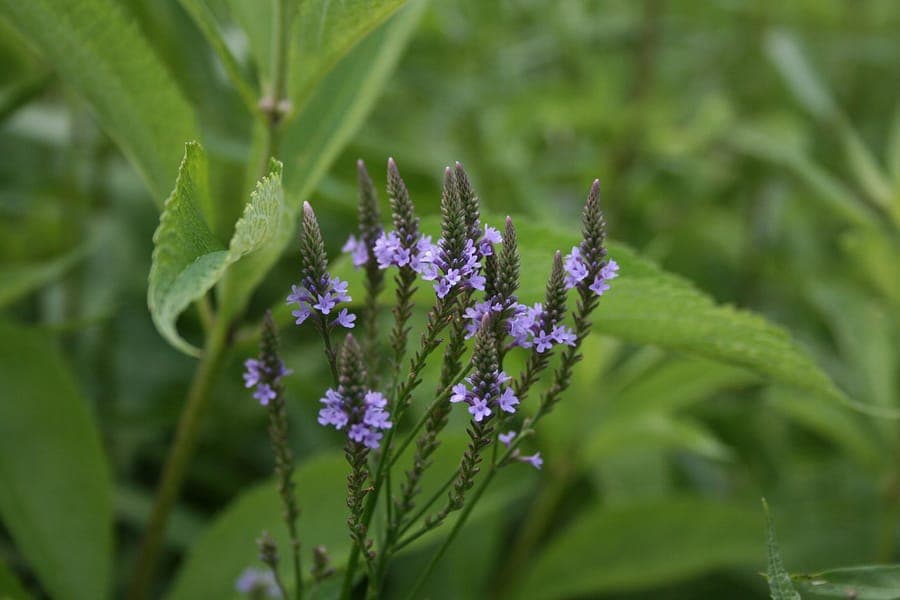
Cody Hough / CC BY-SA 3.0, via Wikimedia Commons
American blue vervain: complete guide
Verbena hastata
Want to see American blue vervain: complete guide in your garden?
1 minute, no credit card
Overview
American blue vervain, or Verbena hastata, is a herbaceous perennial native to wet meadows, stream banks, and woodland edges across eastern and central North America. Standing 150–180 cm tall, it's a striking addition to the back of borders or naturalistic planting schemes. This forb thrives in moist conditions and supports a wide range of pollinators, making it a smart choice for wildlife gardens. Its architectural form and long bloom period give structure to late-season plantings. On gardenworld.app, you can design a garden layout that highlights tall natives like American blue vervain, balancing height, texture, and seasonal interest.
Appearance & bloom cycle
Verbena hastata features upright, square stems with rough, opposite leaves that taper to a distinctive hastate (spear-shaped) base - the origin of its species name. From July to September, it produces slender, terminal spikes densely packed with tiny, tubular flowers in shades of deep violet to soft purple. Each bloom is only 3–5 mm wide, but the collective effect is bold and eye-catching. The flowering period lasts 8–10 weeks, often extending into early fall in cooler zones. Once blooming ends, small nutlet seeds form, providing food for finches and other songbirds.
Ideal location
This plant performs best in full sun, needing at least 6 hours of direct light daily. It tolerates partial shade, but flowering diminishes and stems may stretch or flop. Due to its height, plant it toward the rear of borders or in cottage-style meadow plantings. Stake taller specimens in exposed or windy areas to prevent breakage. When planning your garden layout, use gardenworld.app to visualise spacing and companion planting - this helps avoid overcrowding and ensures good air circulation.
Soil requirements
American blue vervain prefers moist, fertile loam or clay-loam with good drainage. A pH range of 6.0–7.5 is ideal. While it adapts to heavier soils, it struggles in dry, sandy conditions without supplemental watering. At planting, mix in compost or well-rotted manure to improve moisture retention. Avoid high-nitrogen fertilisers, which encourage leggy growth and reduce flowering. A slow-release organic feed in spring is sufficient.
Watering
This species has moderate to high water needs. Keep soil consistently moist, especially during establishment and dry spells. Mulch with 5–7.5 cm of shredded bark or straw to reduce evaporation and suppress weeds. Water deeply once or twice a week during summer droughts. Use rainwater when possible, as Verbena hastata can be sensitive to high levels of dissolved salts in tap water.
Free design
Want to see American blue vervain: complete guide in your garden? Make a free design now.
Pruning
Pruning isn't essential but can improve appearance. Deadhead spent flower spikes to encourage late-season blooming and prevent excessive self-seeding. In autumn, you can cut stems back to 10–15 cm above ground for a tidy look, or leave them standing to provide winter structure and bird food. If self-sowing becomes a concern, remove seed heads before they mature. Divide clumps every 3–4 years in early spring to maintain vigour.
Maintenance calendar
- Jan: Check root crowns; remove any winter debris.
- Feb: No action needed.
- Mar: Prepare soil; divide mature clumps if desired.
- Apr: Plant new specimens; amend soil with compost.
- May: Monitor moisture; watch for slugs and snails.
- Jun: Support tall stems; inspect for bud development.
- Jul: First bloom month; check for pests.
- Aug: Peak flowering; light deadheading.
- Sep: Continue blooming; assess self-seeding.
- Oct: Cut back or leave for winter interest.
- Nov: Apply mulch around base.
- Dec: No pruning; monitor for rodent activity.
Winter hardiness
American blue vervain is hardy in USDA zones 3–8. In zones 5–8, it reliably returns each spring from its deep root system. In colder zones, a light mulch of leaf litter or straw helps insulate roots during freeze-thaw cycles. Avoid heavy mulching, which can lead to crown rot in wet winters. The plant dies back completely in fall, re-emerging in late April or early May.
Companion plants
Pair Verbena hastata with other moisture-loving natives like Joe-Pye weed (Eutrochium fistulosum), swamp milkweed (Asclepias incarnata), or cardinal flower (Lobelia cardinalis). Its vertical form contrasts well with mounded plants like obedient plant (Physostegia virginiana) or wild bergamot (Monarda fistulosa). For colour harmony, combine with goldenrods (Solidago spp.) or black-eyed Susans (Rudbeckia fulgida). Avoid invasive or overly aggressive spreaders that could outcompete it.
Closing
American blue vervain is a resilient, pollinator-rich plant that brings vertical drama and ecological value to the garden. It's not the flashiest at first glance, but its long bloom time and wildlife support make it a hidden gem. Give it sun, consistent moisture, and space to grow, and it will reward you with months of vivid colour. You'll find Verbena hastata at garden centres across North America, often in native plant sections. For layout ideas and planting combinations, visit gardenworld.app - it's a great tool to plan a garden that works with your soil, light, and local climate.
Want to see American blue vervain: complete guide in your garden? Make a free design now.
Upload a photo, pick a style, and get a photorealistic design with plant list in under a minute.
10,000+ gardens designed already
No credit card required


Similar plants
Bigbract verbena: complete guide
Verbena bracteata
Full guide to Verbena bracteata, the creeping North American vervain. Growth habit, care, soil needs, and use as ground cover in drought-tolerant gardens.
Purpletop vervain: complete guide
Verbena incompta
Verbena incompta, a South American charmer. Discover long blooming period and care for sunny borders.
Verbena canescens: complete guide
Verbena canescens
Discover the elegant American gray vervain with purple flowers and exceptional drought tolerance. Perfect shrub for sunny, dry borders.