
Diego Delso / CC BY-SA 3.0, via Wikimedia Commons
Argentine vervain: complete guide
Verbena bonariensis
Want to see Argentine vervain: complete guide in your garden?
1 minute, no credit card
Overview
Verbena bonariensis, commonly known as Argentine vervain, is a tall, slender perennial that brings airy elegance to any garden. Native to open grasslands and scrub areas across Argentina, Bolivia, and southern Brazil, it's adapted to hot, dry summers and mild winters. In temperate climates like those across the UK and much of the US, it behaves as a short-lived perennial or self-seeding annual, returning reliably in USDA zones 7 to 11. Reaching heights of 100–150 cm, it forms upright, branching stems that don't require staking, even in breezy conditions.
What makes this plant a standout is its see-through quality. It doesn't block views or overwhelm neighbouring plants, making it ideal for layered planting schemes. On gardenworld.app, you can create a planting plan that uses Argentine vervain to add height without heaviness, pairing it with bold-leaved or densely flowering companions.
Appearance & bloom cycle
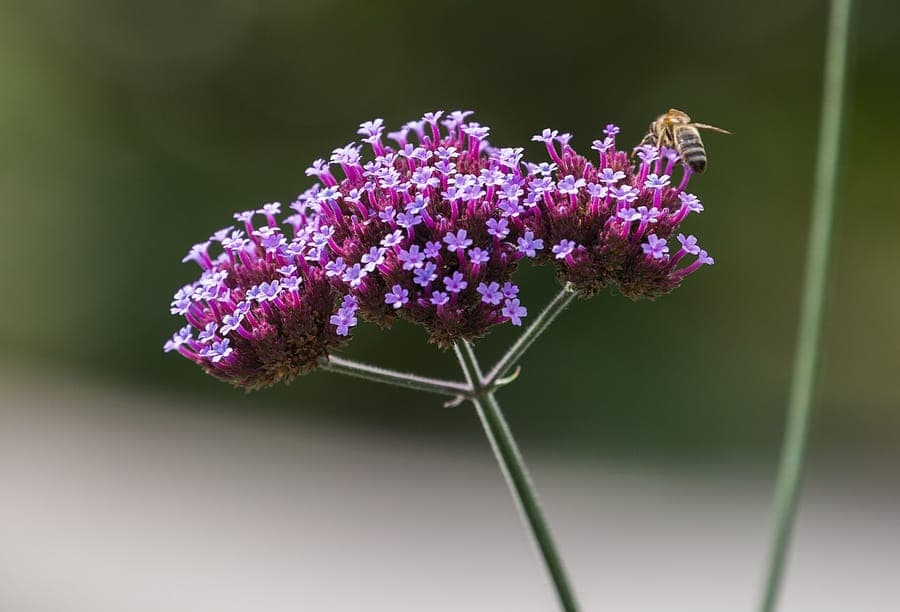
The plant produces clusters of small, vivid purple flowers from July through October. Each flower head is about 2–3 cm wide, composed of dozens of tiny florets in rich magenta-purple. The stems are square and sturdy, staying upright even after rain. Leaves are narrow, lance-shaped, and slightly rough, arranged oppositely along the stem. They emit a faint, herbal scent when brushed or crushed.
The bloom period is impressively long, especially if you deadhead regularly. Even without deadheading, it will rebloom, though less vigorously. In mild autumns, flowering can persist into November. The open structure allows pollinators easy access, and you'll often see bees, hoverflies, and butterflies working the flowers from midday onward.
Ideal location
Full sun is non-negotiable for strong growth and maximum flowering. Aim for at least 6–8 hours of direct sunlight daily. In partial shade, the stems stretch, become leggy, and flop over. It handles coastal exposure well and doesn't mind wind – in fact, its swaying motion adds rhythm to the border.
Use it at the middle or back of mixed borders, in gravel gardens, or as part of a meadow-style planting. It works especially well with ornamental grasses, where its purple blooms contrast beautifully with golden or silver tones. On gardenworld.app, you can visualise how Argentine vervain softens hard edges and adds vertical rhythm to your design.
Soil requirements
Verbena bonariensis isn't fussy about soil type, as long as it's well-drained. It thrives in sandy, loamy, or shallow chalky soils. Avoid heavy, waterlogged clay unless you've improved drainage with grit or compost. A neutral to slightly alkaline pH (6.5–7.5) is ideal, but it tolerates mild acidity. Don't enrich the soil with heavy fertilisers – too much nitrogen leads to lush foliage at the expense of flowers.
Free design
Want to see Argentine vervain: complete guide in your garden? Make a free design now.
Watering
Once established, it's highly drought-tolerant. Water young plants regularly during their first growing season, especially during dry spells. After that, supplemental watering is rarely needed, even in hot summers. Overwatering is a bigger risk than underwatering – soggy roots invite root rot. Water at soil level to keep foliage dry and reduce disease risk.
Pruning
Deadhead spent flower heads to encourage repeat blooming. Cut back stems by one-third in mid-summer if the plant looks tired or has finished its first flush. This promotes bushier growth and a second wave of flowers in late summer. For a neater winter garden, cut all stems to ground level in late autumn. If you want it to self-seed, leave a few stems standing until spring.
Maintenance calendar
- March–April: Clear away old stems. Plant new specimens or transplant volunteers, spacing 40–50 cm apart.
- May–June: Water during dry periods. Watch for leggy growth in low light.
- July–September: Deadhead weekly. Monitor for aphids or powdery mildew in humid weather.
- October–November: Cut back or leave for winter texture.
- December–February: Protect crowns in zone 7 with a light mulch if winters are harsh.
Winter hardiness
Hardy in USDA zones 7–11. In zone 7, it may die back completely but often regenerates from the base in spring. Mulching with dry leaves or straw helps in colder areas. In zones 8 and above, it usually survives as a true perennial. In colder zones, treat it as a tender perennial or annual, or grow it in containers that can be overwintered indoors.
Companion plants
Choose plants with contrasting form and texture:
- Echinacea purpurea – bold daisy-like flowers
- Foeniculum vulgare – feathery foliage and height
- Salvia nemorosa 'Caradonna' – deep purple spikes
- Pennisetum alopecuroides – soft, arching grass heads
- Helenium autumnale – warm-hued late blooms
Avoid overcrowding with dense perennials that may smother its slender stems.
Closing
Argentine vervain is a no-fuss, high-impact plant that earns its place in any sunny border. Its long flowering season, pollinator appeal, and architectural form make it a reliable choice for low-maintenance gardens. Plant in groups of three or more for best effect, and let it weave through neighbouring plants. You'll find Verbena bonariensis at most garden centres from late spring, including major retailers like B&Q, Wyevale, and local independents. With thoughtful placement – perhaps designed on gardenworld.app – it becomes a living trellis, adding depth and movement to your garden year after year.
Want to see Argentine vervain: complete guide in your garden? Make a free design now.
Upload a photo, pick a style, and get a photorealistic design with plant list in under a minute.
No credit card required


Similar plants
Bigbract verbena: complete guide
Verbena bracteata
Full guide to Verbena bracteata, the creeping North American vervain. Growth habit, care, soil needs, and use as ground cover in drought-tolerant gardens.
Purpletop vervain: complete guide
Verbena incompta
Verbena incompta, a South American charmer. Discover long blooming period and care for sunny borders.
Verbena canescens: complete guide
Verbena canescens
Discover the elegant American gray vervain with purple flowers and exceptional drought tolerance. Perfect shrub for sunny, dry borders.