Sten / CC BY-SA 3.0, via Wikimedia Commons
Hungarian Mullein: complete guide
Verbascum speciosum
Want to see Hungarian Mullein: complete guide in your garden?
Full design in HD: €7.99
Look after your Hungarian Mullein with the GardenWorld app
Identify plants with your camera and get a care calendar with reminders for this plant.


Overview
The Hungarian Mullein (Verbascum speciosum), also known as Showy Mullein, is a remarkable biennial or short-lived perennial plant native to Central and Southeastern Europe through Iran. This plant belongs to the Scrophulariaceae family and is celebrated for its stately, branched flowering spikes adorned with numerous yellow blooms.
Appearance and bloom
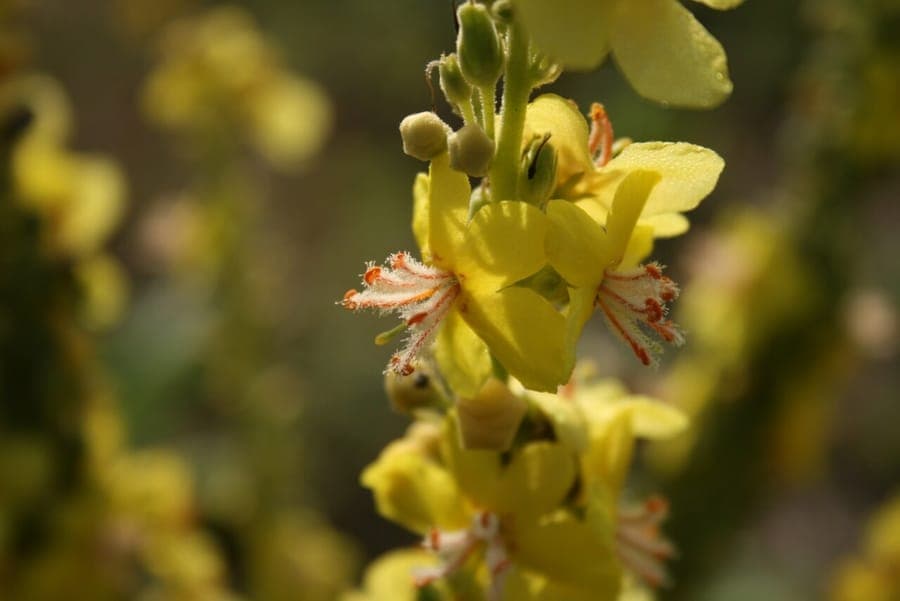
Hungarian Mullein grows into an impressive upright specimen with sturdy, erect stems reaching considerable heights. The leaves are woolly and hairy, clustered at the plant's base with a soft, felted texture. Flowers emerge in July and August in dense clusters, typically golden-yellow, arranged in a candelabra-like formation, which gives this plant its common name. Each individual flower is round to disc-shaped.
Ideal location
This plant thrives in full sun, requiring at least 6-8 hours of direct sunlight daily. Hungarian Mullein prefers open border positions where air can circulate freely, helping prevent fungal issues. Avoid shaded corners entirely.
Soil
Verbascum speciosum is not fussy about soil type. It grows readily in well-draining, moderately fertile soil. Heavy clay can be improved with added sand or compost. The plant tolerates dry conditions better than waterlogged feet.
Free preview
Want to see Hungarian Mullein: complete guide in your garden? Make a free preview of your design.
Watering
Water regularly after planting until the plant is well-established. Once settled, Hungarian Mullein is quite drought-tolerant. Water deeply only when the top soil layer feels dry. During growth periods (spring through early summer), more frequent watering may be beneficial.
Pruning and shaping
Remove spent flowers regularly to encourage continuous blooming and maintain a neat appearance. At season's end, dead growth can be removed. Young plants benefit from light pinching to encourage branching.
Maintenance calendar
Photograph in April for future reference. Water regularly May through June. Enjoy blooms July and August. Deadhead regularly in August. Prepare for winter September-October.
Winter hardiness
The plant is reasonably hardy and can overwinter in temperate climates. In harsh winters, mulching around the base provides extra protection. After the first winter, plants may only persist from the base and regrow.
Companion plants
Combine Hungarian Mullein with other summer bloomers like Salvia, Achillea, or lavender. The vertical form contrasts beautifully with rounded shapes of Allium or Echinops. Green foliage backgrounds make the flowers shine brighter.
Conclusion
Hungarian Mullein is a striking addition to any front garden. With minimal care and maximum impact, this plant brings architecture and drama to your landscape. Available at Intratuin and Gamma in the Netherlands, OBI and Hornbach in Germany.
Need more ideas? Visit gardenworld.app/en for additional plant guides and design inspiration.
Frequently asked questions about Hungarian Mullein
Is Hungarian Mullein winter hardy?
The plant is reasonably hardy and can overwinter in temperate climates. In harsh winters, mulching around the base provides extra protection.
When and how do you prune Hungarian Mullein?
Remove spent flowers regularly to encourage continuous blooming and maintain a neat appearance. At season's end, dead growth can be removed.
How much water does Hungarian Mullein need?
Water regularly after planting until the plant is well-established. Once settled, Hungarian Mullein is quite drought-tolerant.
Where does Hungarian Mullein grow best?
This plant thrives in full sun, requiring at least 6-8 hours of direct sunlight daily. Hungarian Mullein prefers open border positions where air can circulate freely, helping prevent fungal issues.
What soil does Hungarian Mullein need?
Verbascum speciosum is not fussy about soil type. It grows readily in well-draining, moderately fertile soil.

See it in your garden
See Hungarian Mullein in your garden
One photo of your garden and a few questions. You see the result in about a minute.
Try it with a photoIdentify this plant in your own garden. Identify a plant
Similar plants
Bacopa (Chaenostoma cordatum): complete guide
Chaenostoma cordatum
Everything about bacopa (Chaenostoma cordatum, formerly Sutera cordata): position, compost, watering, pruning and overwintering this trailer covered in tiny white stars.
Twinspur (Diascia barberae): complete guide
Diascia barberae
Everything about twinspur (Diascia barberae): position, soil, watering, cutting back for a second flush and overwintering this pretty South African summer flower.
Cape fuchsia (Phygelius capensis): growing guide
Phygelius capensis
Everything about Cape fuchsia (Phygelius capensis): position, soil, spring pruning, hardiness and companions for this long-flowering South African sub-shrub.
