
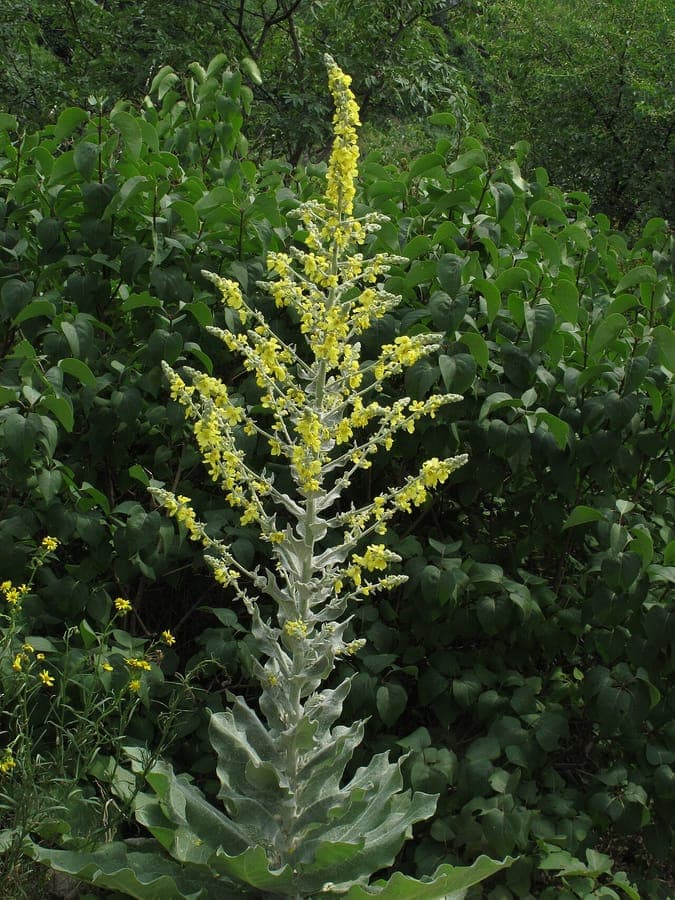
Robert Flogaus-Faust / CC BY 4.0, via Wikimedia Commons
Hoary mullein: complete guide
Verbascum pulverulentum
Want to see Hoary mullein: complete guide in your garden?
1 minute, no credit card
Overview
The Hoary Mullein (Verbascum pulverulentum) is a distinctive plant from the Scrophulariaceae family, native to southern and central Europe. This plant is known for its characteristic white, velvety leaf coating, which gives a pearly appearance. The yellow flowers appear from June to September and attract bees.
Appearance and Bloom Time
The Hoary Mullein grows as an upright plant with thick, woolly stems reaching 60 to 120 cm in height. The leaves are covered with fine white hairs, giving the plant a silvery-gray appearance. The flowers are approximately 1.5 cm in diameter and grow in clusters. They are bright yellow in color and appear from June to September. The characteristic woolly appearance distinguishes this plant from other mullein varieties.
Ideal Location
The Hoary Mullein grows best in sunny spots with plenty of light. The plant needs at least six to eight hours of direct sunlight daily. This plant loves warmth and dry conditions. Provide a place where air can circulate well to keep the leaves dry. Partial shade may be acceptable, but blooms will be less abundant.
Soil
The Hoary Mullein prefers well-draining, nutrient-poor to moderately fertile soil. This plant thrives on sandy or gravel-like soils. A pH value between 7.5 and 8 is ideal. Heavy clay soils should be improved with sand or gravel. The woolly leaves of the plant make good water drainage especially important.
Free design
Want to see Hoary mullein: complete guide in your garden? Make a free design now.
Watering
Once established, the Hoary Mullein is very drought-tolerant. Water regularly during the growing season, but ensure the soil dries well between waterings. Excessive watering can lead to root rot, especially in winter. In containers, water carefully.
Pruning
The Hoary Mullein requires minimal pruning. Remove faded flowers to extend the blooming period. After the season, dead stems can be removed. This plant can last multiple years, but replacement after three to four years is recommended.
Maintenance Calendar
Spring: Growth begins. Start watering. Summer: Water regularly. Remove faded flowers. Autumn: Flowers fade. Remove dead material. Winter: In colder climates, protect with mulch or protective covers.
Winter Hardiness
The Hoary Mullein is quite hardy and tolerates temperatures down to approximately -15 degrees Celsius. In very harsh winters, mulch protection may be needed. In regions with mild winters, the plant can survive multiple years.
Companion Plants
The Hoary Mullein combines well with other Mediterranean plants. Try with lavender, rosemary, and other silver-leaved plants. The yellow flowers pair well with blue Delphinium and white Weigela. Also combine with sun lovers like Sisyrinchium and Helianthemum.
Conclusion
The Hoary Mullein is perfect for sunny, dry gardens with well-draining soil. With its silvery-gray leaves and yellow flowers, it adds subtle elegance. Available at local garden centers. Discover on gardenworld.app how you can transform your garden with this special plant.
Want to see Hoary mullein: complete guide in your garden? Make a free design now.
Upload a photo, pick a style, and get a photorealistic design with plant list in under a minute.
No credit card required


Similar plants
Naio: complete guide
Myoporum sandwicense
All about naio or bastard sandalwood (Myoporum sandwicense): a Hawaiian coastal tree, its uses, cultivation, and role as a tough windbreak in mild gardens.
Oriental Mullein: complete guide
Verbascum orientale
Complete guide to Oriental Mullein (Verbascum orientale): placement, soil, watering, pruning and garden design tips.
Buddleja marrubiifolia: complete guide
Buddleja marrubiifolia
Woolly butterfly-bush from Texas and Mexico. Shrub with soft, hairy leaves and orange-red flowers. Hardy to -5C. Blooms summer-fall. Drought-tolerant and low-maintenance plant.