
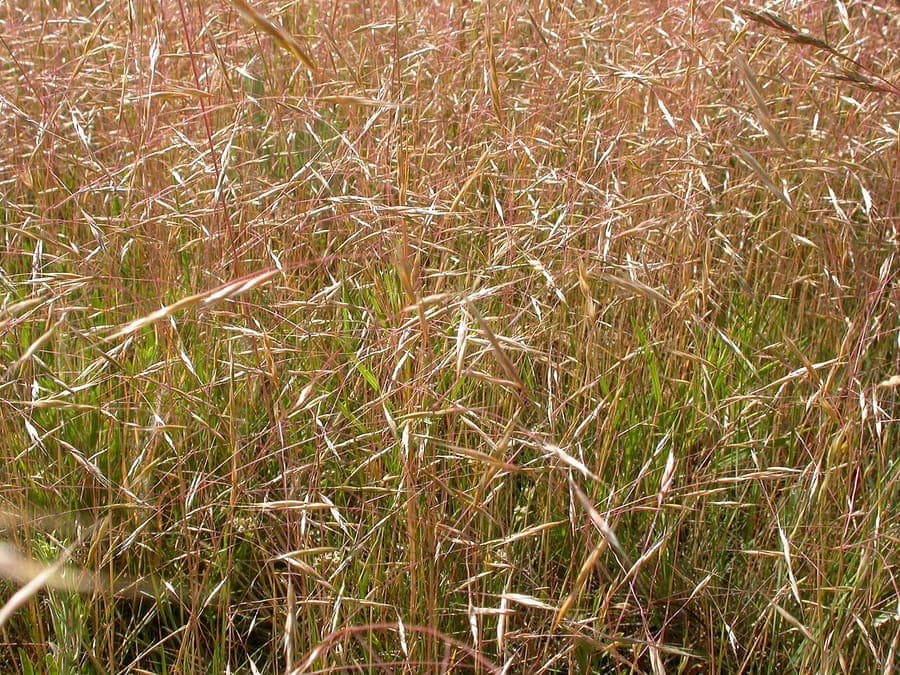
Matt Lavin / CC BY-SA 2.0, via Wikimedia Commons
Ventenata dubia: complete guide
Ventenata dubia
Want to see Ventenata dubia: complete guide in your garden?
1 minute, no credit card
Overview
Ventenata dubia is an ornamental grass from the Poaceae family naturally occurring from Europe through the Caucasus and North Africa. This fine, elegant grass brings movement and airiness to garden designs. The plant owes its English names "hairgrass" or "wiregrass" to its extremely thin, hair-fine foliage that creates a hazy, light texture.
The grass was introduced to North America during the 20th century, where it became established in regions with similar climate patterns. For modern garden designs on gardenworld.app, Ventenata dubia offers a subtle yet highly effective grass for meadow effects and planting schemes.
Appearance & Bloom
Ventenata dubia grows to approximately 60-80 centimeters in height, with foliage that is extremely fine and thread-like. This grass forms soft tufts without aggressive runners. The plant remains compact and orderly in growth, making it ideal for formal garden schemes.
Blooming occurs from June through August, when fine, branched spikelets appear on slender stems. These spikelets are glistening and light, sometimes purple-tinged, bringing great elegance to the garden environment. After the growing season, the grass becomes warm golden to brown, making it even more attractive in autumn and winter months.
Ideal Location
Ventenata dubia thrives best in full sun to part shade. For optimal growth and flowering, ensure at least 4-6 hours of direct sunlight daily. The plant is very flexible regarding light conditions compared to many other ornamental grasses.
Plant this grass in open gardens, along borders, or as an accent in mixed borders. It works perfectly as a transition plant between formally designed areas and more natural zones. The plant is also suitable for container cultivation, offering flexibility in garden design.
Soil
Ventenata dubia is very flexible regarding soil type. It grows in sandy, loamy, or clay soils as long as drainage is reasonable. The plant accepts even poor, nutrient-deficient soils without problems. This makes it a reliable choice for problematic spots in the garden.
While preferring slightly acidic to neutral soils, it's not particularly fussy. Ensure good drainage in wet climates by mixing sawdust or gravel into the soil structure. After planting, little fertilizer needs to be applied.
Watering
Once established, Ventenata dubia is very water-efficient. During the growing period (spring-summer), water regularly, especially when the plant is newly planted. Ensure the soil doesn't completely dry out, but avoid waterlogging.
After the first season, watering can be significantly reduced. During normal rainfall periods, the plant will be self-sufficient. Only during extreme drought need extra water be applied. This makes Ventenata dubia ideal for dry gardens and areas with limited water supply.
Free design
Want to see Ventenata dubia: complete guide in your garden? Make a free design now.
Pruning
Ventenata dubia is very low-maintenance regarding pruning. Dead material is traditionally removed in late winter (February-March) before new growth begins. This can be done by gently cutting back the grass with shears or by carefully pulling dead material from the tufts.
The plant doesn't need pruning during the growing season. Indeed, maintaining the grass's natural form and structure enhances its beauty. Remove dead spikelets if desired after the flowering period.
Maintenance Calendar
In spring (March-April): remove dead winter material and ensure new growth can begin unimpeded. In summer: enjoy the grass and water only during dry periods. In autumn: no specific maintenance required; the grass becomes increasingly interesting as the season progresses. In winter: the dry grass offers texture and visual interest in the garden.
Winter Hardiness
Ventenata dubia is very hardy in temperate climates (USDA zones 5-9). The grass overwinters without any problems. In fact, many gardeners appreciate the dry, golden grass in winter as a decorative element. Only in very wet winters can foot rot occur; good drainage prevents this problem.
In very cold climates, the grass may temporarily recede, but it will usually return in spring. The plant is very tough and resilient against winter stress.
Companion Plants
Ventenata dubia combines beautifully with other ornamental grasses such as Stipa, Molinia, and Festuca. For flowering companions, plant it with lavender, Echinops, or Thalictrum for contrast in form and color. In mixed borders, the grass works well as a transition plant between ground covers and taller perennials.
The plant also complements formal structure plants like boxwood or holly nicely. In grass-dominant schemes, vary texture by combining Ventenata dubia with heavier grass types.
Closing
Ventenata dubia offers gardeners an elegant way to introduce airiness, movement, and subtle beauty to their gardens. With its minimal maintenance needs and great resilience against variable conditions, it's ideal for modern, sustainable garden designs. Whether you want to create a grassy, natural effect or need more formal structure - Ventenata dubia is a grass that offers both adaptability and elegance.
In the UK and beyond, ornamental grasses like Ventenata dubia are available at specialized garden centers and online nurseries. Ask for "Ventenata dubia" or similar fine ornamental grasses at your local supplier. Design your garden with gardenworld.app and see how this elegant grass transforms your design!
Want to see Ventenata dubia: complete guide in your garden? Make a free design now.
Upload a photo, pick a style, and get a photorealistic design with plant list in under a minute.
No credit card required


Similar plants
Sporobolus pungens: complete guide
Sporobolus pungens
Sporobolus pungens is a stoloniferous Mediterranean coastal grass with outstanding salt and drought tolerance, perfect for seaside and dry gardens.
Mediterranean aegilops: complete guide
Aegilops biuncialis
Everything about Aegilops biuncialis, a Mediterranean annual grass with ornamental spikes and outstanding drought tolerance for dry gardens.
Silver bluestem: complete guide
Bothriochloa saccharoides
Full guide to Bothriochloa saccharoides (silver bluestem): site, soil, watering, winter hardiness, pruning, and garden companions.