
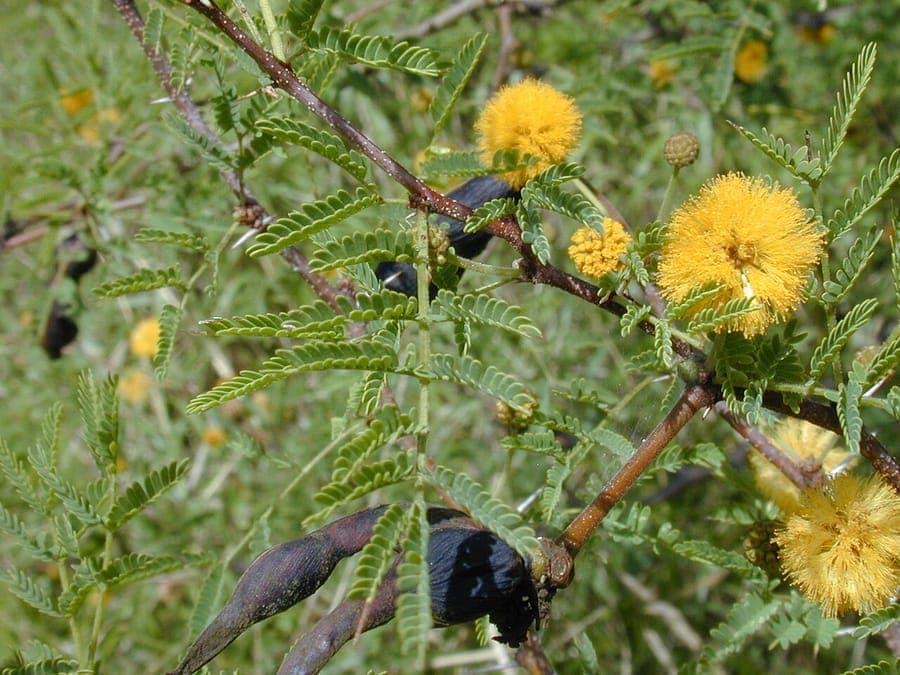
Forest & Kim Starr / CC BY 3.0, via Wikimedia Commons
Sweet acacia: complete guide
Vachellia farnesiana
Want to see Sweet acacia: complete guide in your garden?
1 minute, no credit card
Overview
Vachellia farnesiana - more widely known in older literature as Acacia farnesiana and by common names including sweet acacia, cassie, huisache, fragrant acacia, and scented wattle - is a thorny shrub or small tree belonging to the subfamily Mimosoideae of the legume family Fabaceae. Its native range spans tropical and subtropical America, from the southern United States (Texas, Louisiana, Florida) through Mexico, Central America, the Caribbean, and the length of South America to Argentina and Uruguay. Beyond the Americas, the species has spread widely via human activity to tropical and subtropical regions across Africa, the Middle East, South Asia, Southeast Asia, Australia, and the Mediterranean basin. For centuries, sweet acacia has been valued for the extraordinary fragrance of its flowers, which feature in the perfume industry; the essential oil known as cassie absolute was an ingredient in classical French perfumes. In cooler European climates, it is grown as a container plant or in sheltered, warm garden corners. On gardenworld.app you can find inspiration for incorporating exotic, fragrant shrubs into Mediterranean or subtropical garden styles.
Appearance and bloom cycle
Vachellia farnesiana is a multi-stemmed shrub or small tree that reaches 2 to 8 metres in its native climate. In container culture or in regions with cold winters, it remains considerably smaller. The stems and branches are armed with paired, straight, white thorns that give the plant a distinctive appearance and make it an effective barrier plant. The leaves are bipinnate - doubly compound - with tiny leaflets barely 5 mm long in a soft fresh green, which fold up in response to touch or adverse conditions, a trait reminiscent of the related sensitive plant (Mimosa pudica). The flowers are spherical, intensely golden yellow, and borne in clusters; each pompom measures just 1 to 1.5 cm across but produces a heady, sweet fragrance that can carry considerable distances. In tropical climates, flowering occurs almost year-round; in Mediterranean conditions and container culture in cooler climates, the main bloom is concentrated between January and April. After flowering, hard dark-brown to black seed pods of 5 to 8 cm develop.
Ideal location
Sweet acacia requires a warm, sunny, well-sheltered position. In its native range, the plant grows in dry to semi-dry conditions with hot summers and mild winters. In Northwestern European gardens, it needs the warmest, most sheltered microclimate available: against a south-facing wall, under a glass canopy, or in a warm corner behind a wind-breaking hedge. In USDA hardiness zone 9 and above, the plant can overwinter outdoors. In zone 8, outdoor survival is sometimes possible with protection. Most of the Netherlands, Belgium, the UK and Germany fall in zones 7-8, making overwintering in a frost-free greenhouse or cool indoor space the safest option. During the growing season from May to September, container-grown plants benefit greatly from being placed outdoors on a sunny, sheltered terrace.
Soil
Vachellia farnesiana is a pronounced drought-tolerant species that performs best in poor to moderately fertile, free-draining soils. In its native habitat, it grows on rocky, sandy or loamy substrates with excellent drainage. Rich, moist garden soil is less suitable and can lead to root rot. As a container plant, use a mix of general potting compost and coarse grit or perlite in roughly equal proportions to create a light, well-drained growing medium. A pH of 6.0 to 7.5 is acceptable. Avoid heavy clay and waterlogged conditions at all times, as the roots are highly susceptible to anaerobic conditions.
Watering
Sweet acacia is naturally drought-tolerant and prefers a dry-wet watering cycle: water thoroughly, then allow the growing medium to dry out significantly before watering again. For container plants in summer, water regularly but never allow water to sit in the saucer. In winter, when the plant is in a frost-free space at low light levels, reduce watering dramatically to once every three to four weeks; the roots may dry slightly but should not completely desiccate. Rainwater is preferable to tap water if local tap water is hard or alkaline. On gardenworld.app, you can read more about caring for Mediterranean and subtropical container plants through the year.
Free design
Want to see Sweet acacia: complete guide in your garden? Make a free design now.
Pruning
Prune sweet acacia immediately after flowering in spring, once the blooms have faded. This prevents the plant from directing energy into seed production and encourages branching. When pruning, take care with the sharp thorns: wear sturdy gloves and use long-handled secateurs or loppers. Remove dead or damaged wood and crossing, inward-growing branches. A light shaping after flowering is usually sufficient. If the plant outgrows its container, a more substantial reduction of up to one third of the overall volume can be carried out in early spring before flowering, combined with repotting into a slightly larger container.
Maintenance calendar
January to April: main flowering period in the greenhouse or in mild outdoor positions. Maintain minimal watering. February to March: after flowering, feed with a potassium- and phosphorus-rich fertiliser to support the next flowering cycle. April: light pruning directly after the flowers fade. Repot if necessary into the next size container. May to September: move the container plant outdoors to a sunny, sheltered terrace. Water regularly and feed two to three times during summer with a balanced liquid fertiliser. October: bring the plant back indoors before the first night frosts. Gradually reduce watering. November to December: cool, frost-free room, minimal watering, no feeding. Check regularly for spider mites and mealybugs.
Winter hardiness
Vachellia farnesiana is a subtropical plant and is not frost-hardy in Northwestern Europe. It does not tolerate hard frost. In its native range - the southern United States, the Caribbean, and tropical Latin America - winters are mild or tropical. Where it has naturalised in Mediterranean areas (southern Spain, southern France, Italy), it can survive outdoors in sheltered, south-facing positions in USDA hardiness zone 9 or warmer. In Northwestern Europe, the plant must be brought indoors in October and overwintered in a frost-free, bright space at 5 to 10 degrees Celsius. Temperatures below -2 degrees Celsius cause serious damage. USDA zones 9-11 are ideal for outdoor year-round culture; zone 8 requires frost protection; zones 7 and below require indoor overwintering. Container gardeners in northern climates regularly succeed with this species when proper care is taken.
Companion plants
In a Mediterranean or exotic container plant grouping, sweet acacia pairs beautifully with other warmth-loving, drought-tolerant plants. Oleander (Nerium oleander) and bougainvillea offer flowering companionship in a similar colour register. Agapanthus and cistus suit a Mediterranean style grouping well. For a sheltered warm garden corner, rosemary (Salvia rosmarinus), lavender (Lavandula angustifolia), and rock roses (Cistus spp.) complement the mood that Vachellia farnesiana creates. Avoid very moisture-retentive neighbours that would compromise the drainage conditions at the planting site. In a warm conservatory, it can be combined with lemon trees and other citrus for a scented Mediterranean atmosphere. On gardenworld.app, discover how to combine exotic shrubs into visually striking front garden or terrace designs.
Closing
Vachellia farnesiana is a plant of exceptional character, valued equally for its striking thorny silhouette and the unforgettable fragrance of its golden flowers. It demands some attention in terms of frost protection and water management, but rewards the gardener with a flowering display in the early months of the year that brings warmth and scent to a greenhouse or sheltered corner before most other plants are in bloom. For anyone drawn to fragrant plants, Mediterranean garden styles, or unusual container specimens, the cassie is a deeply rewarding choice. Whether you grow it in a large pot on a sunny terrace or coax it through the winter in a cool conservatory, the spring flowering season makes the effort entirely worthwhile.
Want to see Sweet acacia: complete guide in your garden? Make a free design now.
Upload a photo, pick a style, and get a photorealistic design with plant list in under a minute.
10,000+ gardens designed already
No credit card required


Similar plants
Mimosa: complete guide
Acacia dealbata
How to grow Acacia dealbata: ideal location, watering, pruning and winter care. Best suited for mild climates and sheltered gardens.
Mimosa pudica: complete guide
Mimosa pudica
Discover the sensitive plant (Mimosa pudica) - a fascinating tropical specimen with touch-sensitive leaves. Caring tips, location and cultivation at home.
Black locust: complete guide
Robinia pseudoacacia
Discover black locust, an elegant tree with hanging white flowers. Growing advice, care, and garden benefits.