
Eugene Zelenko (talk · contribs) / CC BY-SA 4.0, via Wikimedia Commons
Mimosa: complete guide
Acacia dealbata
Want to see Mimosa: complete guide in your garden?
1 minute, no credit card
Overview
Acacia dealbata, commonly known as Mimosa, is a fast-growing evergreen shrub or small tree native to the temperate regions of southeastern Australia-specifically New South Wales, Victoria, and Tasmania. This striking plant brings a splash of golden colour to gardens during the dreariest months of the year, blooming from late winter into early spring. While not fully hardy in colder zones, it can thrive in sheltered gardens or large containers with proper care.
In ideal conditions, Mimosa grows 50–80 cm per year and can reach up to 8 meters in height with a spread of 4–5 meters. It's best suited for USDA hardiness zones 9–10, though it may survive in zone 8b with winter protection. For gardeners in cooler climates, growing it in a pot allows flexibility to move it to a frost-free location when needed.
On gardenworld.app, you can visualise how a Mimosa would fit into your garden layout, including sun exposure and spacing from other plants.
Appearance & bloom cycle
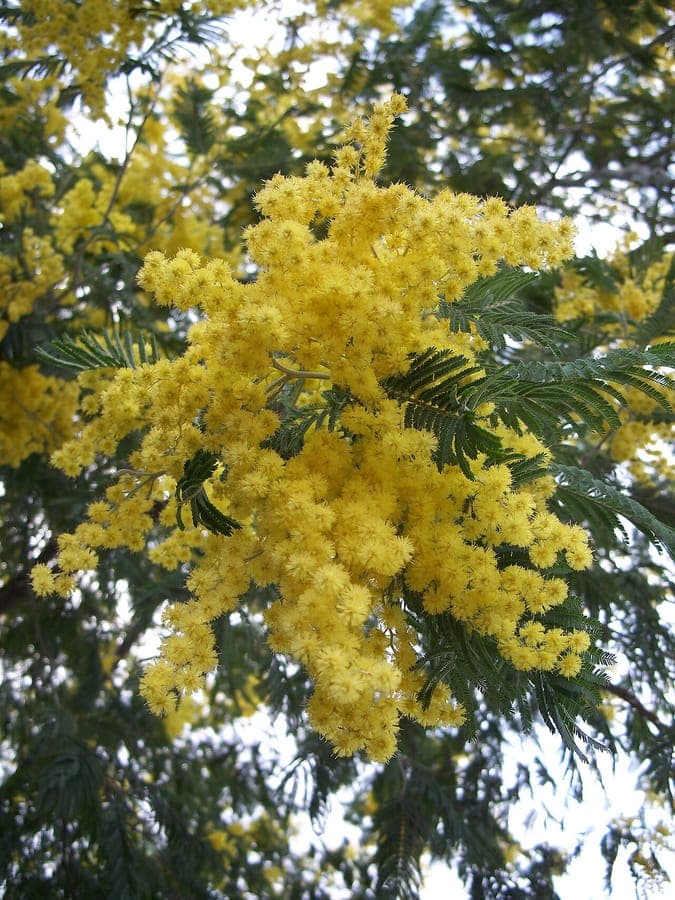
Mimosa is instantly recognisable by its feathery, silvery-grey foliage and clusters of bright yellow, pom-pom-like flowers. The bipinnate leaves are delicate and soft to the touch, creating a light, airy canopy. The blooms appear from January to March, depending on local climate, and emit a light, honey-like fragrance that attracts early pollinators such as bees and hoverflies.
Each flower head is about 1–1.5 cm in diameter, packed with tiny stamens that give the bloom its fluffy appearance. A mature plant can produce hundreds of these golden spheres, transforming the plant into a glowing focal point.
Though often grown as a multi-stemmed shrub, Acacia dealbata can be trained into a small tree with a single trunk and a rounded crown. Its rapid growth makes it ideal for quick screening or as a feature plant.
Ideal location
Mimosa thrives in full sun and needs a sheltered spot to protect it from cold winds and frost. A south- or southwest-facing wall is ideal, as masonry absorbs heat during the day and radiates it at night, helping to keep the plant warm.
Avoid north-facing positions-they're too shady and damp. In exposed gardens, consider planting near a fence or hedge for wind protection. If growing in a container, use a pot at least 60 cm deep with good drainage. Terra cotta or wood containers work well, as they 'breathe' and help regulate moisture.
Soil requirements
This plant prefers well-drained, slightly acidic to neutral soil (pH 5.5–7.0). It does poorly in heavy clay, which retains too much water and can lead to root rot. Amend dense soils with coarse sand, compost, and pine bark to improve structure and drainage.
For container planting, use a mix of loam-based compost (like John Innes No. 2), perlite, and a handful of grit. Avoid lime-rich soils or tap water with high alkalinity, as Mimosa is sensitive to calcium.
Free design
Want to see Mimosa: complete guide in your garden? Make a free design now.
Watering
During the growing season (April to September), water regularly but allow the top few centimetres of soil to dry between waterings. Deep, infrequent watering encourages strong root development. Overhead watering should be avoided to prevent fungal issues on the foliage.
In winter, reduce watering significantly. Plants in the ground may rely on rainfall, but potted specimens need monitoring-keep the soil just barely moist. Never let the root ball sit in water.
Pruning
Prune only after flowering, between March and May. Pruning too early removes next season's flower buds. Use sharp, clean secateurs to remove dead, damaged, or crossing branches. You can also shape the plant to maintain a tidy form or encourage a tree-like structure.
Cut back long or leggy stems to a healthy bud to promote bushier growth. Avoid heavy pruning in late summer or autumn, as new growth may not harden before frost.
Maintenance calendar
- Jan–Mar: Flowering period. Protect from frost. Minimal watering.
- Apr–May: Prune after bloom. Begin light feeding with balanced fertiliser.
- Jun–Aug: Peak growth. Water regularly. Avoid over-fertilising.
- Sep–Oct: Reduce watering. Prepare pots for indoor move if needed.
- Nov–Dec: Winter protection. Check for pests. Keep soil dry.
Winter hardiness
Mimosa is borderline hardy in the UK and northern Europe. In USDA zone 9, it survives down to -7°C, but in zone 8b (-9°C), it often needs protection. Young plants are especially vulnerable. Wrap the crown with horticultural fleece or burlap, and move containers to a cold greenhouse or bright porch (0–8°C).
If frost damage occurs, wait until spring to assess. Sometimes the plant resprouts from the base, even if the top dies back.
Companion plants
Pair Mimosa with other Mediterranean species like Cistus, Lavender, and Rosemary. These share similar needs for sun and drainage. Low-growing perennials such as Erigeron or Thymus work well as ground cover without competing for light.
Avoid planting near moisture-loving or shade-tolerant species. Also, keep it away from wooden structures-damp foliage against wood can encourage rot.
Using gardenworld.app, you can plan companion plantings that enhance both aesthetics and plant health.
Closing
Acacia dealbata isn't for every garden, but for those willing to give it a little extra care, it delivers unmatched winter beauty. With the right site, soil, and winter protection, Mimosa can become a cherished feature in your garden for years.
You can find healthy specimens at garden centres across the UK and Europe, including major retailers like OBI and Hornbach in Germany, Truffaut and Jardiland in France, and general garden centres in the UK.
Want to see Mimosa: complete guide in your garden? Make a free design now.
Upload a photo, pick a style, and get a photorealistic design with plant list in under a minute.
No credit card required


Similar plants
Tall Silky Lupine: complete guide
Lupinus elatus
Tall silky lupine is a fast-growing Californian perennial with silvery foliage and blue-purple flower spikes, ideal for a prairie-style garden.
Garfield Lupine: complete guide
Lupinus garfieldensis
The Garfield lupine is a rare, fast-growing American perennial for alkaline, dry grassland gardens, with striking blue flower spikes.
Lupinus elegans: complete guide
Lupinus elegans
Lupinus elegans, the elegant lupine, is a spectacular blooming plant from Mexico with blue flower spikes. Care, cultivation and garden use.