
Stan Shebs / CC BY-SA 3.0, via Wikimedia Commons
Vachellia constricta: complete guide
Vachellia constricta
Want to see Vachellia constricta: complete guide in your garden?
1 minute, no credit card
Overview
Vachellia constricta, widely known as whitethorn acacia or mescat acacia, is a thorny leguminous shrub in the pea family (Fabaceae). The species grows naturally in the deserts and semi-deserts of the south-western United States and northern Mexico, where it colonises rocky slopes and dry watercourses. In cooler climates it is a connoisseur's container plant, because the combination of finely divided foliage, fragrant yellow puffball flowers and a craggy, thorny frame makes a real statement on a sunny terrace.
Anyone who enjoys a Mediterranean or subtropical mood will find this acacia a rewarding subject. It is rare in mainstream garden centres, but growers specialising in succulents and desert flora sometimes stock it. On gardenworld.app you can preview how this delicate plant looks on your terrace or within a border before you commit.
Appearance and bloom
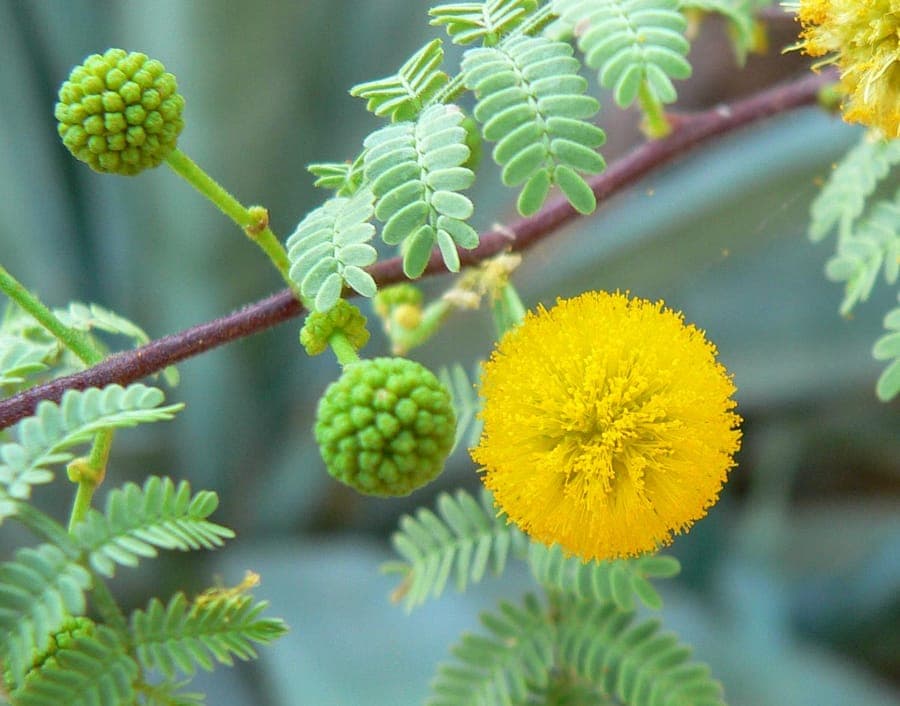
Vachellia constricta forms a loose, much-branched shrub that usually stays one and a half to two metres tall in a container. The twigs carry paired sharp white spines at the base of each leaf, a feature that explains the whitethorn name. The foliage is bipinnate and very fine, so despite the thorns the plant gives an airy impression.
In temperate regions flowering generally falls in late spring and summer. Numerous yellow puffball flowers around a centimetre across appear along the twigs, each built from many tiny stamen-rich florets. They smell sweet and attract bees and butterflies. After flowering, narrow constricted pods form, and that constriction explains the botanical name constricta.
Ideal location
This desert acacia demands the warmest, sunniest spot you can offer, counting on at least six to eight hours of direct sun a day. A sheltered south-facing wall or a sunny, shade-free terrace is ideal. In cooler climates you grow it year-round in a generous container so you can move it indoors at the first night frost.
Give the plant all the outdoor space it wants in summer, because air and warmth encourage a firm, healthy frame. Stand the container out of strong wind, since the fine twigs can snap in a storm. The plant tolerates heat superbly and, unlike many container subjects, positively benefits from it.
Soil
Vachellia constricta requires a markedly mineral, sharply draining substrate. Mix cactus compost with coarse sand and fine lava grit or perlite in a ratio of roughly two parts compost to one part inorganic material. Standing moisture around the roots is the quickest route to rot, so drainage comes first and foremost.
The plant accepts a lean to moderately fertile base and needs no rich compost. Over-rich ground produces soft, disease-prone growth. A neutral to slightly alkaline reaction best matches its natural desert ground. Make sure the container has generous drainage holes and never use a saucer that holds water against the base.
Watering
During the growing season, water moderately as soon as the top layer of the substrate feels dry. Let the pot dry out well between waterings, because the plant is adapted to long dry spells and will not tolerate wet feet. A heavy hand with the watering can is the most common cause of trouble with this species.
In winter, when the plant stands cool indoors, restrict watering to a bare minimum, just enough to stop the rootball drying out completely. Through the growing season apply a light feed for cacti or Mediterranean plants once a month, and stop from late summer so the wood can ripen before winter. This seasonal rhythm keeps the plant compact and hardy in its cultural sense.
Free design
Want to see Vachellia constricta: complete guide in your garden? Make a free design now.
Pruning
Vachellia constricta takes pruning well and is easy to keep in shape. Prune preferably in early spring, just before new growth starts. Remove dead, damaged or crossing wood and shorten over-long twigs to maintain a compact, balanced frame.
Wear stout gloves, because the white spines are sharp. If you want to train the plant as a small container tree, gradually remove the lower side branches and leave one or a few main stems. A light shaping each year is enough; a hard cut-back is rarely needed and can cost the current season's bloom. On gardenworld.app you can sketch the eventual silhouette against your terrace before you start training.
Maintenance calendar
In early spring (March) repot into fresh mineral substrate if needed and carry out the shaping prune. April and May are months when growth picks up; return the container outdoors to the warmest spot once the risk of frost has passed. In summer you enjoy the bloom, water moderately and feed lightly once a month.
In September taper off watering and feeding so the wood ripens. At the first night frost, usually in October, move the container to a bright, frost-free room at about five to ten degrees. Through winter, water very sparingly and check now and then for mealybug and scale insects.
Winter hardiness
Vachellia constricta is not hardy in the Netherlands, Belgium or Germany. In its native range the species tolerates light frost to about minus five degrees, matching the warmer fringes of USDA zone 8, but it will not survive prolonged or severe cold. In temperate regions you therefore grow it strictly as a container plant.
Overwinter the plant cool and bright, for instance in a greenhouse, an unheated conservatory or a light garage at five to ten degrees. Overwintering too warm in a dark room leads to long, soft shoots and encourages pests. Keep the rootball just dry enough not to desiccate completely.
Companion plants
In a Mediterranean or desert-style terrace arrangement, Vachellia constricta combines handsomely with other drought-loving container plants. Think agave, opuntia, oleander, olive and blue plumbago. These subjects share a preference for sun, warmth and a sharply draining substrate, so you can care for them together.
At the foot of the container, low grey-leaved herbs such as cotton lavender and lavender sit well; they reinforce the southern picture and tolerate the same dryness. By combining plants with staggered flowering times you keep the terrace attractive from late spring into autumn. Assemble such a coherent terrace picture in advance and see at once how the fine acacia reads among its neighbours.
Closing
Vachellia constricta is a graceful, fragrant desert acacia for the lover of Mediterranean and subtropical container plants. Anyone who can offer a mineral substrate, plenty of sun and a frost-free winter is rewarded with finely divided foliage, fragrant yellow puffballs and a craggy, characterful frame, all at surprisingly little upkeep. Look for the plant at specialist growers of succulents and desert flora, since the standard garden centre rarely carries it. If you want to test in advance whether this acacia suits your terrace, design your arrangement and see the result in a realistic image of your own garden.
Want to see Vachellia constricta: complete guide in your garden? Make a free design now.
Upload a photo, pick a style, and get a photorealistic design with plant list in under a minute.
10,000+ gardens designed already
No credit card required


Similar plants
Tall Silky Lupine: complete guide
Lupinus elatus
Tall silky lupine is a fast-growing Californian perennial with silvery foliage and blue-purple flower spikes, ideal for a prairie-style garden.
Garfield Lupine: complete guide
Lupinus garfieldensis
The Garfield lupine is a rare, fast-growing American perennial for alkaline, dry grassland gardens, with striking blue flower spikes.
Lupinus elegans: complete guide
Lupinus elegans
Lupinus elegans, the elegant lupine, is a spectacular blooming plant from Mexico with blue flower spikes. Care, cultivation and garden use.