
Noah Elhardt / CC BY-SA 3.0, via Wikimedia Commons
Zigzag bladderwort: complete guide
Utricularia subulata
Want to see Zigzag bladderwort: complete guide in your garden?
1 minute, no credit card
Overview
Utricularia subulata, commonly known as zigzag bladderwort or slender bladderwort, represents one of nature's most sophisticated adaptations in the plant kingdom. This carnivorous aquatic belongs to the Lentibulariaceae family and occurs naturally across the tropics and subtropics from the Americas to Africa and Asia. Unlike terrestrial plants, this species hunts underwater using a mechanism that operates faster than the eye can perceive.
The plant develops fine, thread-like stems with leaves measuring mere millimeters. Its most remarkable feature is an array of microscopic bladder traps capable of capturing tiny aquatic organisms. These individual traps create a negative pressure vacuum that sucks prey in at lightning speed, making this plant an extraordinary example of evolutionary engineering in aquatic gardens.
Appearance and Bloom
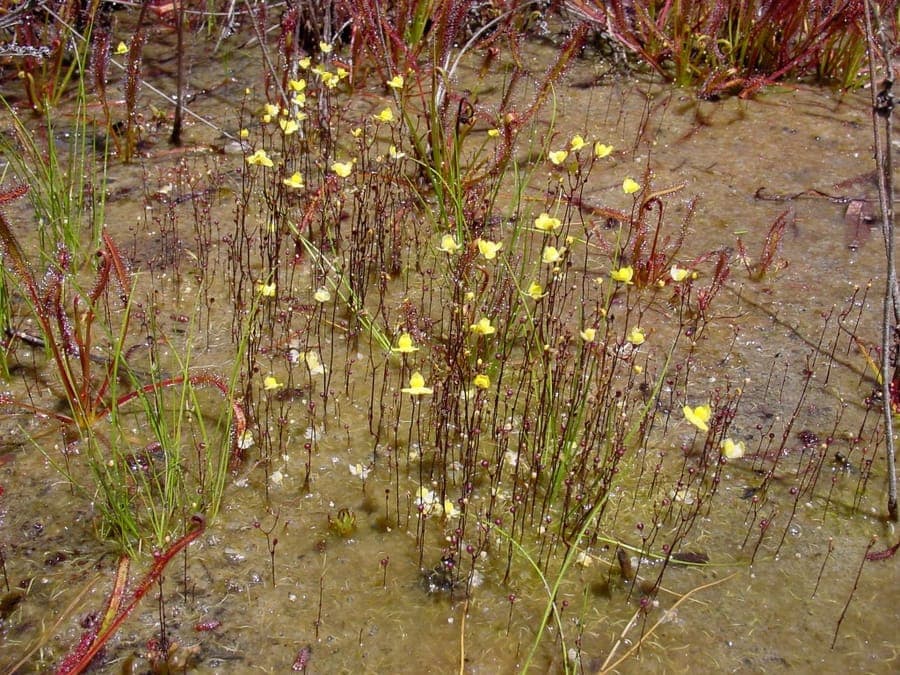
The foliage of Utricularia subulata consists of delicate, hair-thin leaves that create an ethereal appearance in aquariums. The entire plant typically reaches only a few centimeters in height, making it perfect for foreground positioning. Flowering stems emerge above the waterline, producing small yellow flowers that contrast beautifully against the fine green foliage.
The trap organs are invisible to the naked eye, representing an invisible hunting arsenal within the water column. In favorable conditions, the plant forms dense mats that provide natural ecosystem services by controlling populations of small aquatic organisms. The greenish foliage creates an almost weightless effect in the aquarium.
Ideal Location
Utricularia subulata thrives in foreground aquarium areas receiving strong illumination. This light-hungry plant requires a minimum of twelve hours of daily light to develop properly. Position the plant approximately 30 centimeters below aquarium lighting for optimal photosynthesis. Strong water currents will damage the delicate foliage, so avoid high-flow areas.
A warm location is essential for maintaining growth momentum throughout the year. Allocate 10 to 20 centimeters of open water space around the plant to prevent entanglement with heavier vegetation. Proper spacing ensures adequate water circulation around the fine leaves while avoiding damage from nutrient competitors.
Soil
The roots of Utricularia subulata are extremely fine and serve primarily anchoring functions. The plant obtains most nutrition directly from the water column via osmotic uptake. Use soft sand or fine soil as substrate - coarse gravel can damage the delicate root system.
While rooting in substrate plays a secondary role to water-column nutrition, beneficial microorganisms in nutritious substrates support indirect nutrient availability. Avoid heavily fertilized substrates that promote algal growth, which can smother this species through shading.
Free design
Want to see Zigzag bladderwort: complete guide in your garden? Make a free design now.
Watering
Water conditions are critical for successful cultivation. Maintain temperatures between 22 to 26 degrees Celsius, with pH values ranging from 5.0 to 7.0. Softer water (acidic aquarium conditions) produces optimal growth results. Perform water changes of 25 to 30 percent weekly to maintain water quality standards.
The plant is sensitive to toxic breakdown products including ammonia and nitrite. These compounds cause leaf loss and stunted growth. Establish a mature biological filter and test water parameters regularly with quality test kits to prevent problems before they develop.
Pruning
Utricularia subulata requires minimal pruning due to its naturally compact growth habit. Remove only dead or damaged stems. When the plant becomes overcrowded and begins self-shading, gently separate and replant stem sections in other aquarium zones to maintain vigor.
Preventing algae accumulation on fine foliage takes priority over active pruning. Ensure predatory organisms like Chinese algae-eaters do not consume algae that may be benefiting this sensitive species.
Maintenance Calendar
Month by month care ensures consistent growth: January through March represents dormancy period - reduce lighting to ten hours daily. April through September demands full attention with twelve-hour lighting, regular fertilization, and weekly water changes. October through December gradually return to dormancy levels.
Monthly inspection checks for pest indicators and overall plant condition. Annual verification of filter system functionality ensures long-term success. Seasonal adjustments to heating prevent stress responses.
Winter Hardiness
Zigzag bladderwort cannot tolerate temperatures below 18 degrees Celsius. This tropical species requires year-round warmth for survival. When temperatures drop, growth slows dramatically and leaf loss becomes evident. Long-term cold exposure results in plant death.
Protection against temperature fluctuation is essential for thriving populations. Use a submersible aquarium heater with thermostat regulation for stable conditions. Never position near drafts, open windows, or cooling devices that create temperature instability.
Community Support
Seek guidance from experienced aquarists when specific problems develop. Aquatic plant forums and specialized online communities provide valuable insights specific to carnivorous aquatic cultivation. This plant demands particular expertise, so building knowledge through discussion prevents costly mistakes.
Closing Thoughts
Utricularia subulata represents a fascinating challenge for advanced aquarium enthusiasts willing to invest the required effort. This carnivorous aquatic plant demonstrates the remarkable diversity within plant evolution and how specialized adaptations enable life in aquatic environments. With careful management, this species flourishes for years, bringing a piece of botanical science directly into your home.
Discover more tropical aquatic plants at gardenworld.app. Explore fascinating aquatic gardens and learn how to elevate your water features. For comprehensive exotic plant collections, gardenworld.app connects you with the perfect specimens for your aquatic vision.
Want to see Zigzag bladderwort: complete guide in your garden? Make a free design now.
Upload a photo, pick a style, and get a photorealistic design with plant list in under a minute.
No credit card required


Similar plants
Pinguicula lusitanica: complete guide
Pinguicula lusitanica
Pale butterwort is a fascinating carnivorous plant with sticky leaves and delicate white flowers. Perfect houseplant. Complete care guide and tips here.
Gibba bladderwort: complete guide
Utricularia gibba
Explore the gibba bladderwort, a fascinating carnivorous plant: aquatic requirements, feeding mechanism, temperature, and care for water gardens.
Hairy butterwort: complete guide
Pinguicula villosa
Pinguicula villosa is a rare carnivorous plant from subarctic regions with delicate purple flowers. Perfect for bog gardens and wet sites.