
Wikimedia Commons / CC BY-SA 3.0, via Wikimedia Commons
Horizontal navelwort: complete guide
Umbilicus horizontalis
Want to see Horizontal navelwort: complete guide in your garden?
1 minute, no credit card
Overview
The horizontal navelwort, scientifically known as Umbilicus horizontalis, is a fascinating succulent native to the Mediterranean region and beyond. This plant is also known by other names such as 'Nombril-de-Venus' in French. With its characteristic disc-shaped leaves and delicate flowers, it is a unique addition to any rock garden or succulent collection.
Umbilicus horizontalis is a short-lived perennial belonging to the Crassulaceae family, the same family as Sedum and Echeveria. The plant thrives across the Mediterranean and extended regions due to its hardy nature and fleshy leaves.
Appearance and Bloom
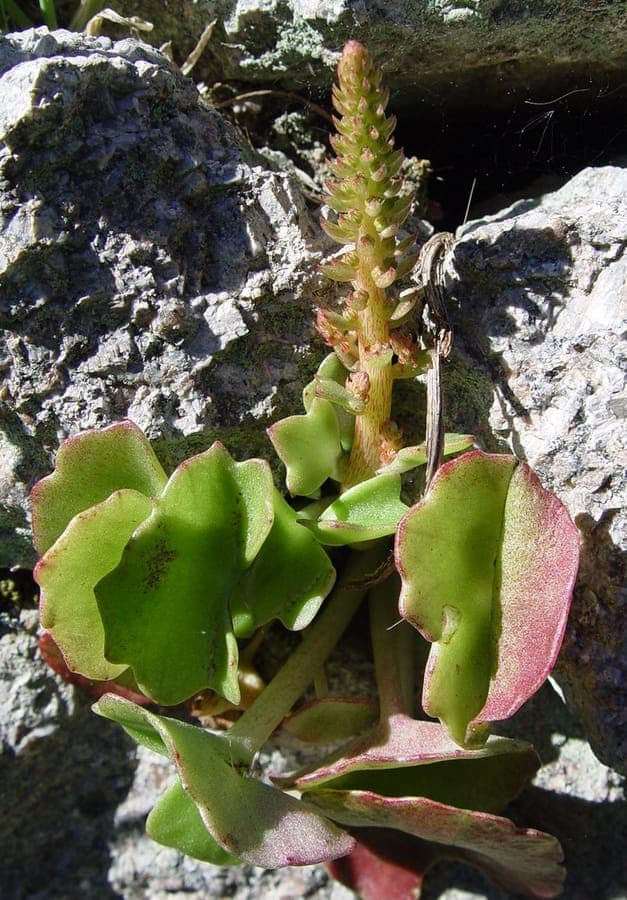
The horizontal navelwort is a compact plant that usually grows 15-30 cm tall. The most distinctive feature is the leaf formation: leaves grow in rosettes with a characteristic disc or cup shape and a small indentation in the center, hence the name 'navelwort'. The leaves are green, sometimes with red or purple tints, especially during stress periods or under intense light.
During the growing season, slender flower stems emerge with small flowers that are typically red or pink with red-tipped petals. The flowers are bell-shaped and highly decorative. After flowering, small seed capsules form. The plant can also reproduce vegetatively through root tubers.
Ideal Location
The horizontal navelwort thrives best in a location with abundant sunlight. The plant enjoys 6-8 hours of direct sunlight daily, though it can also grow with less light. Place it in a warm, dry location protected from heavy rain and excess water.
This plant is ideal for rock garden settings, green roofs, and dry landscape designs. It can also grow in pots and containers, making it flexible for various garden designs.
Soil
The horizontal navelwort requires well-draining, sandy or gravelly soil. A mix of succulent potting soil with added perlite or sand is ideal. The plant can grow in poor soil and actually prefers infertile soil, as rich soil can lead to excessive growth and reduced flowering.
Aim for neutral to slightly acidic pH. The plant tolerates salt in the soil, making it suitable for coastal regions.
Watering
The horizontal navelwort is highly drought-tolerant and handles water scarcity well. Water only when the soil is completely dry. During the growing season (autumn and early winter), slightly more regular watering is acceptable, but water must drain well.
During summer months, water can be minimal. Excess water is the most common cause of problems with this plant, so underwater rather than overwater. During summer dormancy, virtually no water is needed.
Free design
Want to see Horizontal navelwort: complete guide in your garden? Make a free design now.
Pruning
The horizontal navelwort requires virtually no pruning. Remove dead or wilted leaves and flower stems after they pass their prime. This helps keep the plant neat and can prevent disease.
If the plant becomes too large or sprawling, you can prune it gently, though this is not necessary for healthy growth.
Maintenance Calendar
- September-October: Start of growing season; gradually increase watering
- November-January: Flowering period; moderate water; support tall flower stems if needed
- February-March: Seed formation; reduce watering
- April-August: Rest period; minimal water; place in shade if possible
Winter Hardiness
The horizontal navelwort is fairly cold-hardy and can overwinter in temperate climates. In very cold regions (below -10 degrees Celsius), the plant must be protected, such as by placing it in a cold frame or covering it with dry mulch.
In most Mediterranean and temperate zones, the plant can overwinter outdoors, especially if protected from heavy rain and excess water.
Companion Plants
The horizontal navelwort combines beautifully with other succulents in rock gardens. Consider pairing it with:
- Sedum species for varied heights and colors
- Echeveria for size contrast
- Sempervivum for hardiness and structure
- Aloe species for dramatic forms
- Ornamental grasses and stones for texture
The red flowers create a beautiful contrast with silver or blue-tinted succulents.
Closing
The horizontal navelwort is a fascinating plant that adds unique beauty to any rock garden or succulent collection. With its characteristic leaf shape, delicate flowers, and extreme drought tolerance, it is an ideal choice for gardeners seeking something different. Whether you are creating a rock garden or expanding your succulent collection, the horizontal navelwort is certainly worth considering.
When purchasing horizontal navelwort in the United States, consult your local garden centers or specialized succulent suppliers. Visit gardenworld.app for more design ideas and inspiration for your front garden. Discover how horizontal navelwort can add unique beauty to your garden design with personalized recommendations from gardenworld.app.
Want to see Horizontal navelwort: complete guide in your garden? Make a free design now.
Upload a photo, pick a style, and get a photorealistic design with plant list in under a minute.
No credit card required


Similar plants
Sedum nevadense: complete guide
Sedum nevadense
Discover Sedum nevadense, the stunning alpine stonecrop from the Pyrenees. Expert care tips, growing requirements, and design ideas for rock gardens.
Aizoon stonecrop: complete guide
Phedimus aizoon
Everything about Phedimus aizoon - the frost-tolerant aizoon stonecrop from Siberia with bright yellow flowers. Planting, care and garden use.
Roseroot: complete guide
Rhodiola rosea
Everything about roseroot (Rhodiola rosea): a tough hardy succulent ideal for rock gardens, green roofs, and dry sunny positions.