
Wikimedia Commons / Public domain, via Wikimedia Commons
California bay: complete guide
Umbellularia californica
Want to see California bay: complete guide in your garden?
1 minute, no credit card
Overview
The California bay, scientifically known as Umbellularia californica, is a striking evergreen shrub native to the western coasts of North America. This plant grows naturally in California, Oregon, and Northern Mexico across various climate zones. With its glossy foliage and attractive fruits, it is a versatile choice for gardens seeking a touch of the Wild West.
This shrub goes by several alternative names including California laurel, berglorbeer, and headache tree. The headache tree name refers to the strong aromatic scent the foliage releases when damaged, something some people find invigorating but others may experience as overwhelming.
Appearance and Bloom
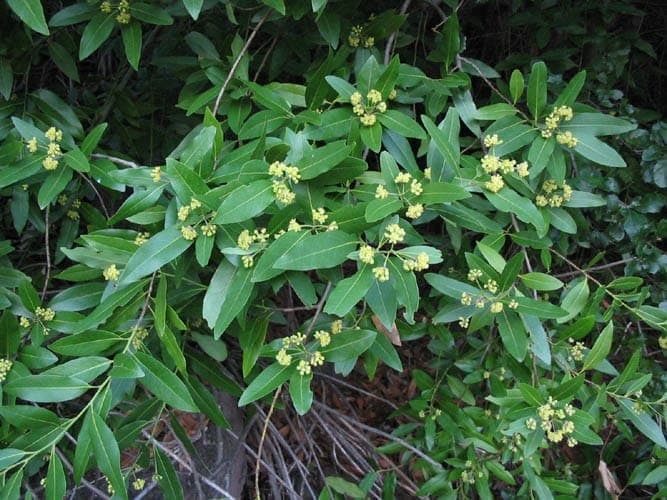
The California bay grows into a medium-sized shrub or small tree, typically reaching 6 to 9 meters tall, though older specimens can grow taller. The plant has a single trunk with heavily branched branches forming a compact crown. The foliage is the most striking feature: the leaves are elongated-lanceolate, glossy green, and possess a leathery texture that gives the plant a luxurious appearance.
Flowers appear in winter and early spring, generally January through March. These are small, greenish-yellow flowers in loose clusters, very subtle but pleasantly scented. After flowering, attractive fruits develop: small olive-like stone fruits that first appear green, later darkening to deep blue-black. These fruits are popular with birds and other wildlife.
Ideal Location
The California bay thrives best in a location with abundant sunlight. The plant can grow in partial shade, but will produce more flowers and fruits with at least 6 hours of direct sunlight daily. Plant it where it is protected from strong, biting winds, especially in colder regions.
In temperate climates, the plant can grow outdoors; in colder regions it may be kept in a greenhouse or as a container plant. It loves well-ventilated locations, so ensure adequate air circulation around the shrub.
Soil
The California bay is not particular about soil type, but grows best in well-draining, fertile soil. The plant is highly drought-tolerant and prefers soils with a pH between 5.7 and 7.4. This means it thrives in both acidic and neutral soils.
Ensure the soil drains well - standing water can lead to root rot. When planting, add organic matter such as compost or rotted leaf mold. In heavy clay soils, it is helpful to incorporate perlite or sand to improve drainage.
Free design
Want to see California bay: complete guide in your garden? Make a free design now.
Watering
Despite its drought tolerance, the California bay thrives with regular water, especially during the growing season. Water deeply but not too frequently - the plant prefers dry periods between waterings. Once established, the plant can withstand long dry periods.
During your first season after planting, water the plant regularly to allow roots to establish properly. Afterward, you can gradually reduce watering. In winter months, especially in colder regions, less water is needed.
Pruning
The California bay requires minimal pruning. The plant grows naturally in an attractive form. You can remove old or damaged branches after flowering. Prune this plant in early spring or immediately after flowering for best results.
If you want to keep the plant smaller, you can do light pruning, but avoid heavy pruning as this can affect the form. Note that cutting foliage releases strong scents.
Maintenance Calendar
- January-March: Flowering period; water moderately; remove dead branches after flowering
- April-June: Growing season; water regularly; fruit production
- July-September: Dry summer months; reduce watering; keep up with height
- October-December: Winter preparation; reduce watering; no pruning needed
Winter Hardiness
The California bay is reasonably hardy in temperate climates (USDA zones 8-10). In colder regions, the plant must be protected from frost. Mulch around the base of the plant with a thick layer of leaf mold or compost to protect roots against severe cold.
In very cold climates (zone 7 or colder), it is better to grow the plant in a container so it can be brought indoors during winter. Wrapping cloth around the trunk can also help protect against severe frost.
Companion Plants
The California bay combines well with other Mediterranean and drought-tolerant plants. Consider pairing it with:
- Rosemary and sage trees for fragrance
- Lavender for color and texture
- Myrtle and cotoneaster for different foliage textures
- Bamboo varieties for height and movement
The dark fruits and glossy leaves create a nice contrast with silver or golden-tinged foliage plants.
Closing
The California bay is an exceptional plant for gardens seeking something different. With its glossy foliage, subtle flowers, attractive fruits, and drought tolerance, it is a low-maintenance plant that can provide years of beauty. Whether you live in a Mediterranean climate or want to create a tropical garden in a temperate zone, the California bay is certainly worth considering.
When purchasing a California bay plant in the United States, check your local garden centers or online suppliers. Visit gardenworld.app for more inspiration and design ideas for your front garden. Discover how a California bay can transform your garden design with personalized recommendations from gardenworld.app.
Want to see California bay: complete guide in your garden? Make a free design now.
Upload a photo, pick a style, and get a photorealistic design with plant list in under a minute.
No credit card required


Similar plants
Ocotea floribunda: complete guide
Ocotea floribunda
All about Ocotea floribunda, a tropical laurel tree from Central and South America: growing in temperate climates, containers, pruning, and care in greenhouses.
Redbay: complete guide
Persea borbonia
A full guide to redbay (Persea borbonia), a fragrant evergreen tree native to the southeastern United States, related to avocado and laurel.
Swamp bay: complete guide
Persea palustris
A full guide to swamp bay (Persea palustris), an evergreen tree native to the wetlands and coastal swamps of the southeastern United States.