
Ronnie Nijboer / CC0, via Wikimedia Commons
Ulmus thomasii: complete guide
Ulmus thomasii
Want to see Ulmus thomasii: complete guide in your garden?
1 minute, no credit card
Overview
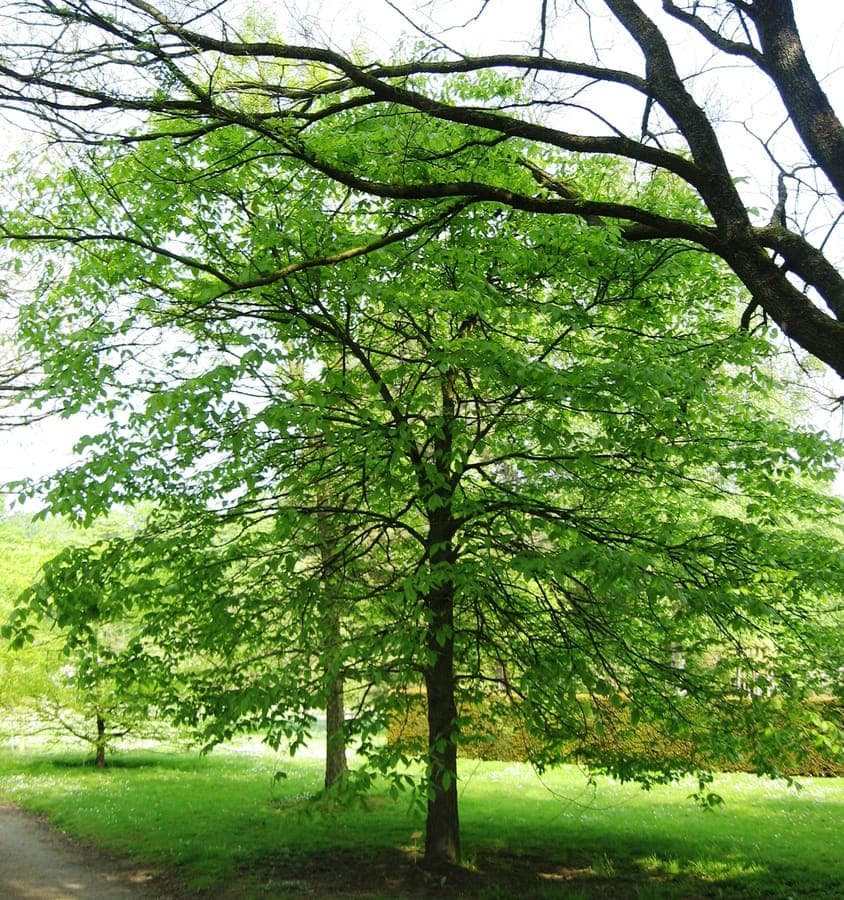
The cork elm, botanically Ulmus thomasii, is a native North American deciduous tree from the Midwest and eastern coast. This imposing tree reaches heights of 15 to 25 meters and is known for its distinctive cork-like ridge formations on younger branches. The tree belongs to the elm family and is widely used in landscaping for its robust constitution and striking winter appearance.
The cork elm distinguishes itself from other elms through its specific leaf morphology and tree form. This makes it a valuable addition to gardens needing a robust, native tree with distinctive appeal.
Appearance and bloom
The cork elm has an upright to broad crown form with branches developing characteristic corky ridges early in growth. These corky protrusions give the tree unique texture especially visible in winter.
The leaves are small to medium, roughly 5-10 centimeters long, with finely serrated leaf margins. Leaf color is bright green in summer and changes to yellow-orange tones in autumn. The tree leafs out relatively late, after most other elms.
Flowering is modest - the tree blooms early spring, before leaf emergence. Flowers are reddish-brown and inconspicuous, followed by small seed-bearing fruit.
The tree bark is gray and rough, with deep furrows. This provides interesting contrast effects in winter landscapes.
Ideal location
The cork elm grows best in sunny to partially shaded locations. Minimum four hours direct sun daily is preferable. In warmer regions, the tree tolerates more shade.
The tree is wind-resistant and handles urban environments well, including pollution. This makes it ideal for street trees and city parks.
Although native to moister areas, the tree tolerates drier conditions once established. Aim for balance between extremes.
Soil
The cork elm grows in a broad range of soils, from sand to clay, as long as they drain reasonably well. The tree tolerates both acidic and neutral to alkaline soils (pH 4.5 to 7.2).
The tree prefers moist soils but tolerates drought once established. In drier environments, irrigation tubes can be helpful in the first year.
Organic material like compost or leaf mold worked in at planting improves soil structure and water retention.
Free design
Want to see Ulmus thomasii: complete guide in your garden? Make a free design now.
Watering
Young cork elms need regular watering, especially in the first growing season. Water deeply but infrequently to promote strong root development. The first year is critical - ensure consistent soil moisture.
Once established (after 2-3 years), the tree is quite drought-tolerant. During extended summer drought, supplemental water helps. However, avoid waterlogged soil.
In winter, minimal watering is needed. Check soil moisture by feeling soil to about 15 centimeters depth.
Pruning
The cork elm needs minimal pruning. The tree naturally forms a pleasing silhouette. Remove only dead, damaged or diseased branches.
Young trees can be lightly pruned to build form, but avoid heavy pruning, which can cause excessive growth. Prune in winter (December-February) for minimal stress.
Do not remove large branches without good reason - this can introduce disease.
Maintenance calendar
Spring: check for damage and remove dead/damaged branches. Summer: monitor soil moisture, especially for young trees. Fall: enjoy color changes. Winter: no actions needed except checking overall health.
Winter hardiness
The cork elm is completely winter hardy and tolerates extreme cold, including temperatures below -30 degrees Celsius. This is one of the most cold-hardy deciduous trees available.
The tree is also resistant to Dutch elm disease, though infection rates are now lower.
Companion plants
The cork elm combines nicely with underplanting of native shrubs and plants. Consider flowering shrubs like redbud, pagodatree and American dogwood.
Ground cover plants like ivy and grape can grow beneath the tree. Avoid competing trees too close together.
Conclusion
The cork elm is an excellent choice for those wanting a durable, native tree with interesting winter characteristics. The corky branches and elegant summer foliage make it a year-round attractive specimen. With basic care and adequate moisture in young years, this tree grows into a majestic specimen. This is a tree that provides beauty and character for years to come. Visit local garden centers for young specimens.
On gardenworld.app, you can incorporate this native tree into your design. At gardenworld.app, find inspiration how this classic North American tree gives your front yard natural, stylish character.
Want to see Ulmus thomasii: complete guide in your garden? Make a free design now.
Upload a photo, pick a style, and get a photorealistic design with plant list in under a minute.
No credit card required


Similar plants
Dutch elm: complete guide
Ulmus × hollandica
Full guide to Ulmus x hollandica: siting, soil, watering, pruning, Dutch elm disease management, and companion plants for this majestic hybrid elm.
Caucasian zelkova: complete guide
Zelkova carpinifolia
Discover Zelkova carpinifolia, the elegant Caucasian elm. Growing guide and care tips for landscapers.
Ulmus americana: complete guide
Ulmus americana
Discover American elm, a majestic tree with ivory-tinted foliage. This impressive fast-growing tree is ideal for landscape planting and park-like settings. Learn all about care and maintenance.