
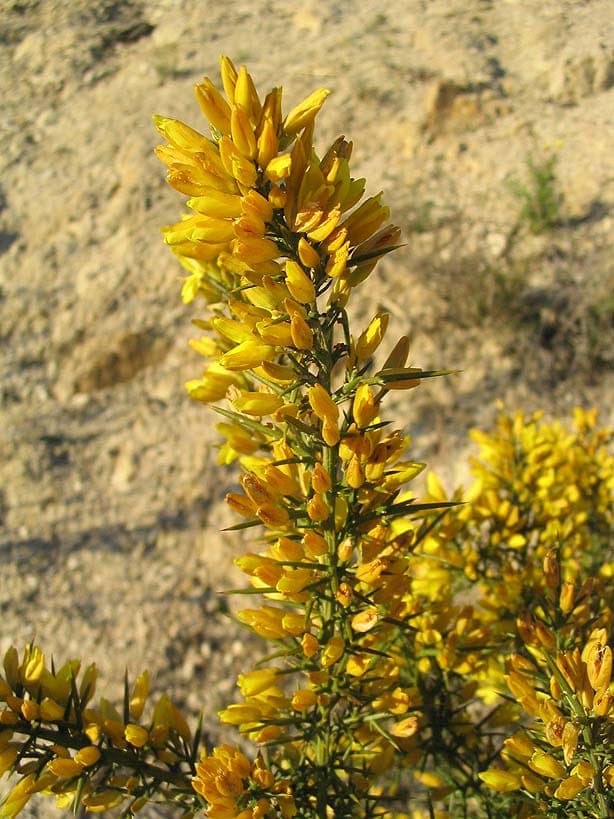
Jean Tosti / CC BY-SA 3.0, via Wikimedia Commons
Small-flowered gorse: complete guide
Ulex parviflorus
Want to see Small-flowered gorse: complete guide in your garden?
1 minute, no credit card
Overview
Ulex parviflorus, commonly known as small-flowered gorse or Provence gorse, is a spiny, evergreen shrub belonging to the legume family (Fabaceae). The species was described in 1788 by the French botanist Pourret from specimens collected in southwestern Europe. The Latin name parviflorus means "small-flowered", reflecting the slightly smaller blooms compared to the closely related common gorse (Ulex europaeus).
The natural distribution of this species spans Portugal, Spain, the Balearic Islands, southeastern France, Algeria, and Morocco. In these regions it colonises dry slopes, rocky garrigue scrubland, and coastal clifftops where the soil is thin, poor, and fast-draining. It naturally forms dense, impenetrable thickets that shelter birds and small mammals throughout the year.
In the garden, Ulex parviflorus is an excellent choice for hot, sunny spots where few other shrubs perform well. Its golden-yellow flowers appear in autumn and winter - precisely when most shrubs are bare and leafless - and carry a sweet, coconut-like scent that attracts early bumblebees and honeybees on mild winter days. The sharp spines also make it highly effective as an impenetrable hedge or boundary planting.
As a legume, the plant is capable of fixing atmospheric nitrogen through root nodules, making it useful for improving poor soils and stabilising slopes. On lean, sandy or stony ground it performs at its very best: overly fertile soil produces long, weak shoots that are more vulnerable to frost and give the plant an untidy appearance.
Discover how to integrate this Mediterranean shrub into your garden design at gardenworld.app.
Appearance & bloom cycle
Ulex parviflorus is a compact to medium-sized shrub growing 60-150 cm tall with a similar spread. The branches are stiff, green, and armed with sharp, grooved spines 1-2 cm long. Unlike leafy shrubs, this species has almost no true leaves: the numerous green spines and stems take over the function of photosynthesis, giving the plant a permanently green appearance without seasonal leaf drop.
The flowers are golden yellow and butterfly-shaped - typical of the Fabaceae family. Each bloom measures 8-12 mm and carries a delicate, sweet fragrance reminiscent of coconut or vanilla. Flowering begins in October or November depending on the site and climate, and continues through to February or March. On sheltered, sunny positions, the first flowers may appear as early as September.
After flowering, small, softly hairy pods of 1-1.5 cm develop, each containing two to three seeds. On warm, dry days these pods split open with an audible click, shooting seeds up to several metres away. This explosive seed dispersal mechanism makes Ulex parviflorus an active colonist on open, dry ground. In the garden it is advisable to remove the pods before they ripen if you wish to limit self-seeding.
The autumn-winter flowering season makes this shrub particularly valuable: while other shrubs stand bare and dormant, Ulex parviflorus provides warm colour and fragrance that even entices bees and bumblebees to venture out on mild winter afternoons. The flowers stand out brilliantly against both blue winter skies and frost-whitened ground.
Ideal location
Small-flowered gorse thrives in a fully open, sunny position receiving direct sunlight throughout the day. In its natural habitat on dry, rocky slopes and open garrigue, the plant experiences intense light, excellent air circulation, and soils that dry quickly after rain. Reproducing these conditions in the garden is the key to success.
A south- or southwest-facing position is ideal: in a gravel garden, along a dry stone wall, on a south-facing slope, or as a standalone specimen in a low border. The spiny habit also makes it excellent as an intruder-deterring barrier hedge or accent planting that naturally discourages unwanted access.
Partial shade is poorly tolerated: in shadier positions the shrub becomes spindly, barely flowers, and grows more vulnerable to frost. In urban gardens with the heat island effect of surrounding buildings or paving, flowering can be even more prolific than in open rural settings. Shelter from hard easterly and northerly winds is desirable in continental climates.
Allow a minimum planting distance of 100-150 cm from other shrubs, as Ulex parviflorus can spread considerably and its spines may damage neighbours. A safety setback of 60-80 cm from paths or seating areas is sensible given the sharp thorns.
Soil requirements
Small-flowered gorse is extremely undemanding about soil. It thrives on almost any well-drained substrate: sand, gravel, loamy sand, calcareous ground, stony soil, or even shallow rocky substrates. The ideal pH range is 5.0-5.5, though the plant tolerates mildly alkaline conditions up to pH 7.
Heavy, poorly drained clay is the most problematic substrate. On clay, roots suffer from waterlogging - especially in winter - and the plant rarely survives beyond two to three years. If you must plant on clay, improve the root zone over a width of at least 60 cm and a depth of 40 cm by incorporating 30-40% coarse sand and 10% perlite or broken clay brick before planting.
Avoid rich, nitrogen-heavy soils or fresh compost. As a legume, Ulex parviflorus fixes its own nitrogen via root nodules; additional nitrogen input leads to long, soft, frost-vulnerable shoots and a dishevelled habit. On lean, dry ground the growth is more compact, the flowering richer, and the plant's lifespan longer.
Mulching around the plant with moisture-retaining bark or compost is neither necessary nor beneficial. A 3-5 cm layer of gravel or crushed stone around the base is a much better option: it keeps the soil surface dry, suppresses weeds, and suits the Mediterranean character of the planting.
Watering
Once established - typically six to twelve weeks after planting - Ulex parviflorus requires virtually no supplemental watering in the climate of the Netherlands and Belgium. The plant is supremely drought tolerant and its spine-covered habit is itself an adaptation to water scarcity: the reduced leaf surface and reflective spines minimise water loss during dry periods.
In the planting year, weekly watering during dry spells of more than ten days is recommended - about 5-10 litres per plant per session - to encourage root establishment. Drip irrigation or a watering can applied directly to the base is preferable; avoid wetting the foliage.
From the second year onward, supplemental watering is only needed during extreme, prolonged drought lasting more than four to six weeks. The plant signals water stress through slight yellowing of the youngest shoots; at the first sign, a single thorough soaking is sufficient. Waterlogging around the roots must be avoided at all times - this is the primary cause of plant death in wet northern winters.
During rainy periods no additional watering is needed. The soil can dry out completely between waterings; this is no problem for the plant and actually encourages a deeper, more drought-resistant root system.
Free design
Want to see Small-flowered gorse: complete guide in your garden? Make a free design now.
Pruning
Ulex parviflorus requires thoughtful pruning - both because of its spines and because of its growth rhythm. Always wear thick leather gloves and use long-handled shears with handles of at least 25 cm to keep your hands clear of the thorns.
The best time for a meaningful pruning session is immediately after flowering ends, in March or April. At this point the plant still has the whole growing season ahead and plenty of time to recover before the next autumn flowering. Cut back the spent flowered shoots by a maximum of one-third of the total height, preferably to just above a visibly green, actively growing section of stem.
Cutting back hard into old, leafless wood should be avoided: Ulex parviflorus does not readily regenerate from bare old wood, unlike the related common gorse. Severe pruning can kill the plant. Light annual pruning immediately after flowering is far preferable to periodic hard cutting.
For hedge formation, lightly trim the plant in the first two years after planting to encourage dense branching at the base. Subsequently, a single annual maintenance trim of 10-15 cm after flowering is sufficient. Remove dead wood from the centre of the shrub annually to improve air circulation and prevent fungal infections.
Maintenance calendar
January - February: The plant is in full flower or just beginning to bloom. No pruning during this period. Check that there is no waterlogging around the roots. Enjoy the golden flowers and observe early bee activity on mild days.
March - April: The ideal time for maintenance pruning once flowering has finished. Cut back flowered shoots by up to one-third. Remove dead wood. Plant out new specimens once the soil has warmed sufficiently.
May - June: Active growing period. Water young plants weekly during dry spells. Keep weeds away from the base. Remove ripening pods before they burst if you want to limit self-seeding.
July - August: The driest time of year. Established plants need almost no water. Young specimens: a thorough soaking every two weeks in extreme drought. Watch for formation of new flower buds.
September - October: The flowering season begins. First flowers appear on sheltered, sunny positions. No pruning. Collect seed if desired for propagation, before the pods burst open.
November - December: Full flowering during mild autumns. Monitor frost hardiness on exposed sites. In continental locations, have a layer of horticultural fleece ready for extreme cold spells below -12 degrees.
Winter hardiness
Ulex parviflorus is less cold hardy than its northern European relative Ulex europaeus, reflecting its Mediterranean origins. In its natural range in southwestern Spain, Portugal, and the Balearic Islands, hard frosts are rare, though mountainous areas can experience short periods down to -8 to -10 degrees Celsius.
In Dutch and Belgian gardens, the plant tolerates light frost down to approximately -8 degrees for short durations - one to two nights. Prolonged cold periods of more than a week below -5 degrees may damage the upper parts of the shrub. Deep frost reaching -15 degrees or below will generally kill unprotected specimens above ground, though the roots sometimes survive and can produce new growth in spring.
The most critical factor is not the absolute minimum temperature but the combination of frost and wet soil. A dry, well-drained position dramatically improves cold hardiness. Plants growing in sand or gravel can reliably overwinter in USDA zone 8, which corresponds to the coastal regions of Belgium, Zeeland, and the Dutch coastal strip where mild maritime winters prevail.
In colder inland areas (zones 6-7), it is wise to protect the shrub with a layer of horticultural fleece at the first frost warnings and to position it against a south-facing wall that stores daytime heat. In containers, the plant can be overwintered in a frost-free but cool greenhouse or cold frame. Visit gardenworld.app for more guidance on which Mediterranean shrubs are suitable for your climate zone.
Companion plants
Ulex parviflorus pairs best with other Mediterranean and drought-tolerant plants that share its preference for dry, sunny conditions and lean soils. Recommended companions include:
- Cistus (Rock rose) - shares the preference for dry, sunny sites on poor ground; the large white or pink flowers provide a beautiful contrast with the gorse's golden yellow.
- Rosmarinus officinalis (Rosemary) - lavender-blue flowering herb that thrives on the same dry, calcareous soils; both plants can bloom simultaneously in winter and early spring.
- Lavandula angustifolia (English lavender) - the blue flower spikes and silver foliage of lavender create a classic Mediterranean combination with the golden gorse; both are highly drought tolerant.
- Euphorbia characias (Mediterranean spurge) - the large, grey-green flower heads in spring complement the gorse in colour and share its drought-tolerance.
- Stipa tenuissima (Mexican feather grass) - the delicate, silky plumes of this ornamental grass move beautifully in the breeze and provide a soft counterpoint to the spiny gorse branches.
- Santolina chamaecyparissus (Cotton lavender) - compact silver-grey shrub with yellow button flowers that reinforce the Mediterranean character of the planting scheme.
Allow 100-150 cm between Ulex parviflorus and neighbouring shrubs. In a gravel or dry garden, groups of three gorse plants combined with lavender and rosemary create a fragrant, colourful winter display. Explore Mediterranean planting designs at gardenworld.app.
Conclusion
Small-flowered gorse is an underused gem in northern European gardens. At precisely the moment when most gardens look grey and bare, this Mediterranean shrub throws out its golden-yellow flowers complete with a coconut-scented fragrance that attracts early bumblebees on mild winter days. Its modest soil requirements, exceptional drought tolerance, and spiny structure make it an ideal choice for dry, sunny positions where other shrubs give up.
Given a warm, sunny, and dry spot and a light annual trim after flowering, this plant rewards the garden with a reliable, scented winter display that returns faithfully year after year. A truly distinctive and ecologically valuable addition to any drought-tolerant garden scheme.
Want to see Small-flowered gorse: complete guide in your garden? Make a free design now.
Upload a photo, pick a style, and get a photorealistic design with plant list in under a minute.
10,000+ gardens designed already
No credit card required


Similar plants
Tall Silky Lupine: complete guide
Lupinus elatus
Tall silky lupine is a fast-growing Californian perennial with silvery foliage and blue-purple flower spikes, ideal for a prairie-style garden.
Garfield Lupine: complete guide
Lupinus garfieldensis
The Garfield lupine is a rare, fast-growing American perennial for alkaline, dry grassland gardens, with striking blue flower spikes.
Lupinus elegans: complete guide
Lupinus elegans
Lupinus elegans, the elegant lupine, is a spectacular blooming plant from Mexico with blue flower spikes. Care, cultivation and garden use.