
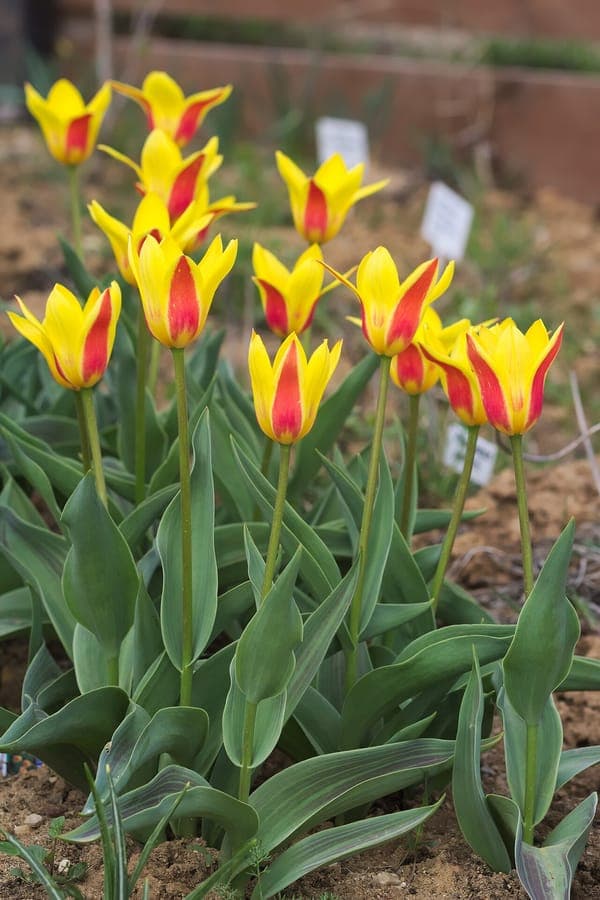
Retired electrician / CC0, via Wikimedia Commons
Water-lily tulip: complete guide
Tulipa kaufmanniana
Want to see Water-lily tulip: complete guide in your garden?
1 minute, no credit card
Overview
Tulipa kaufmanniana, commonly known as the Water-lily tulip, is one of the most eye-catching early spring bloomers you can grow. Native to the mountainous regions of Central Asia-Kazakhstan, Kyrgyzstan, Tajikistan, and Uzbekistan-this species thrives in environments with cold winters and hot, dry summers. That makes it perfectly suited to many temperate gardens across USDA hardiness zones 3 to 8. Standing between 15 and 25 cm tall, it's an excellent choice for the front of borders, rock gardens, or even naturalised in grass.
On gardenworld.app, you can design a planting scheme that highlights the charm of Water-lily tulips, ensuring they're placed where their unique bloom can shine. Unlike many hybrid tulips, this species often produces more than one flower per bulb, especially when grown in ideal conditions. It's also known for naturalising well, meaning it can return and spread gently over the years.
Appearance & bloom cycle
Water-lily tulips bloom in early spring, typically from late March to mid-April, depending on your location. When the sun comes out, the flowers open wide into a star-like shape, resembling a water lily-hence the name. The petals are often red, pink, or yellow, frequently with a contrasting white or pale base, creating a striking two-tone effect. As the light hits them, the blooms seem to glow.
The foliage is equally distinctive: broad, grey-green leaves with attractive purple or brown mottling. These appear early and add visual interest even before flowering. After blooming, the foliage gradually yellows and dies back by late May or early June. Never cut it down too early-wait at least six weeks after bloom to allow the bulb to store energy for next year.
Ideal location
Choose a spot with full sun to light shade. These tulips need at least 6 hours of direct sunlight daily for strong stems and good flowering. Too much shade leads to floppy growth and fewer blooms. Plant them in groups of 10 to 25 bulbs for a natural, drift-like effect.
They work beautifully in rock gardens, under deciduous trees (before the canopy fills in), or dotted across a lawn. Avoid areas with heavy, waterlogged soil or permanent shade. On gardenworld.app, you can simulate sun patterns in your garden to find the best planting spots for maximum impact.
Free design
Want to see Water-lily tulip: complete guide in your garden? Make a free design now.
Soil requirements
Tulipa kaufmanniana isn't fussy but prefers well-drained, sandy to loamy soil. A pH between 6.0 and 7.5 is ideal. Heavy clay soils should be amended with grit or sharp sand to improve drainage. If your soil retains too much moisture, consider raised beds or containers.
No fertiliser is needed at planting time. Excess nitrogen promotes leafy growth at the expense of flowers. If replanting in the same area, refresh the soil with compost or replace it entirely to prevent nutrient depletion.
Watering
After planting in October or November, water lightly if the weather is dry. Once established, these tulips rely on winter and spring rainfall. During the growing season (February to April), supplemental watering is rarely needed unless there's a prolonged dry spell.
Avoid watering during summer dormancy (May to September). Wet bulbs in warm, moist soil are prone to rot. If growing in containers, store them in a dry, shaded spot over summer.
Pruning
No pruning is required. After flowering, remove the seed heads by hand to prevent energy loss, but leave the foliage intact. Only cut back the leaves once they've turned completely yellow, usually by late May.
Never tie or braid the leaves-the more surface area exposed to sunlight, the better the bulb recharge.
Maintenance calendar
- October–November: Plant bulbs 10–15 cm deep, spaced 8–10 cm apart
- February: Check for rodent or slug damage
- March–April: Peak bloom; enjoy the display
- May–June: Foliage dies back; do not cut early
- July–September: Dormant period; bulbs can remain in ground or be lifted in wet soils
Replant every 3–4 years if flowering declines. Buy fresh, firm bulbs from reputable garden centres in autumn.
Winter hardiness
Fully hardy in USDA zones 3–8. It tolerates temperatures down to -30°C. No mulch is needed, though a light layer of sand or dry leaves can help in excessively wet winters by improving drainage.
Companion plants
Pair with early crocus, snowdrops (Galanthus), or hellebores for a layered spring display. Works well with creeping thyme (Thymus serpyllum) or ajuga in borders. Avoid tall perennials that might shade or smother the tulips before they finish flowering.
Closing
Tulipa kaufmanniana is a low-maintenance, high-reward bulb that brings early colour and elegance to the garden. Its wide-open blooms and mottled foliage make it stand out from more common tulip varieties. Plant in bold groups for best effect, and let the foliage die back naturally. It's drought-tolerant once established and ideal for naturalising. With proper care, it can return for years, especially in well-drained soil. For planting inspiration and garden layouts, visit gardenworld.app.
Want to see Water-lily tulip: complete guide in your garden? Make a free design now.
Upload a photo, pick a style, and get a photorealistic design with plant list in under a minute.
No credit card required


Similar plants
Reverchon's gagea: complete guide
Gagea reverchonii
Full guide to Gagea reverchonii, Reverchon's gagea: rare Pyrenean bulb with bright yellow spring flowers, soil needs and companion planting.
Leafy gagea: complete guide
Gagea foliosa
Gagea foliosa is a rare Mediterranean bulb with bright yellow star-shaped flowers blooming February to March in well-drained rocky settings.
Tubular gagea: complete guide
Gagea fragifera
Gagea fragifera is a mountain bulb with golden-yellow star flowers blooming May to July on subalpine slopes from Europe to the Himalaya.