
Tony Rebelo / CC BY-SA 4.0, via Wikimedia Commons
Tropaeolum peregrinum: complete guide
Tropaeolum peregrinum
Want to see Tropaeolum peregrinum: complete guide in your garden?
1 minute, no credit card
Canary-Creeper: An Exotic Climbing Vine for Warm Gardens
Overview The Canary-creeper (Tropaeolum peregrinum), commonly known as Canarybird-flower or Canarybird-vine, is a captivating annual climbing plant native to the mountainous regions of Peru and Ecuador. Named poetically for its distinctive yellow flowers that resemble tiny yellow birds in flight, this plant offers gardeners a unique combination of vigorous growth and botanical elegance. It's an excellent choice for those seeking a fast-growing, visually striking climber.
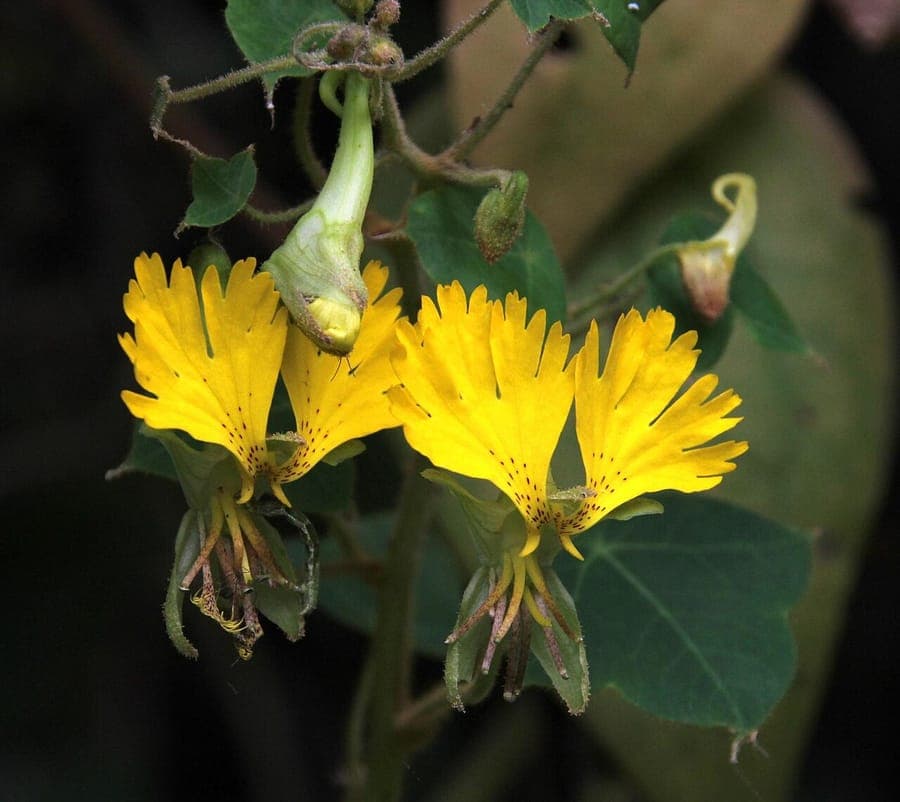
Appearance and Bloom The Canary-creeper is a delicate, slender climber capable of reaching two to three meters in a single season. The plant features beautifully fingered, deep green foliage that provides an elegant backdrop to its vibrant yellow flowers. The flowers are truly spectacular: uniquely shaped with a characteristic pointed spur that genuinely resembles a small yellow canary. Blooming from summer through autumn, the plant continuously produces fresh flowers as long as temperatures remain warm.
Ideal Location The Canary-creeper thrives in warm, sunny locations receiving at least six hours of direct sunlight daily. A south- or west-facing wall, pergola, or trellis is ideal. This is not a hardy plant in temperate climates and is best grown as an annual or moved indoors during winter. In Mediterranean climates and full sun, the plant blooms prolifically.
Soil Use loose, well-draining potting soil or garden soil that is not excessively nitrogen-rich. Heavy, water-retentive soil produces more foliage than flowers. A slightly acidic to neutral pH is ideal. For container cultivation, a mix of garden soil, compost, and sand works well. Good drainage is essential to prevent root rot.
Watering Water regularly, especially during dry periods and hot summers. The plant should never completely dry out, but equally should not remain waterlogged. In containers, daily watering may be necessary during very hot weather. Water in early morning or evening to minimize evaporation. During blooming, consistent moisture is important for optimal flowering.
Pruning Light pruning at the season's beginning encourages bushier growth and more flowers. Pinch the shoot tips when the plant reaches approximately fifteen centimeters. During the growing season, remove spent flowers and damaged growth. The plant does not require heavy pruning.
Maintenance Calendar May to June: Place outdoors in warm location, water regularly. July to September: Provide regular feeding (low nitrogen), water, and remove spent flowers. October: Reduce watering as temperatures drop. November: Clear stakes and remove spent material. December to April: Dormancy, plan next season.
Winter Hardiness The Canary-creeper is not winter-hardy and can only overwinter outdoors in Mediterranean climates. In northern regions, treat as an annual, resowing each season. Seeds can be collected for subsequent years, or cuttings can be overwintered indoors.
Support This climber winds around stakes, trellises, or frames. Soft ties help secure the plant. For container cultivation, a hanging system allows graceful downward growth. A well-constructed support encourages natural growth patterns.
Companion Plants The yellow flowers combine beautifully with blue or purple companions such as petunias, blue morning glories, or red-and-white geraniums. In traditional gardens, pair with clematis or jasmine. For cottage effects, combine with other summer bloomers.
Closing Thoughts The Canary-creeper is a wonderful plant for those seeking to experiment with something special. At gardenworld.app, integrate this plant into your garden design as a summer accent. With basic care and adequate warmth, you'll enjoy it throughout the growing season. This isn't a plant for casual gardeners but for enthusiasts ready to invest effort. Start your collection today!
Available at major garden centres. Find more design inspiration at gardenworld.app.
Want to see Tropaeolum peregrinum: complete guide in your garden? Make a free design now.
Upload a photo, pick a style, and get a photorealistic design with plant list in under a minute.
No credit card required


Similar plants
Tropaeolum tuberosum: complete guide
Tropaeolum tuberosum
Tropaeolum tuberosum, known as Mashua, is a traditional Andean food crop with edible tubers and beautiful red flowers. Learn how to grow this remarkable plant for food and ornament.
Dwarf nasturtium: complete guide
Tropaeolum minus
Dwarf nasturtium is a compact, flower-rich plant from South America with red, orange and yellow blooms. Perfect for baskets, pots and borders. Very easy to grow.
Garden nasturtium: complete guide
Tropaeolum majus
Discover the colorful world of garden nasturtiums. This tropical flower is easy to grow and full of edible blooms. Complete cultivation guide.