
Hans Hillewaert / CC BY-SA 3.0, via Wikimedia Commons
Bladder vetch: complete guide
Tripodion tetraphyllum
Want to see Bladder vetch: complete guide in your garden?
1 minute, no credit card
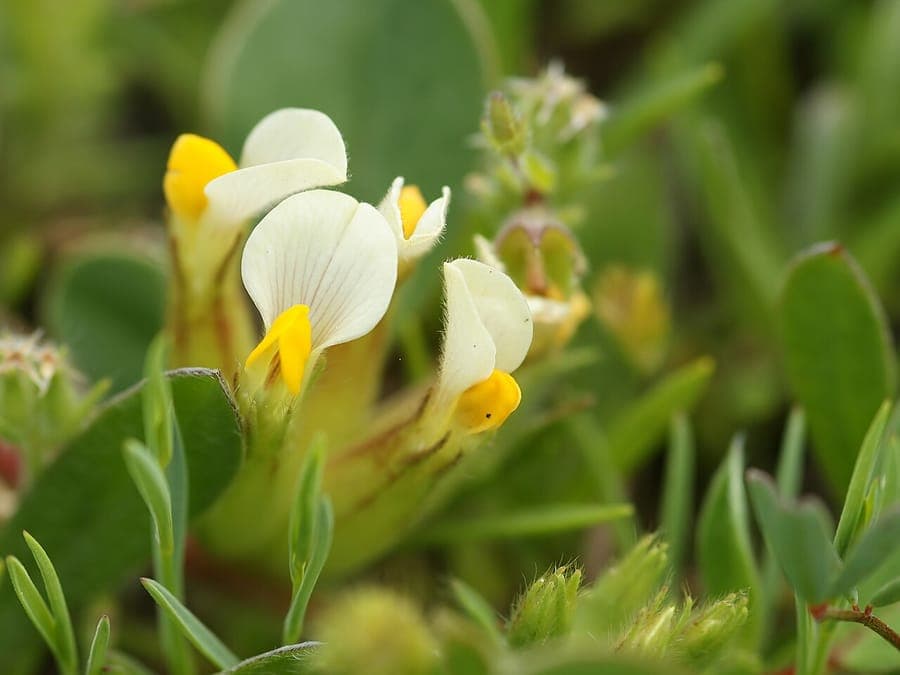
Tripodion tetraphyllum, commonly called Bladder Vetch or Annual Kidney Vetch, is a compact annual legume prized for its distinctive inflated seed pods that develop after flowering. Native to the Mediterranean basin from North Africa through southern Spain and Italy, this plant specializes in well-drained soils with alkaline pH. Reaching only 20-40 cm tall, it forms a bushy mound of finely divided four-leaflet foliage (the species name tetraphyllum refers to this). Bright yellow flowers cluster densely in flower heads appearing from April through July, making this an excellent choice for spring borders and rock gardens. What sets Tripodion tetraphyllum apart is its remarkable inflated peapod-like fruit, a visual feature that gardeners can observe developing from May onward. This structural detail adds ornamental value beyond the flowering season.
The blooming period from April to July provides continuous yellow color that contrasts beautifully with the silvery-gray foliage. These flowers are highly attractive to bumblebees and wild bees, supporting early-season pollinator populations. In Mediterranean gardens, Tripodion tetraphyllum naturally associates with other drought-tolerant species like lavender and rockrose, creating cohesive plant communities. The deep root system confers excellent drought tolerance once established, and the plant declines in waterlogged conditions.
As a member of the Fabaceae family, Tripodion tetraphyllum fixes atmospheric nitrogen, enriching soil fertility. This makes it useful in regenerating depleted garden soils. Plant in full sun on well-draining ground enriched with sand or grit. A pH between 7.5 and 8.0 is optimal; add lime if your soil is acidic. In cooler climates, Tripodion tetraphyllum thrives in fully open positions where water drainage is rapid.
Watering is minimal after establishment. Once rooted, supplemental irrigation is unnecessary except during exceptional drought. Direct sowing in October or November is most effective, as winter chilling breaks dormancy. In spring, seedlings grow rapidly and flower. Thin seedlings to approximately 15 cm spacing.
Maintenance is minimal. Deadhead faded flowers to encourage continued blooming, though many gardeners prefer allowing the inflated fruits to mature for their ornamental value. These seeds can be harvested in autumn for sowing the following year. Pests and diseases are rare, and the plant performs well alongside other drought-tolerant companions.
Winter hardiness: Tripodion tetraphyllum is an annual and does not survive winter in cool climates.
In temperate zones, Tripodion tetraphyllum performs best in containers or exceptionally well-drained garden borders. Consider it a seasonal planting rather than permanent garden furniture. It nonetheless delivers exceptional color and form from minimal investment.
Availability: Source seed from specialized seed merchants. This plant is not mainstream, but growing in popularity among Mediterranean-garden enthusiasts. Check online seed suppliers and botanical garden plant sales.
GardenWorld Tip: Combine Tripodion tetraphyllum with Verbena simplex and other drought-specialists for a cohesive Mediterranean border requiring minimal maintenance. The contrasting flower and fruit forms maintain visual interest throughout the growing cycle.
Want to see Bladder vetch: complete guide in your garden? Make a free design now.
Upload a photo, pick a style, and get a photorealistic design with plant list in under a minute.
No credit card required


Similar plants
Tall Silky Lupine: complete guide
Lupinus elatus
Tall silky lupine is a fast-growing Californian perennial with silvery foliage and blue-purple flower spikes, ideal for a prairie-style garden.
Garfield Lupine: complete guide
Lupinus garfieldensis
The Garfield lupine is a rare, fast-growing American perennial for alkaline, dry grassland gardens, with striking blue flower spikes.
Lupinus elegans: complete guide
Lupinus elegans
Lupinus elegans, the elegant lupine, is a spectacular blooming plant from Mexico with blue flower spikes. Care, cultivation and garden use.