
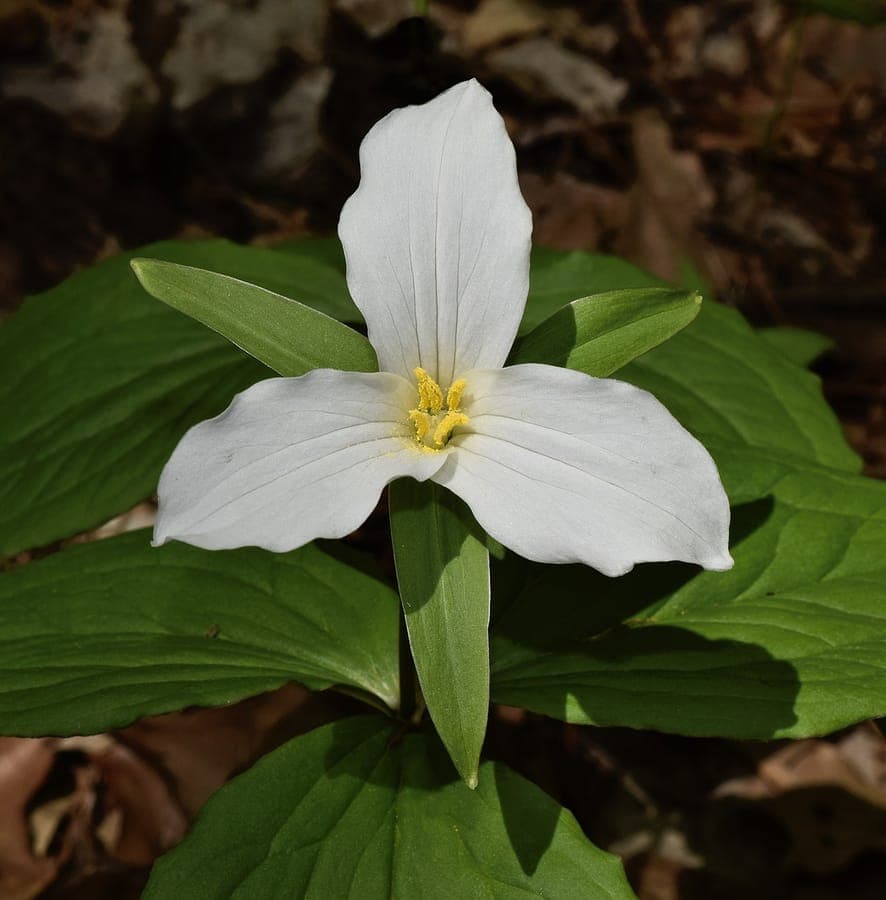
СССР / CC BY-SA 2.5 ca, via Wikimedia Commons
Trillium grandiflorum: complete guide
Trillium grandiflorum
Want to see Trillium grandiflorum: complete guide in your garden?
1 minute, no credit card
Overview
Trillium grandiflorum, commonly known as Great White Trillium or Snow Trillium, is an elegant woodland flower from eastern North America. It is prized for striking three-petaled flowers in pure white that emerge in spring. This classic native woodland beauty prefers temperate forest environments.
In its natural habitat, Trillium grandiflorum grows on forest floors of deciduous woodlands where it nestles under protective larger trees. It is part of rich woodland ecosystems and blooms among the first spring wildflowers.
Appearance and bloom
Trillium grandiflorum grows from underground rhizomes to approximately 30 to 45 centimeters height. Above ground, an upright stem bears three leaves in a whorled configuration. These leaves are elliptical-oblong and structurally important for photosynthesis.
The flower is spectacular: three pure white petals form a regular triangular structure. The bloom is large, typically 5 to 8 centimeters across. Inside are six stamens and one pistil. Flowering occurs from April through May, depending on location and climate.
Following bloom, seed capsules develop. The plant withdraws after flowering and disappears underground until the following year.
Ideal location
Trillium grandiflorum grows best in shade to light-shaded environments. This reflects its natural forest-floor habitat. Full-sun locations are not ideal, especially in hot climates.
The plant appreciates moist air environments but not stagnant water. Light shade from shrubs or trees is perfect. In more northern regions, somewhat more sun can be tolerated.
Protected woodland edges or shaded garden corners are ideal locations. Avoid dry, sun-scorched walls.
Soil
Trillium grandiflorum thrives in humus-rich, nutrient-rich woodland soil. Incorporate generous compost material into planting hole. Add leaf mold or decomposed organic matter for structure.
Soil must drain well yet retain adequate moisture. Add perlite if you have heavy clay. pH can range from acidic to neutral; the plant favors slightly acidic conditions.
Initial digging and amendment are important. This is a plant that rewards soil investment.
Free design
Want to see Trillium grandiflorum: complete guide in your garden? Make a free design now.
Watering
Trillium grandiflorum enjoys consistent moisture, especially during growth and bloom. Water regularly in spring. After bloom and withdrawal, moisture becomes less critical.
Keep soil moist but not waterlogged. Mulch helps maintain stable moisture and mimics woodland-floor conditions.
Once established, consistent moisture becomes less critical, especially in temperate climates with regular precipitation.
Pruning
Trillium grandiflorum requires virtually no pruning. Leave flowers and foliage intact until they naturally die back.
Remove only dead or decaying leaf material. The plant prepares its withdrawal and this is natural.
Translocate seed heads if you wish to prevent self-sowing, but allow them for natural distribution.
Maintenance calendar
Winter (December-February): Dormancy. Nothing needed. Plant is underground.
Spring (March-May): Growth and blooming. Water regularly. Plant will emerge, grow, and flower. Enjoy the spectacular display. Fertilization not needed.
Summer (June-August): Plant gradually withdraws. Reduce watering. Foliage disappears completely by late July. Patience needed.
Fall (September-November): Dormancy begins. Plant prepares for winter. No action needed.
Winter hardiness
Trillium grandiflorum is fully winter hardy in all temperate climates. It actually requires cold, with snow or frost periods. This is critical for blooming.
In subtropical zones without cold winters, it will likely struggle.
Companion plants
Trillium grandiflorum thrives alongside other woodland plants. Consider Bloodroot, Mertensia, Hellebores, and native woodland structure.
Shredded leaves from birch or beech provide helpful humus addition.
Other Trillium species can grow in the same garden.
Conclusion
Trillium grandiflorum is a classic native woodland beauty offering much to temperate gardens. The pure white spring blooms are unforgettable and the plant demands minimal care. This is a plant for patience and appreciation of natural rhythms. For woodlands, shaded corners, or naturalistic gardens, it is an essential addition. Available through native plant nurseries in North American regions.
Visit gardenworld.app for more inspiration on woodland plants and shade garden design.
Want to see Trillium grandiflorum: complete guide in your garden? Make a free design now.
Upload a photo, pick a style, and get a photorealistic design with plant list in under a minute.
No credit card required


Similar plants
California false hellebore (Veratrum californicum): complete guide
Veratrum californicum
Full guide to Veratrum californicum, the imposing native perennial from western North America. Toxicity warning, site, soil, watering and bold companion plant ideas.
Beargrass: complete guide to growing Xerophyllum tenax
Xerophyllum tenax
Xerophyllum tenax is a dramatic perennial with fine grass-like leaves and tall white flower plumes, ideal for dry, sunny gardens and naturalistic border designs.
Anticlea elegans: complete guide
Anticlea elegans
Anticlea elegans, commonly called white camas or mountain death camas, is an elegant alpine plant with delicate white-yellow flowers and distinctive blue-tinged foliage. Perfect for rock and alpine gardens.