
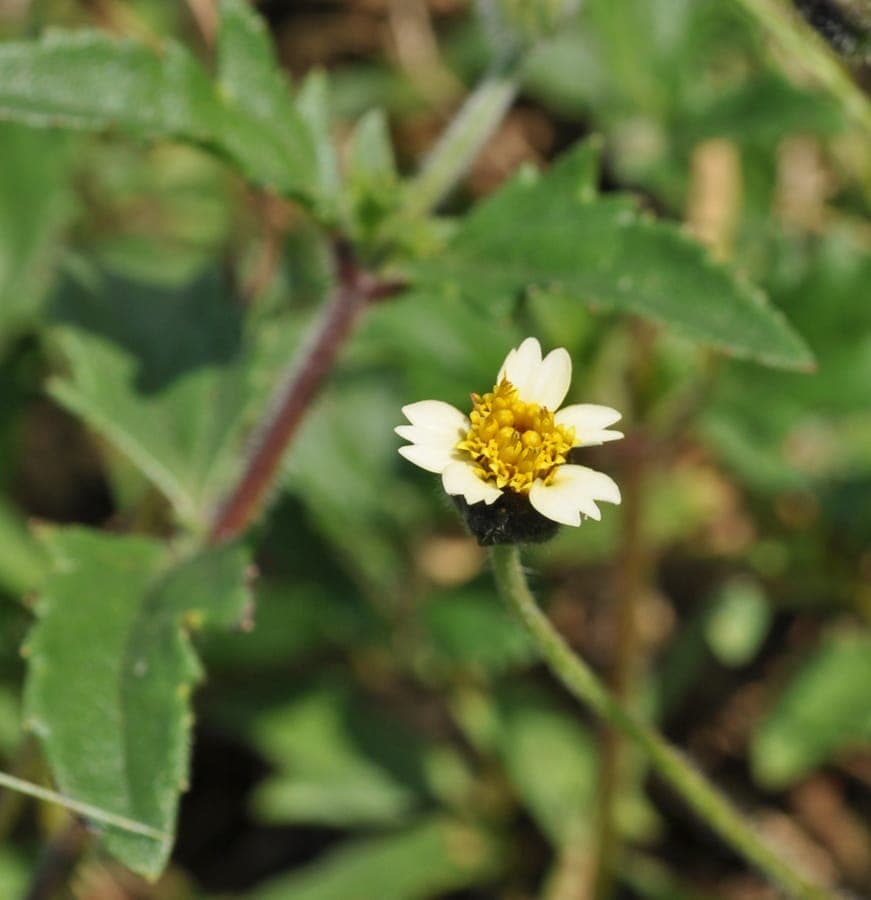
Wibowo Djatmiko (Wie146) / CC BY-SA 3.0, via Wikimedia Commons
Tridax procumbens: complete guide
Tridax procumbens
Want to see Tridax procumbens: complete guide in your garden?
1 minute, no credit card
Overview
Tridax procumbens, commonly known as Coatbuttons, Tridax Daisy, or Mexican Daisy, is a robust groundcover from Mexico and Tropical America. The plant is recognized for its abundant small bright yellow flowers with white ray petals. It is highly adaptable and thrives in warm, dry climates.
In its natural habitat, Tridax procumbens grows across tropical and subtropical regions, adapting to diverse soil types and moisture conditions. Its ability to thrive under challenging circumstances makes it popular for informal gardens and warm zones.
Appearance and bloom
Tridax procumbens is a low-growing, creeping plant that spreads via runners. Leaves are small, lance-shaped, and slightly rough textured. The plant typically reaches 30 to 60 centimeters height depending on conditions.
Flowers are small, about 1 to 2 centimeters across, consisting of bright yellow or orange disk florets surrounded by white ray florets. They appear abundantly during warm season. The flowers attract numerous bees and other pollinating insects.
Following bloom, small hairy seeds develop and disperse easily. This can lead to self-seeding in favorable conditions.
Ideal location
Tridax procumbens performs best in full sun. Plant it where it receives at least six to eight hours of direct sunlight daily. The plant even tolerates very hot, sunny conditions where many other plants wilt.
While growth is possible in light shade, flowering period shortens and flower production decreases. The plant becomes stronger and more floriferous in full sun.
Tridax procumbens is extremely heat and drought tolerant. It thrives in climates with high temperatures and low rainfall, making it ideal for drier regions.
Soil
Tridax procumbens grows in virtually any soil type. It is not fussy and performs even in poor, dry soils. No special preparation is necessary.
Drainage is important however. In very wet areas, the plant may develop root rot. In areas with drainage concerns, mixing sand or perlite through soil improves drainage.
PH can range from moderately acid to neutral to slightly alkaline. The plant is flexible and adapts to local soil conditions.
Free design
Want to see Tridax procumbens: complete guide in your garden? Make a free design now.
Watering
Once established, Tridax procumbens is extremely drought tolerant. This is actually a major advantage in warm climates. Water only until the plant is established (first few weeks).
In fully established conditions, you rarely need to water the plant. Even during dry periods it continues to grow and flower vigorously.
In extremely arid conditions or sandy soils, occasional watering may promote growth, but it is not necessary.
Pruning
Tridax procumbens requires minimal pruning. The plant grows low and compact and needs little shaping.
Remove dead or damaged foliage. Cutting back overgrown stems helps maintain compact form if desired.
Leave seed heads for self-seeding or remove them to prevent excessive self-sowing. The choice depends on your preference.
Maintenance calendar
Spring and summer: Active growth and flowering season. Water regularly until plant is established. Possible once-monthly fertilization with balanced formula if desired, though not necessary.
Fall: Flowering begins to diminish. Reduce watering. Plant begins to die back in winter.
Winter: Plant will die in frost areas. In tropical zones, continues growing year-round.
Before next spring: Remove dead plant material. Harvest seed for next season.
Winter hardiness
Tridax procumbens is not frost hardy in temperate zones. Plant dies at light frost.
In subtropical and tropical regions it survives year-round easily. In Mediterranean climates it may survive mild winters.
Most gardeners treat it as an annual in cold climates.
Companion plants
Tridax procumbens pairs well with other drought-tolerant plants. Consider Portulaca, Zinnias, Sunflowers, and other heat-loving species.
In subtropical or tropical gardens it combines well with native grasses and other groundcovers.
In container plantings or raised beds it grows beautifully cascading over edges.
Conclusion
Tridax procumbens is a strong, reliable groundcover for warm and dry climates. With minimal care and no irrigation once established, it flowers continuously during warm season. The yellow flowers bring color to drab corners and attract pollinators. For Mediterranean gardens, rooftops, or dry slopes this small-scale groundcover offers valuable solutions. Available at garden centers everywhere.
Visit gardenworld.app for more inspiration on drought-tolerant plants and garden design.
Want to see Tridax procumbens: complete guide in your garden? Make a free design now.
Upload a photo, pick a style, and get a photorealistic design with plant list in under a minute.
No credit card required


Similar plants
Calendula stellata: complete guide
Calendula stellata
Complete guide to Calendula stellata, the star-flowered marigold from Sicily: location, soil, watering and companion planting tips.
Korean chrysanthemum: complete guide
Chrysanthemum x rubellum
Chrysanthemum x rubellum is a hardy autumn perennial with single pink to copper flowers from August to November. Care and combinations.
Helianthus divaricatus: complete guide
Helianthus divaricatus
Helianthus divaricatus is a North American woodland sunflower with yellow summer blooms, ideal for naturalistic borders and shady edges.