
Graham Racher / CC BY-SA 2.0, via Wikimedia Commons
Black-pigweed (Trianthema portulacastrum): complete guide
Trianthema portulacastrum
Want to see Black-pigweed (Trianthema portulacastrum): complete guide in your garden?
1 minute, no credit card
Overview
Trianthema portulacastrum, known as black-pigweed or water hyssop, is an annual or short-lived herbaceous plant native to tropics and subtropics. This compact plant grows as a low mat and is extremely drought-tolerant, making it ideal for xeriscaping and dry gardens. The plant has fleshy, opposite leaves and small pink to purple flowers in summer.
The plant thrives in warm climates and can flourish in poor soil with minimal watering. Despite its modest appearance, it is a resilient plant offering great value in water-limited gardens.
Appearance and Bloom
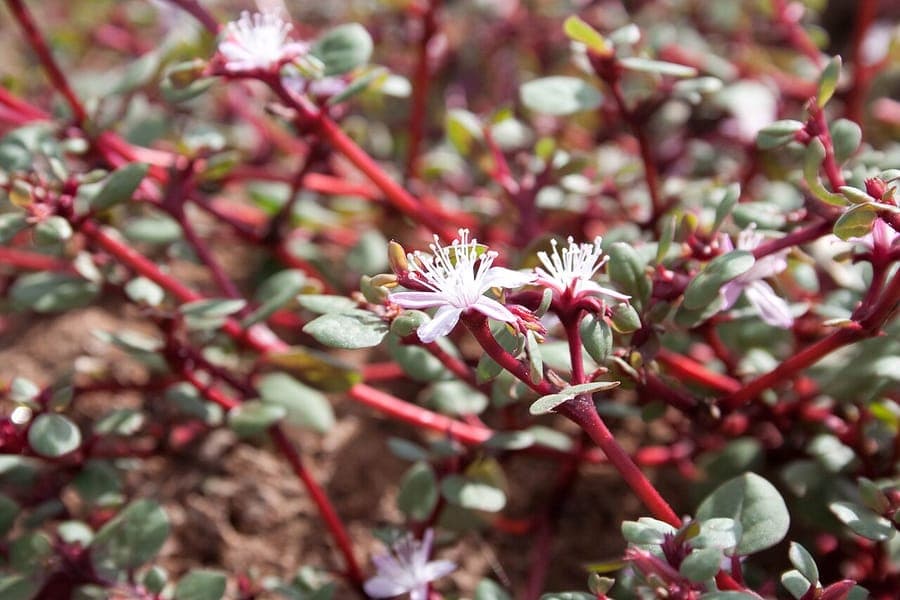
Trianthema portulacastrum is a low-growing plant with fleshy, small leaves that may become tinged red or purple in full sun. The leaves are opposite and have a smooth, glossy appearance. The plant forms a low mat or carpet on the ground.
The flowers are small, approximately 5-8 mm, and pink to lilac, appearing in small clusters. Flowers appear continuously from summer to fall, especially in warm weather. The plant produces small seed capsules after flowering.
Ideal Location
Trianthema portulacastrum thrives most in full sun, although it can also grow in partial shade. The plant loves warmth and is ideal for hot, dry places where other plants struggle. Plant it in dry gardens, on slopes, between pavers, or as groundcover under trees.
The plant is perfect for containers, hanging baskets, or along path edges where it can hang elegantly.
Soil
Trianthema portulacastrum grows in almost any soil but prefers well-drained, sandy, or loamy soil. The plant can even grow in poor, nutrient-starved soil. Add some compost when planting, although this is not necessary. The plant is very salt-tolerant and even grows in coastal areas.
Avoid heavy clay soil without improvement, as this can cause waterlogging.
Free design
Want to see Black-pigweed (Trianthema portulacastrum): complete guide in your garden? Make a free design now.
Watering
Trianthema portulacastrum is very drought-tolerant and requires minimal water. Once established, the plant can grow long without water. Water sparingly, especially in cooler months. During the growing period (summer-fall), you can water occasionally, but it is not essential.
Avoid overwatering, as this can cause root rot. The plant thrives best under dry conditions.
Pruning
Trianthema portulacastrum requires minimal pruning. You can trim the plant back if it becomes too long, although it naturally hangs and spreads. In very cold climates, the plant can be cut back in late winter to stimulate growth.
The plant does not require heavy pruning.
Maintenance Calendar
- Spring: Sow seeds directly or plant seedlings
- Summer: Enjoy flowers, water very sparingly
- Fall: Wait for seed setting, loves warmth
- Winter: Plant overwinters in warm zones, dies back in cold
Winter Hardiness
Trianthema portulacastrum is not winter-hardy in colder climates and is usually grown as an annual plant. The plant grows best in USDA zones 10-12 year-round. In temperate climates, it can be grown in summer and dies back at first frost.
In containers, it can be brought indoors to overwinter, although it grows less well in winter.
Companion Plants
Trianthema portulacastrum works well as groundcover with other drought-tolerant plants such as portulaca, echeveria, and sedum. In dry gardens, it can be combined with succulents and xerophyllous shrubs.
The plant is bird-friendly and attracts bees and other pollinators.
Closing
Trianthema portulacastrum is an excellent choice for those seeking a resilient, water-saving groundcover. This small plant offers years of low-maintenance growth in the toughest conditions. With minimal care, you can enjoy this modest plant for years in dry, hot gardens.
Perfect for gardenworld.app users designing sustainably and saving water. Discover more xeriscape inspiration on gardenworld.app!
Want to see Black-pigweed (Trianthema portulacastrum): complete guide in your garden? Make a free design now.
Upload a photo, pick a style, and get a photorealistic design with plant list in under a minute.
No credit card required


Similar plants
Carpobrotus glaucescens: complete guide
Carpobrotus glaucescens
Pigface or angular sea-fig is a succulent from Australia. Learn cultivation, care, and use for coastal and container gardens.
Delosperma nubigenum: complete guide
Delosperma nubigenum
Everything about Delosperma nubigenum: a prolific-flowering succulent from South Africa with orange blooms. Growing tips, care and design ideas for your garden.
Crocea Iceplant: complete guide
Malephora crocea
Discover Crocea Iceplant (Malephora crocea), a South African succulent with coppery-orange flowers. Perfect for dry, sunny gardens and rock gardens.