
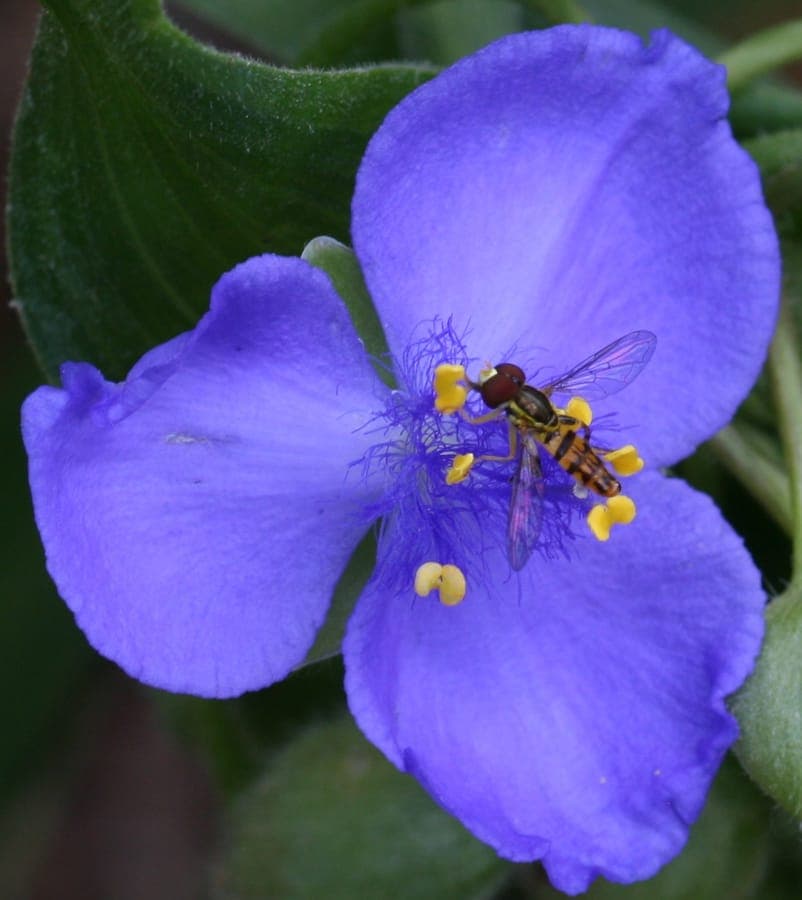
Daniel J. Layton / CC BY-SA 3.0, via Wikimedia Commons
Tradescantia virginiana: complete guide
Tradescantia virginiana
Want to see Tradescantia virginiana: complete guide in your garden?
1 minute, no credit card
Tradescantia virginiana: Complete Guide
Overview
Tradescantia virginiana, commonly called Virginia spiderwort or widow's tears, is a hardy North American perennial renowned for its distinctive three-petaled flowers. This versatile plant thrives in borders, meadow gardens, and naturalized plantings. With continuous blooming from early summer through fall and reliable hardiness, it deserves a place in every gardener's landscape.
Appearance and Bloom
Spiderwort forms dense clumps of narrow, grass-like foliage reaching 18 to 24 inches tall. Flowers emerge in terminal clusters and feature three delicate petals in shades of white, lavender, pink, or deep blue depending on cultivar. While individual blooms last only one day, continuous flower production throughout the growing season provides extended color. Bloom period extends from June through September.
Ideal Location
Plant in full sun for optimal flowering, though plants tolerate partial shade. Six or more hours of direct sunlight daily ensures vigorous growth and abundant blooms. Position where morning sun reaches foliage to minimize fungal issues from overnight moisture.
Soil
Tradescantia virginiana is adaptable to most soil types but prefers well-draining, moderately moist soil enriched with organic matter. Amend with compost or well-rotted manure at planting time. The plant tolerates both acidic and neutral pH levels from 4.0 to 8.0.
Watering
Water regularly to maintain consistently moist soil, especially during establishment and dry spells. Once established, plants tolerate moderate drought but bloom more prolifically with regular moisture. Deep watering one to two times weekly is typical. Mulch around plants to conserve soil moisture.
Free design
Want to see Tradescantia virginiana: complete guide in your garden? Make a free design now.
Pruning
Remove spent flower clusters and stems to encourage repeat blooming. Cut back hard after initial flush to promote bushier growth and potential late-season flowers. In late fall, cut entire plant back to ground level. This plant requires minimal pruning compared to other perennials.
Maintenance Calendar
April-May: Divide established clumps and plant new specimens. June-August: Water regularly, divide congested plants, deadhead spent flowers. September-October: Cut back after bloom ceases, collect seed if desired. November-March: Plant lies dormant, minimal care required.
Winter Hardiness
Tradescantia virginiana is fully hardy throughout USDA zones 4 to 9 (minus 30 degrees Fahrenheit to 20 degrees Fahrenheit). Plants naturally die back to the soil line in winter and regrow vigorously each spring. This deciduous habit makes the plant ideal for cold climates.
Companion Plants
Pair spiderwort with tall grasses, Rudbeckia, Coreopsis, and Phlox for layered borders. The delicate foliage and flower structure contrast beautifully with bold daisy-form flowers. Plant in substantial groups for maximum visual impact.
Closing
Tradescantia virginiana is a reliable, low-maintenance perennial that returns year after year with minimal intervention. Its hardiness, long bloom period, and adaptability make it indispensable in naturalistic landscapes. Find quality plants at your local garden center. For more landscape design inspiration, visit gardenworld.app/en.
Want to see Tradescantia virginiana: complete guide in your garden? Make a free design now.
Upload a photo, pick a style, and get a photorealistic design with plant list in under a minute.
No credit card required


Similar plants
Virginia dayflower: complete guide
Commelina virginica
Full guide to Virginia dayflower (Commelina virginica): ideal location, soil, watering, pruning, winter care and companion plants.
Commelina diffusa: complete guide
Commelina diffusa Burm.f.
Commelina diffusa, the climbing dayflower, is an elegant perennial with soft blue flowers that bloom for just a day. This tropical grower thrives in shaded locations and is ideal for hanging baskets, pergolas, and moist garden corners.
Callisia repens: complete guide
Callisia repens
Creeping Inchplant is an elegant trailing plant with delicate foliage, perfect for hanging baskets and groundcover. Learn how to cultivate this popular houseplant successfully.