
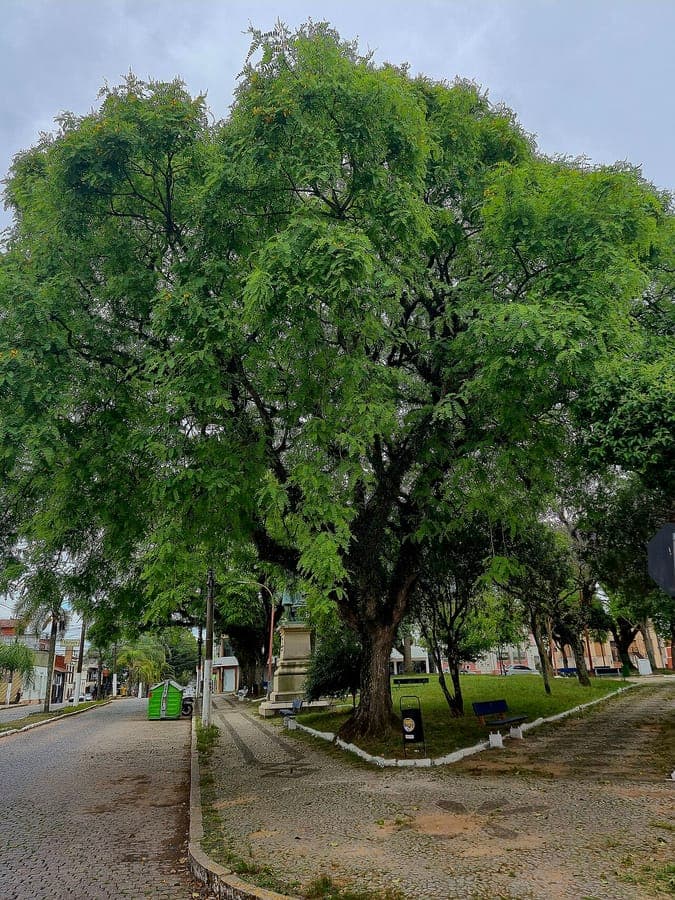
Bageense / CC BY-SA 4.0, via Wikimedia Commons
Tipuana tipu: complete guide
Tipuana tipu
Want to see Tipuana tipu: complete guide in your garden?
1 minute, no credit card
Overview
The Tipu tree, botanically Tipuana tipu, is a spectacular ornamental tree from Bolivia and southern Brazil. This tree is renowned for its beautiful golden yellow flowers that appear in summer. Growing to a natural height of up to 25 meters with a broad, spreading crown, this tree makes a dramatic focal point in any garden. The tree belongs to the legume family and is considered heat-loving in most temperate climates.
Because of its exotic origin and limited frost hardiness, the Tipu tree is mainly cultivated in southern European regions and warm gardens. The tree combines aesthetic beauty with impressive resilience, making it attractive to those seeking something unique.
Appearance and bloom
The Tipu tree immediately captures attention with its feathery foliage that can reach 45 centimeters in length. These leaves consist of small, oval leaflets that dance gently in the breeze. The leaf color is bright green and turns golden-bronze tones in autumn.
The bloom is undoubtedly the highlight: golden yellow, softly fragrant flowers appear in dense clusters at branch tips. These flowers attract butterflies and bees, creating a true color spectacle. After flowering, flat brown seed pods develop that can grow up to 10 centimeters long.
The tree bark is gray and becomes rougher as the tree ages. This characteristic bark gives the tree a stately appearance.
Ideal location
The Tipu tree grows best in a warm, sunny location. At least six hours of direct sun daily is essential for optimal flowering. In warmer regions, you can plant the tree in partial shade, but this reduces blooming.
The tree should be protected from strong winds that can damage its branches. A south-facing position against a building or wall provides extra warmth and shelter.
Frost sensitivity is an important consideration. The Tipu tree tolerates temperatures down to around -5 degrees Celsius, but is not winter hardy in cold regions. In Northern Europe, this tree is better grown in containers that can be moved indoors when frost threatens.
Soil
The Tipu tree grows in virtually all soils but prefers well-draining mediums. The tree is drought-tolerant once established, thanks to deep roots that can access water far below the surface.
Heavy clay soils should be improved by incorporating sand and organic material when planting. A pH between 6.0 and 7.5 is ideal. The tree also tolerates slightly acidic soils.
In containers, use a quality potting mix that drains well. A blend of garden soil, sand and compost (1:1:1 ratio) works excellently.
Free design
Want to see Tipuana tipu: complete guide in your garden? Make a free design now.
Watering
Once established, the Tipu tree is drought-tolerant. Young trees should be watered regularly, especially during the first growing season. Water deeply but infrequently, as this encourages deep root development.
During summer dry periods, give the tree extra water. However, avoid keeping the soil constantly wet, as this promotes root rot. Check soil moisture by feeling the ground to about 10 centimeters depth.
In winter, as the tree goes dormant, it requires significantly less water. Reduce watering considerably.
Pruning
The Tipu tree requires minimal pruning. A natural form is usually preferable. Only damaged, diseased or crossing branches should be removed.
If you wish to shape the tree, do so after flowering in August-September. Then gradually remove some branches to let more light into the crown. It is better to prune small amounts regularly than to create large pruning wounds.
For container-grown trees, you can control size by regularly pinching back new growth.
Maintenance calendar
Start in spring with checks for new growth and feeding. A nitrogen-rich fertilizer in May helps stimulate growth. In summer, monitor moisture and enjoy the blooms. After flowering in September, prune if needed. In autumn and winter, minimal interventions are required, repair damage only.
Winter hardiness
The Tipu tree is half-hardy and tolerates short frosts, but prolonged freezing causes damage. In regions with temperatures regularly below -5 degrees Celsius, winter protection or container cultivation is better.
If growing the tree in containers, move to a cool greenhouse or protected location when frost threatens. Winter wrapping with blankets helps protect against sudden frosts.
Companion plants
The Tipu tree pairs beautifully with other heat-loving plants. Underplant with jasmine, cape myrtle or dwarf myrtle for a warm Mediterranean feel. Sunlovers like oleander, lantana and sage complement nicely.
Low-growing companions like lavender, santolina and helichrysum create nice color contrast and fill ground coverage.
Conclusion
The Tipu tree is an exceptional choice for anyone wanting something tropical and spectacular in their garden. The golden flowers, elegant foliage and impressive form make this tree truly special. With adequate warmth, drainage and basic care, this tree grows into a magnificent specimen. Despite its South American origin, any gardener with heat-loving interests can enjoy it. Visit local garden centers for saplings or young specimens.
On gardenworld.app, you can incorporate this tree into your garden design and see how it transforms your front yard. At gardenworld.app, gardeners can discover how such exotic elements give their gardens unique character.
Want to see Tipuana tipu: complete guide in your garden? Make a free design now.
Upload a photo, pick a style, and get a photorealistic design with plant list in under a minute.
No credit card required


Similar plants
Tall Silky Lupine: complete guide
Lupinus elatus
Tall silky lupine is a fast-growing Californian perennial with silvery foliage and blue-purple flower spikes, ideal for a prairie-style garden.
Garfield Lupine: complete guide
Lupinus garfieldensis
The Garfield lupine is a rare, fast-growing American perennial for alkaline, dry grassland gardens, with striking blue flower spikes.
Lupinus elegans: complete guide
Lupinus elegans
Lupinus elegans, the elegant lupine, is a spectacular blooming plant from Mexico with blue flower spikes. Care, cultivation and garden use.