
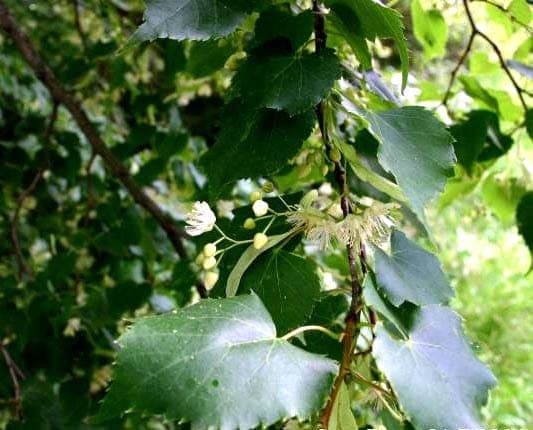
Wikimedia Commons / CC BY-SA 3.0, via Wikimedia Commons
Linden: complete guide
Tilia cordata
Want to see Linden: complete guide in your garden?
1 minute, no credit card
Overview
Tilia cordata, commonly known as the littleleaf linden or simply linden, is a stately deciduous tree that brings both elegance and function to any garden. Native across much of Europe, it's a long-lived species, often reaching 50 to 80 years, and sometimes even over a century under ideal conditions. While it starts off slow in its youth, it gradually develops a dense, oval to rounded crown that offers excellent shade. It's a tree you plant not just for yourself, but for the generations after. Whether you're designing a new garden or replacing an old specimen, the linden stands out for its resilience and beauty. On gardenworld.app, you can visualise how a mature linden will fit into your space before you buy.
Appearance & bloom cycle
Tilia cordata typically grows 15 to 22 meters tall with a spread of 8 to 12 meters. Its heart-shaped leaves are small, usually 4 to 8 cm across, with a pointed tip and finely toothed edges. They emerge bright green in spring, darken over summer, and turn a pale yellow in autumn before dropping. The real show begins in July when clusters of small, creamy-white, highly fragrant flowers dangle from slender stalks. These blossoms are a magnet for bees, producing the prized linden honey. After flowering, hard, nut-like fruits form and persist into early winter, providing food for birds and small mammals. The bark on young trees is smooth and grey-green, becoming deeply fissured with age.
Ideal location
This tree thrives in full sun to light shade - aim for a light score of 7 out of 10, meaning 5 to 6 hours of direct sunlight daily. It tolerates urban pollution well, making it a solid choice for city gardens or streetside planting. However, avoid cramped spaces; allow at least 4 meters between the trunk and any structures. Roots can spread widely and may interfere with underground utilities. For larger landscapes, plant in groups or as a focal point. Use gardenworld.app to map out spacing and future growth when planning your layout.
Soil requirements
Linden is adaptable but prefers deep, moist, well-drained loam with a pH between 4.8 and 7.2. It handles clay soils admirably, as long as they're not waterlogged. Sandy soils are acceptable if irrigated during dry spells. When planting, amend the hole with compost to boost organic content. Avoid highly alkaline or compacted soils. A layer of mulch (5–8 cm) around the base helps retain moisture and suppress weeds, but keep it a few inches from the trunk to prevent rot.
Free design
Want to see Linden: complete guide in your garden? Make a free design now.
Watering
Young lindens need consistent moisture for the first 2–3 years. Water deeply once or twice a week during dry periods, applying 10–15 liters per session. Use a soaker hose or watering spike to deliver water directly to the root zone. Mature trees are drought-tolerant once established but will benefit from supplemental watering during prolonged dry summers, especially in USDA zones 6 and 7. Signs of underwatering include early leaf drop and browning leaf margins.
Pruning
Pruning is minimal with Tilia cordata. Only remove dead, damaged, or crossing branches, and do so in late winter or early spring (February to March) before bud break. Avoid summer pruning to prevent excessive sap flow. If you're training a young tree, select a central leader and remove competing stems early. Keep lower branches up to 2.5 meters for a clean trunk if desired. Use sharp, sterilised tools to prevent disease transmission.
Maintenance calendar
- Jan: Inspect for winter damage; plan pruning
- Feb: Prune as needed; apply compost around base
- Mar: Final pruning; mulch newly planted trees
- Apr: Monitor bud swell; protect from late frosts if needed
- May: Water young trees in dry spells; check for aphids
- Jun: Prepare for bloom; avoid disturbing pollinators
- Jul: Enjoy flowering period; reduce foot traffic under canopy
- Aug: Water established trees in droughts; monitor for pests
- Sep: Stop fertilising; top up mulch layer
- Oct: Rake fallen leaves or mulch in place
- Nov: Protect young trunks from rodents with tree guards
- Dec: Minimal care; assess overall tree health
Winter hardiness
Tilia cordata is hardy in USDA zones 4 to 7, tolerating temperatures as low as -25°C. It handles cold winters with ease, though young trees may need protection from deer and rabbits that chew the bark. Use spiral guards or wire mesh up to 1.2 meters high. In colder zones, plant in sheltered spots to reduce wind scorch. Once established, it's highly resilient.
Companion plants
Under a mature linden, plant shade-tolerant species like hostas (Hosta spp.), lungwort (Pulmonaria officinalis), or barrenwort (Epimedium spp.). For partial shade, consider foxgloves (Digitalis purpurea) or wild geraniums (Geranium macrorrhizum). Avoid aggressive groundcovers like ivy that can climb and weaken the trunk. A naturalistic planting scheme complements the linden's graceful form.
Closing
The littleleaf linden is a timeless garden choice-graceful, hardy, and beneficial to wildlife. Its fragrant summer blooms and clean foliage make it a standout. Whether you're planting in a suburban backyard or a city park, it adapts well. For accurate placement, use gardenworld.app to simulate growth and canopy spread. In the UK and US, look for Tilia cordata at garden centres or online nurseries. Always check the root ball type-balled and burlapped or container-grown-and choose a specimen with a straight trunk and balanced branching.
Want to see Linden: complete guide in your garden? Make a free design now.
Upload a photo, pick a style, and get a photorealistic design with plant list in under a minute.
10,000+ gardens designed already
No credit card required


Similar plants
Crimean linden: complete guide
Tilia × euchlora
Crimean linden is an elegant, fast-growing shade tree ideal for large gardens. Discover cultivars, spacing, maintenance tips and winter hardiness.
California flannelbush: complete guide
Fremontodendron californicum
Everything about California flannelbush (Fremontodendron californicum): sunny placement, drainage, pruning and care for this spectacular yellow-flowering shrub.
Hairy rose mallow: complete guide
Hibiscus moscheutos subsp. lasiocarpos
Full growing guide for hairy rose mallow (Hibiscus moscheutos subsp. lasiocarpos): location, soil, watering, winter hardiness and garden design tips.