
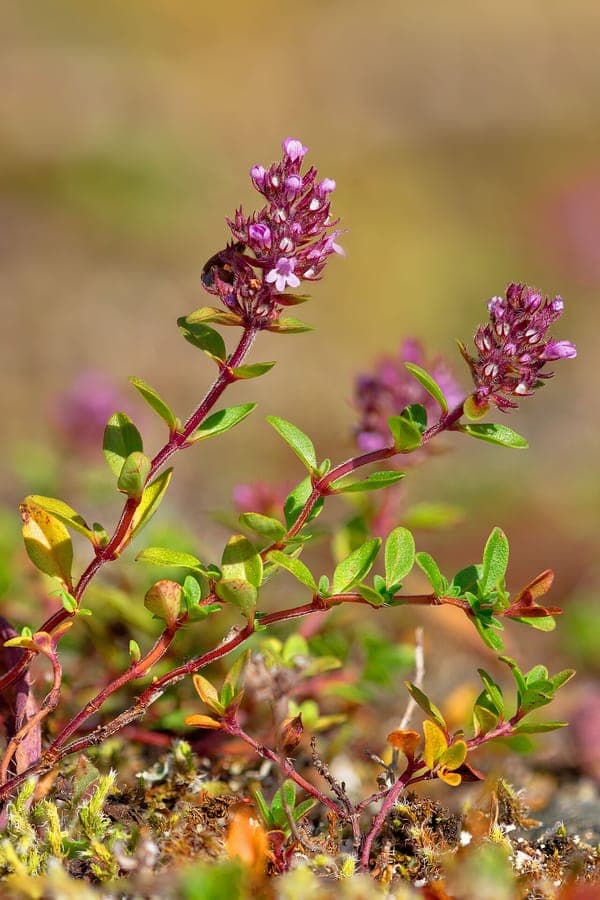
Andreas Trepte / CC BY-SA 2.5, via Wikimedia Commons
Large thyme: complete guide
Thymus pulegioides
Want to see Large thyme: complete guide in your garden?
1 minute, no credit card
Overview
Thymus pulegioides, commonly known as large thyme, is a resilient subshrub that thrives in sunny, well-drained spots across the garden. Unlike its culinary cousin Thymus vulgaris, this species is grown more for its ornamental appeal than for kitchen use, though the leaves do carry a faint herbal scent. Native to regions like Austria, the Baltic States, Belarus, and Denmark, large thyme has adapted to temperate climates with cold winters and dry, warm summers. In the UK and similar zones, it excels as a ground cover in rock gardens, between paving stones, or along the front of dry borders.
On gardenworld.app, you can design a drought-resistant planting scheme where large thyme plays a key role in texture and pollinator support. As part of the Lamiaceae family, it spreads slowly via creeping stems, forming dense mats that suppress weeds and endure foot traffic lightly. It's a long-lived perennial with semi-woody stems, returning reliably each year if given proper care.
Appearance & bloom cycle
Large thyme grows 10–15 cm tall and can spread up to 30 cm wide. It forms soft, slightly upright cushions of ovate, grey-green leaves covered in fine hairs. These leaves release a mild thyme aroma when brushed, making the plant pleasant along garden paths. From July to September, it produces clusters of small, tubular purple flowers that attract bees, hoverflies, and butterflies. The bloom period is generous, especially in full sun, and spent flowers often persist into winter, adding seasonal structure.
The plant matures into a woody base over time, with new growth emerging from the tips each spring. Without pruning, older clumps can become leggy and develop bare centres. This makes annual maintenance essential for longevity.
Ideal location
Large thyme demands full sun - aim for 8 hours of direct light daily (light factor 8). It fails in shade, becoming sparse and prone to fungal issues. Plant it in south- or west-facing beds, rockeries, or gravel gardens where heat and drainage are optimal. It's ideal for dry, neglected corners where other plants struggle.
Use gardenworld.app to map sun exposure in your garden and identify the perfect spot for large thyme. Avoid damp, enclosed areas; these increase the risk of root rot, especially in winter.
Soil requirements
This thyme prefers light, free-draining soil with a pH between 5.5 and 6.5. Heavy clay must be improved with horticultural sand or grit. A mix of topsoil, sand, and a little compost works well. Avoid rich, fertile soils - they encourage leafy growth at the expense of flowers. Adding crushed granite or lava grit enhances drainage and mimics its natural habitat.
Free design
Want to see Large thyme: complete guide in your garden? Make a free design now.
Watering
Once established, large thyme is highly drought-tolerant. In typical UK summers, it rarely needs watering unless we face prolonged dry spells (3+ weeks without rain). When watering, do so deeply but infrequently, preferably in the early morning. Overhead watering should be avoided to prevent fungal diseases. Young plants in their first season need weekly watering during dry periods to establish strong roots.
Pruning
Prune after flowering, in late September or early October. Trim back no more than one-third of the plant's height using sharp shears. Cut just above a leaf node to encourage bushy regrowth. Avoid hard pruning into old wood, as it rarely re-sprouts. Never prune in late winter or early spring - this can damage new shoots emerging from the base.
Maintenance calendar
- Jan: Check for winter damage; remove dead stems
- Feb: No action needed
- Mar: Light tidying; rake out old foliage
- Apr: Monitor for new growth
- May: Apply light organic feed if needed (low dose)
- Jun: Watch for aphids or powdery mildew
- Jul: Enjoy flowering; check soil moisture in heatwaves
- Aug: Continue monitoring; no pruning
- Sep: Prune after bloom; divide clumps if desired
- Oct: Loosen soil surface; apply gravel mulch
- Nov: No action; plant enters dormancy
- Dec: Inspect for pests; ensure good drainage
Winter hardiness
Large thyme is hardy down to -20°C (USDA zone 5). In the UK (zone 8), it survives winter with ease as long as the soil drains well. The main threat is wet, cold soil - not cold itself. Young plants may benefit from a light mulch of grit or straw in their first winter, but mature clumps need no protection. Leave old stems intact through winter; they insulate new buds from frost.
Companion plants
Pair large thyme with drought-tolerant perennials like Sedum, Lavender, Catmint, and Echinacea. It works well as edging in herb gardens or between stepping stones with creeping thyme varieties. Avoid moisture-loving plants like ferns or astilbes. In a wildlife garden, it complements native wildflowers and grasses.
Closing
Large thyme is a dependable, attractive ground cover for sunny, dry areas. With minimal care, it delivers months of pollinator-friendly blooms and year-round structure. Buy it from garden centres, or check online retailers. Use gardenworld.app to visualise your planting layout and create a low-maintenance, bee-friendly garden where large thyme thrives.
Want to see Large thyme: complete guide in your garden? Make a free design now.
Upload a photo, pick a style, and get a photorealistic design with plant list in under a minute.
No credit card required


Similar plants
Apple mint (Mentha x villosa): complete guide
Mentha x villosa
Meet apple mint (Mentha x villosa): a fruity-scented kitchen herb with woolly leaves, perfect for tea and mojitos.
Salvia peyronii: complete guide
Salvia peyronii
Discover Salvia peyronii, a rare Lebanese mountain sage. Growing tips, hardiness, and companion planting for a Mediterranean gravel garden.
Bigleaf mint (Mentha x rotundifolia): complete guide
Mentha x rotundifolia
Discover bigleaf mint: cultivation, care tips, and garden uses. Learn how to grow this aromatic herb with soft, hairy leaves.