
Wikimedia Commons / Public domain, via Wikimedia Commons
Northern white-cedar: complete guide
Thuja occidentalis
Want to see Northern white-cedar: complete guide in your garden?
1 minute, no credit card
Overview
Thuja occidentalis, commonly known as Northern white-cedar, is a resilient evergreen tree that's become a staple in gardens across temperate zones. Native to parts of eastern North America, from Maine to Minnesota and south into Kentucky, this conifer thrives in USDA hardiness zones 3 to 8. It's widely used for hedges, screens, and specimen planting due to its dense foliage and steady growth. Unlike some cedars, it's not a true cedar but belongs to the Cupressaceae family, making it more closely related to cypresses.
Gardeners value it not just for looks but for reliability - it resists most pests, keeps its color year-round, and adapts well to pruning. Whether you're creating a living fence or adding structure to a mixed border, this tree delivers. And with tools on gardenworld.app, you can map out spacing and growth projections to avoid overcrowding down the line.
Appearance & bloom cycle
Northern white-cedar grows in a narrow, pyramidal shape, typically reaching 12–15 m tall in the wild, though in garden settings it's often kept between 6–10 m. Annual growth averages 20–30 cm when young, slowing as it matures. The scale-like leaves are rich green, turning slightly bronze or purple in winter, especially in full sun. This seasonal shift is normal and not a sign of stress.
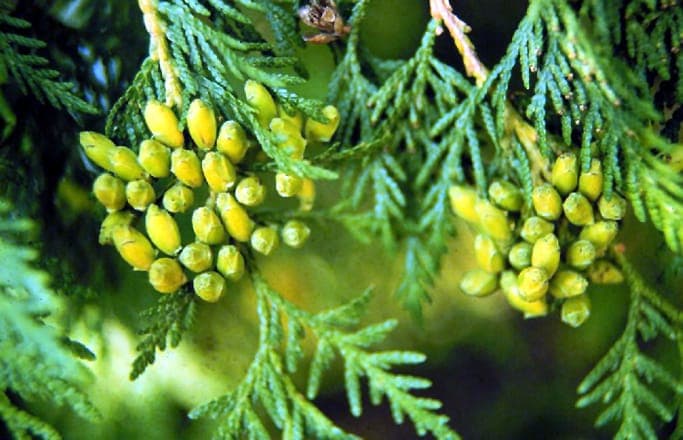
In spring, usually April to early May, small brown female cones and yellow male flowers appear. They're inconspicuous but necessary for seed production. The cones mature by autumn, measuring about 8–10 mm, and release seeds that may germinate in moist, shaded soil. While not ornamental, the reproductive cycle supports local wildlife, including small birds that feed on seeds.
Ideal location
Plant Thuja occidentalis in full sun to partial shade. It performs best with at least 6 hours of direct light daily. In deep shade, growth becomes sparse and leggy. Choose a spot sheltered from harsh northern winds, especially for young trees. For hedges, space plants 60–80 cm apart. If using as a standalone specimen, allow 3 m on all sides for mature spread.
If you're unsure about placement, gardenworld.app offers a design feature where you can simulate how a row of Thuja will fill in over 5–10 years.
Soil requirements
This tree tolerates a wide pH range from 5.2 to 7.0. It prefers moist, well-drained soil rich in organic matter but can handle clay or loam. Avoid soils with poor drainage or high salinity - salt from winter roads can damage foliage. Improve sandy soils with compost to boost moisture retention.
Free design
Want to see Northern white-cedar: complete guide in your garden? Make a free design now.
Watering
Young trees need consistent moisture the first two growing seasons. Water deeply once a week, giving 10–15 liters per plant. During heatwaves, increase to twice weekly. Use a soaker hose to deliver water directly to the root zone. Mature trees are drought-tolerant but benefit from supplemental watering during prolonged dry spells. Check soil moisture by probing 5 cm deep - if dry, it's time to water.
Pruning
Pruning isn't required for health, but it's essential for hedges. Trim once in late June and again in early August if shaping is needed. Never cut into old wood - Thuja doesn't regenerate from bare stems. Keep the base wider than the top to allow light penetration. Use sharp bypass pruners or electric hedge trimmers for clean cuts.
Maintenance calendar
- January: Inspect for winter damage, remove broken branches
- February: Replenish mulch, check staking on young trees
- March: Monitor for spider mites on warm days
- April: Apply slow-release organic fertilizer
- May: First hedge trim if desired
- June: Second feeding if growth is weak
- July: Check for drought stress, water as needed
- August: Final trim for formal hedges
- September: Stop fertilizing, reduce watering frequency
- October: Clear fallen debris from around base
- November: Check for rodent activity, protect trunks if needed
- December: Wrap young plants in burlap in exposed areas
Winter hardiness
This tree is hardy to USDA zone 3 (-40°C). In zones 4–8, it typically needs no winter protection. However, young plants in windy sites may suffer from desiccation. Burlap wraps or windbreaks help. Avoid heavy snow buildup on horizontal branches - gently brush off snow to prevent breakage.
Companion plants
Pair with shade-tolerant perennials like Heuchera, Hosta, or ferns. For contrast, plant hydrangeas in front for summer blooms. Groundcovers such as Pachysandra or Vinca minor work well under the canopy. Avoid invasive species like English ivy, which can climb and smother the trunk.
Closing
Thuja occidentalis is a workhorse in the garden - low maintenance, long-lived, and effective. Whether you're blocking a view or adding evergreen structure, it delivers. Buy healthy stock from local garden centres, where you can inspect root balls and foliage. Avoid bargain plants with yellowing leaves or tight root circling. With proper spacing and care, this tree will serve your garden for decades. And when planning your layout, remember that gardenworld.app helps visualize growth patterns and companion combinations so your design evolves beautifully over time.
Want to see Northern white-cedar: complete guide in your garden? Make a free design now.
Upload a photo, pick a style, and get a photorealistic design with plant list in under a minute.
No credit card required


Similar plants
Cupressus macnabiana: complete guide
Cupressus macnabiana
The Fragrant Cypress offers elegant growth with fine, aromatic foliage. Perfect for temperate climates and as specimen trees in contemporary gardens.
Cupressus guadalupensis: complete guide
Cupressus guadalupensis
The Guadalupe cypress: an elegant conifer for gardens. Complete cultivation guide for this Mexican cypress. Information about care, location, form and maintenance.
Austrocedrus chilensis: complete guide
Austrocedrus chilensis
Discover Austrocedrus chilensis, the Chilean Cedar ornamental conifer. Elegant specimen with fine foliage and columnar form for permanent structure.