
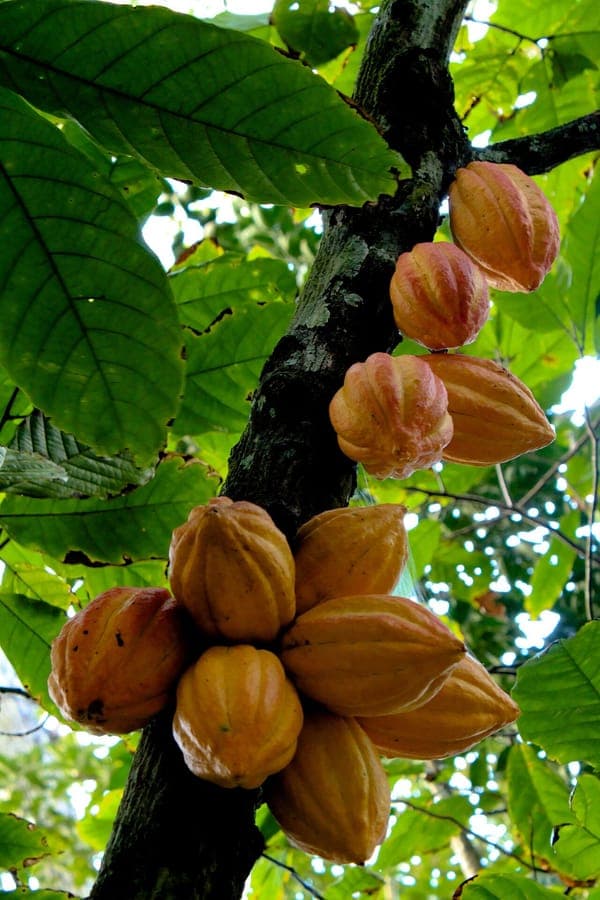
Luisovalles / CC BY 3.0, via Wikimedia Commons
Cacao Tree: complete guide
Theobroma cacao
Want to see Cacao Tree: complete guide in your garden?
1 minute, no credit card
Introduction: Decoding the Cacao Tree
The cacao tree (Theobroma cacao) is a fascinating tropical tree that forms the foundation of our beloved chocolate. This tree originates from the rainforests of South America and is now cultivated in many tropical parts of the world. For home gardeners in warmer climates, growing cacao trees can be a rewarding project.
Appearance and Bloom
The cacao tree can grow up to 8 meters tall, though cultivated specimens often remain smaller. The tree features large, leathery leaves that are dark green and glossy. A striking characteristic of the cacao tree is that flowers grow directly from the trunk and large branches, a phenomenon called cauliflory. The small, red or pink flowers appear year-round, with peak periods in spring and autumn.
The fruits are large, football-shaped pods that turn yellow, red, or purple when ripe. Each pod contains approximately 20 to 40 seeds, surrounded by sweet, white flesh.
Ideal Location
Cacao trees thrive in warmth and humidity. Choose a location with partial shade, especially in very hot climates. The tree needs protection from strong winds. If you are in the Netherlands or Belgium, you can only grow a cacao tree indoors or in a heated greenhouse. Provide plenty of indirect light and protect the plant from direct midday sun.
Soil
The cacao tree prefers rich, well-draining soil with a pH between 6 and 7. In gardens, you should heavily add compost and other organic material. For potting soil, choose a mixture of potting soil with extra organic matter. Good drainage is crucial, as the tree cannot tolerate waterlogging.
Watering
Water regularly, especially during the growing season. The soil should remain moist but not wet. In winter, you can slightly reduce watering. In tropical areas with dry seasons, you can provide extra water, but always ensure good drainage.
Pruning
Cacao trees do not require much pruning, but you can remove dead branches and maintain the shape. Pruning is best done after harvest. Note: excessive pruning can reduce yield.
Maintenance Calendar
Spring: Start feeding with nitrogen-rich fertilizer. Check for pests and diseases. Summer: Ensure adequate water. Repeat feeding with balanced fertilizer. Autumn: Prepare for flowering with a phosphate-rich fertilizer. Winter: Reduce water and feeding. Check frost protection.
Frost Hardiness
Cacao trees are not frost-hardy. They grow optimally at temperatures between 20 and 30 degrees Celsius. Temperatures below 15 degrees can be harmful.
Companion Plants
In tropical gardens, you can use bananas and shade trees for cacao trees. The combination does not harm either plant. For home growing: ensure sufficient space around the pot.
Closing Thoughts
Growing a cacao tree is an adventure for gardeners in warm climates or those with a heated greenhouse. Although it can take years before you bring in your first harvest, the process is rewarding. Visit your local garden center or gardenworld.app for everything you need to get started.
Check both local garden centers and gardenworld.app for plant material and advice.
Want to see Cacao Tree: complete guide in your garden? Make a free design now.
Upload a photo, pick a style, and get a photorealistic design with plant list in under a minute.
No credit card required


Similar plants
Crimean linden: complete guide
Tilia × euchlora
Crimean linden is an elegant, fast-growing shade tree ideal for large gardens. Discover cultivars, spacing, maintenance tips and winter hardiness.
California flannelbush: complete guide
Fremontodendron californicum
Everything about California flannelbush (Fremontodendron californicum): sunny placement, drainage, pruning and care for this spectacular yellow-flowering shrub.
Hairy rose mallow: complete guide
Hibiscus moscheutos subsp. lasiocarpos
Full growing guide for hairy rose mallow (Hibiscus moscheutos subsp. lasiocarpos): location, soil, watering, winter hardiness and garden design tips.