
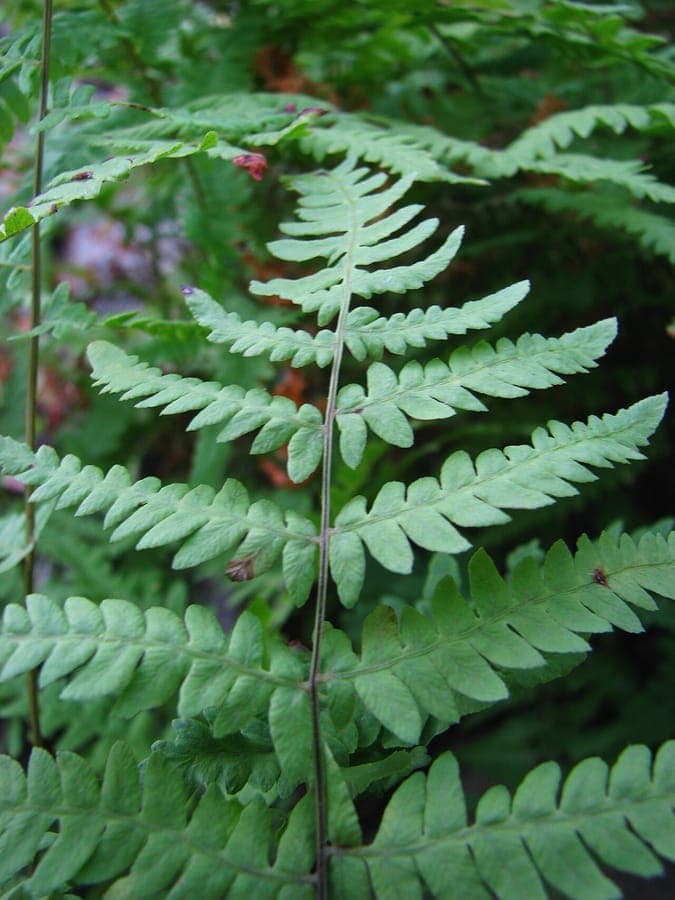
Agnieszka Kwiecień, Nova / CC BY-SA 3.0, via Wikimedia Commons
Thelypteris palustris: complete guide
Thelypteris palustris
Want to see Thelypteris palustris: complete guide in your garden?
1 minute, no credit card
Thelypteris palustris, known as marsh fern or meadow fern, is an elegant fern species specializing in wet, boggy conditions. This native fern provides valuable contributions to water edges, wetland borders and moist plantings in gardens.
Overview and Appearance The marsh fern is a medium-sized fern typically reaching 30 to 60 centimeters in height. The plant grows via thin, underground stems (rhizomes) enabling spread along moist environments. The fronds are finely dissected, bright green foliage with numerous subdivisions, creating an extremely delicate, fern-like appearance. Plants develop a fine lacework of leaves.
Geographic Distribution Thelypteris palustris is distributed across temperate zones of both North America and Eurasia. In Europe it grows from Finland and Russia in the north to Italy in the south. In North America it extends from Canada to Mexico. The plant inhabits moist environments: marshes, reed beds, water pools and wet meadows.
Bloom and Reproduction As a fern, Thelypteris palustris produces no classical flowers but reproduces via spores. These spores form on the undersides of fronds in so-called "sori" (spore clusters). Spores mature from June through August.
Ideal Growing Conditions The marsh fern prefers moist environments to waterlogged situations. It grows best in constantly wet soils. Half-shade to shade is appreciated, though it can thrive in semi-sunny locations.
Soil and Growth The plant prefers nutrient-rich, moist soils with abundant organic matter. Sandy, fast-draining soils are unsuitable. Add substantial garden compost or peat to increase moisture retention.
Watering Needs Consistent moisture is a hallmark of this plant. It demands constantly wet soils without complete submersion. Regular watering during the growing period is essential. In aquatic systems it can even grow in shallow water.
Pruning and Maintenance Minimal maintenance required. Remove dead fronds in late winter before new growth appears. Leave fallen foliage where it falls, as this returns organic material to the soil.
Maintenance Calendar April-May: New fronds appear. June-August: Spore maturation. September-October: Continued growth. November-March: Dormancy with dead fronds.
Winter Hardiness Thelypteris palustris is hardy and tolerates temperatures to minus 20 degrees Celsius. In the UK it overwinters completely outdoors.
Diseases and Pests The plant is generally extremely healthy and free from pests. In very dry situations leaf scorch can occur.
Companion Plants Pair marsh fern with other moisture-loving plants such as Typha, Iris laevigata and Filipendula. Dark foliage of Rodgersia creates beautiful contrasts.
Use in Garden Design The marsh fern is ideal for moist beds, water edge situations, rainwater basins and wild gardens. Use in groups for maximum impact.
Disease Resistance The plant displays good disease resistance in suitable growing conditions.
Conclusion Thelypteris palustris is a fascinating fern for wet areas. In the right conditions it will add value to your garden for years. Find it at water nurseries and specialist fern growers.
Want to see Thelypteris palustris: complete guide in your garden? Make a free design now.
Upload a photo, pick a style, and get a photorealistic design with plant list in under a minute.
10,000+ gardens designed already
No credit card required


Similar plants
Mountain spleenwort: complete guide
Asplenium montanum
Everything about mountain spleenwort fern: cultivation, care, growing conditions and proper maintenance for your garden
Western spleenwort: complete guide
Asplenium vespertinum
The Western spleenwort (Asplenium vespertinum) is a delicate fern from California with fine, feathery fronds. Learn about care, location, and overwintering in this comprehensive guide.
Asplenium cirrhatum: complete guide
Asplenium cirrhatum
Discover the chestnut scale spleenwort, a tropical fern full of elegance. Learn how to care for this exotic plant at home.