
Chhe (talk) / Public domain, via Wikimedia Commons
Tetradium daniellii: complete guide
Tetradium daniellii
Want to see Tetradium daniellii: complete guide in your garden?
1 minute, no credit card
Overview
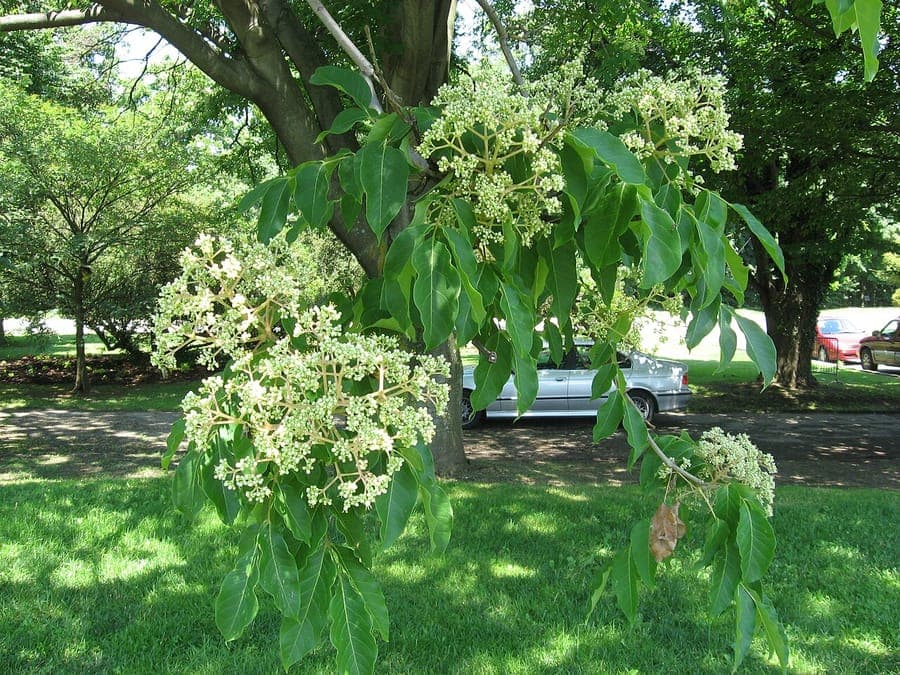
Tetradium daniellii, commonly known as the bee-bee tree, is an impressive deciduous shrub to small tree from China. The plant is particularly renowned for its intensely fragrant, creamy-white flowers that attract bees and other pollinators in remarkable numbers. After flowering, the plant produces attractive red seed capsules that extend the season of interest.
The bee-bee tree is a robust, versatile plant that thrives in temperate climates. With its ornamental value, ecological benefits, and distinctive fragrance, this plant offers much to both garden designers and pollinators.
Appearance & Bloom
Tetradium daniellii features large, compound, opposite leaves that develop purplish tints when young. The leaves can reach 30 cm in length and are composed of numerous small leaflets. When bruised, the leaves release a strong aromatic scent.
Flowers appear in July-August in large, flat clusters at the branch tips. These are creamy-white to pale yellow blooms with an intensely sweet fragrance. After bloom, the plant produces red seed capsules that turn brown-red by autumn, providing extended seasonal interest.
Ideal Location
The bee-bee tree thrives in full sunlight locations, though it can reasonably succeed in partial shade. At least six hours of direct daily sunlight is ideal for optimal blooming and fruit set. Ensure good air circulation around the plant.
This is an ideal specimen tree for central garden positions where the fragrance of the flowers can be appreciated on warm summer evenings. Avoid planting it too close to pathways where the scent might become overwhelming.
Soil
Tetradium daniellii is not fussy about soil type and grows well in most well-draining soils. Sandy, clay, and loamy soils are all suitable. The plant adapts to both acidic and alkaline conditions, though neutral soil is preferred.
While the established plant is reasonably drought-tolerant, it grows better with regular moisture. Add organic matter at planting time to improve the soil's water-holding capacity.
Watering
Young bee-bee trees require regular watering to become established, especially during their first two growing seasons. Water deeply and evenly to keep the soil moderately moist but not waterlogged. In hot weather, daily watering may be necessary.
Once established, the tree can be quite drought-tolerant and requires little supplemental water in temperate climates with regular rainfall. Additional water during dry spells is beneficial, however.
Free design
Want to see Tetradium daniellii: complete guide in your garden? Make a free design now.
Pruning
The bee-bee tree responds well to pruning and can be pruned both lightly and aggressively. Light pruning for shape retention can be done annually after flowering. If you wish to encourage more abundant blooming, cut back the longest branches to approximately mid-length.
Avoid pruning in early spring, as this can lead to frost damage on new growth. The plant develops an attractive natural form with minimal intervention.
Maintenance Calendar
Spring: Check for winter damage. Remove any dead or damaged branches. Begin light feeding.
Summer: Enjoy the flowers and fragrance. Water regularly if weather is dry. Observe the bees and other pollinators.
Fall: The red seed capsules provide seasonal interest. No special maintenance required.
Winter: In very cold regions, branch tips may freeze back. Spring pruning helps remove damaged portions.
Winter Hardiness
Tetradium daniellii is hardy to zone 6 (-20 degrees Celsius) and thrives in most European regions. However, the plant is sensitive to extremely harsh winters and may die back to the ground in severe years. In such cases, the plant will reshoot from the roots in spring.
In regions with very cold winters, mulching around the base may be beneficial.
Companion Plants
The bee-bee tree combines well with other pollinator plants. Plant it alongside other flowering shrubs and small trees, such as Sambucus (elderberry), Prunus (cherry), and Ilex (holly). For contrast, combine it with ferns and other structural plants.
In ecological gardens, this is an excellent choice as a centerpiece for a pollinator-attracting zone.
Closing Thoughts
Tetradium daniellii is a wonderful plant for gardeners who value both aesthetics and environmental contribution. The intensely fragrant flowers, value for insects, and attractive seed pods make this a plant with much to offer. For bees and other pollinators, it's an absolute essential.
Ready to add this fascinating tree to your garden? Your local tree nursery can provide healthy specimens. On gardenworld.app, discover more inspiration for pollinator-friendly planting schemes and how to effectively integrate this species into your design. Visit gardenworld.app for additional information on bee-friendly plants and other ecologically valuable trees.
Want to see Tetradium daniellii: complete guide in your garden? Make a free design now.
Upload a photo, pick a style, and get a photorealistic design with plant list in under a minute.
No credit card required


Similar plants
Thamnosma montana: complete guide
Thamnosma montana
Everything about Thamnosma montana, the aromatic turpentine broom from the Mojave Desert. Location, soil, care and companion planting explained.
Narrow-leaved fringed rue: complete guide
Ruta angustifolia
Everything about Ruta angustifolia: location, soil, watering, pruning and winter care for this Mediterranean subshrub.
Mountain rue: complete guide
Ruta montana
A complete guide to Ruta montana: best location, soil, watering, pruning and overwintering of this aromatic Mediterranean subshrub.