
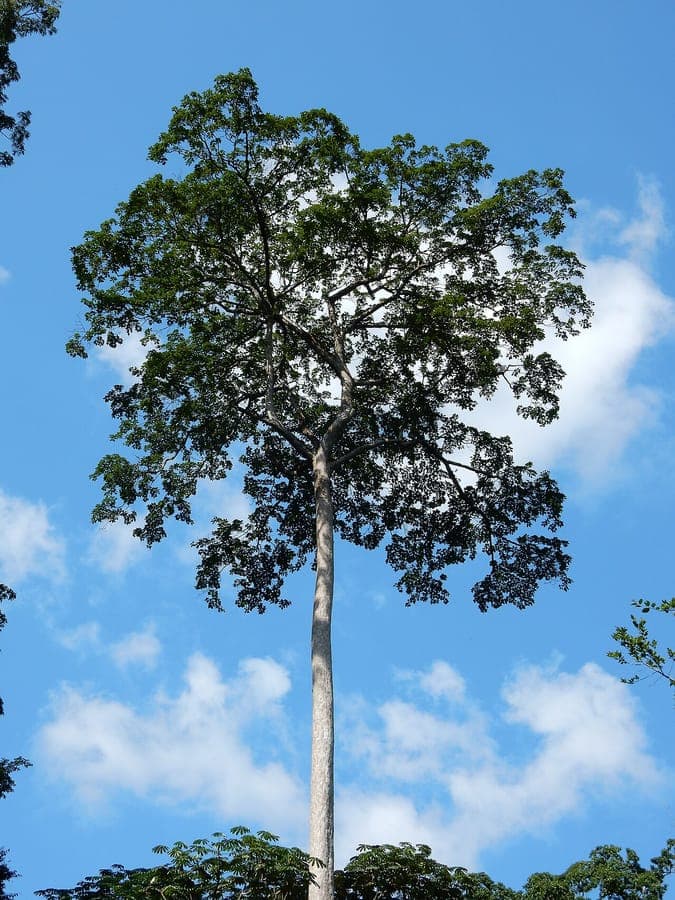
Orbicule / CC BY-SA 4.0, via Wikimedia Commons
Terminalia superba (Limba): complete guide
Terminalia superba
Want to see Terminalia superba (Limba): complete guide in your garden?
1 minute, no credit card
Overview
Terminalia superba, better known by its trade names Limba or Afara, is an impressive tree native to West Africa and West-tropical Africa. This plant belongs to the Combretaceae family and is known for its tall growth, straight stem, and strong architectural presence. In its natural habitat, the tree reaches heights exceeding 40 meters, though in cultivation it usually remains more modest.
The tree is traditionally felled for its valuable light timber, but can also grow in gardens where space permits. This is a tree for large gardens, where it functions beautifully as a solitary specimen or background plant.
Appearance and Bloom
Terminalia superba has elegant, flatly-spread leaves arranged along the branches. The foliage is dark green and contrasts with the light grey to silvery bark. The tree grows in a natural, straight form without much pruning needed.
The flowers are small and inconspicuous, usually greenish-yellow and growing in subtle clusters along the twigs. The true beauty lies in the overall form and foliage mass of the tree, creating an elegant canopy. In autumn, the leaves can turn red-yellow for dramatic effect.
Ideal Location
Terminalia superba thrives best in sunny to part-shaded locations. Though the tree prefers full sun, it also tolerates partial shade well. In its natural habitat, it often grows as part of the tree canopy in tropical forests.
The tree thrives in warm climates and will perform less well in cold environments. In temperate zones, it must be protected from frost or grown only in protected microclimate areas.
Soil
Terminalia superba is not particularly fussy about soil. The tree grows in diverse soil types, from acidic to alkaline. Well-draining soil is important, however, especially during rainy periods.
The tree tolerates poor soils well, though it grows better in moderately fertile earth. When planting, add compost or organic material for better water retention and nutrition.
Watering
During the establishment phase (first two years), the tree should receive regular water, especially during dry periods. Once established, Terminalia superba is fairly drought-tolerant and rainwater will usually suffice.
During very dry seasons, extra waterings can be given, especially for young trees. The tree thrives in moderately moist conditions and tolerates both wet and drier periods.
Free design
Want to see Terminalia superba (Limba): complete guide in your garden? Make a free design now.
Pruning
Terminalia superba requires minimal pruning. The tree grows naturally into an elegant form. Only dead, damaged, or crossing branches should be removed. This can be done throughout the year.
The tree can be trained for a cleaner tree form by removing early lateral branches, contributing to a higher crown.
Maintenance Calendar
Spring (March-May): Check growth and support young trees during strong growing season. Feed newly planted specimens.
Summer (June-August): Water regularly, especially for young trees. Monitor for shade and growth issues. Check support.
Autumn (September-October): Enjoy autumn colors. Prepare for winter period. Check drainage.
Winter (November-February): Minimal activity. Protect from frost in cold regions. Check for damage.
Winter Hardiness
Terminalia superba is sensitive to frost and will not grow in areas with severe winters. The tree performs best in areas where temperatures do not drop below 10 degrees Celsius. In colder climates, it must be grown in a greenhouse or protected indoor environment.
Even in temperate zones, winter protection may be needed for young trees.
Companion Plants
As a large specimen, Terminalia superba works well with low-growing shrubs around the base. Dark-leaved plants such as ilex or dark green foliage create nice contrast.
Floral accents in red, yellow, or purple nearby add warmth without dominating the tree.
Closing Words
Terminalia superba is an adventurous tree for experienced gardeners with ample space. With its majestic growth, elegant form, and exotic origin, this tree adds grandeur and tropical character to large gardens. Plant in a protected, sunny location in suitable climates and enjoy an impressive garden specimen that inspires other generations.
For Terminalia superba purchase, consult specialized nurseries with experience in tropical trees. This is not a common garden plant but will be available through expert suppliers. Visit gardenworld.app for more exotic plant ideas and inspiration.
Want to see Terminalia superba (Limba): complete guide in your garden? Make a free design now.
Upload a photo, pick a style, and get a photorealistic design with plant list in under a minute.
No credit card required


Similar plants
White-flowered mangrove: complete guide
Lumnitzera racemosa
Discover the white-flowered mangrove. This article covers cultivation, care and placement for coastal gardens.
Kinkeliba: complete guide
Combretum micranthum
Discover Kinkeliba (Combretum micranthum), an African shrub with medicinal value. Warm-climate lover, fine foliage, traditionally used in herbal medicine.
Witte mangrove: complete gids
Laguncularia racemosa
Laguncularia racemosa of witte mangrove groeit langs tropische kusten. Ontdek teelt in subtropische tuinen en klimaatzone vereisten.