
Sean.hoyland / Public domain, via Wikimedia Commons
White-flowered mangrove: complete guide
Lumnitzera racemosa
Want to see White-flowered mangrove: complete guide in your garden?
1 minute, no credit card
Overview
The white-flowered mangrove, scientifically Lumnitzera racemosa, is a characteristic coastal plant native from Southeast Asia to Australia. This plant is known for its delicate white flowers and adapted roots that tolerate saltwater. The white-flowered mangrove plays a crucial role in coastal ecosystems and is valuable for garden and landscape design.
This mangrove is also called kripa and is popular in tropical gardens with coastal themes. It can adapt to various growing conditions thanks to its robust root systems.
Appearance & bloom
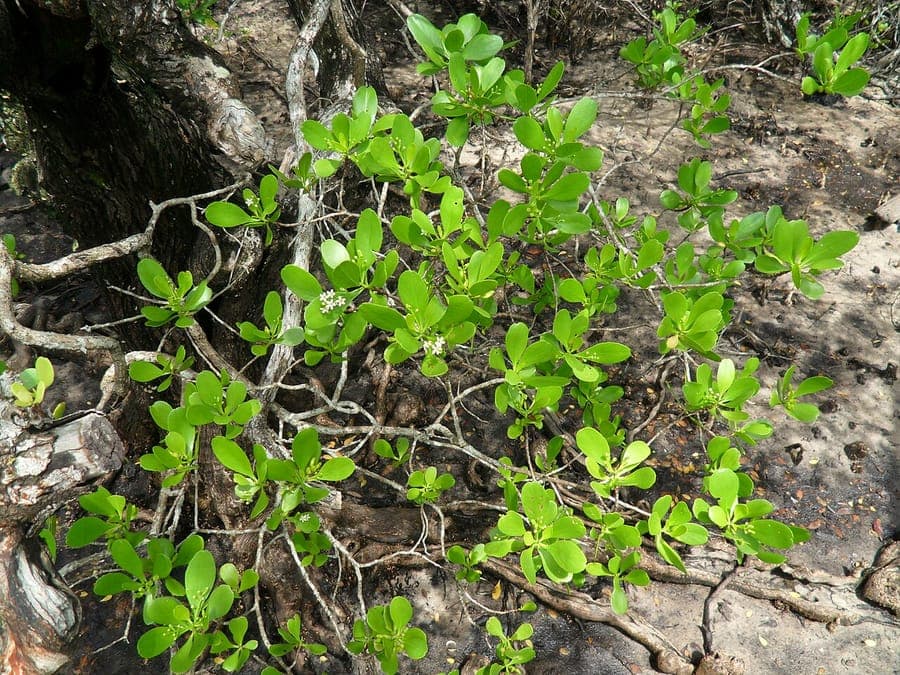
The white-flowered mangrove grows as a shrub to small tree with glossy foliage. The leaves are small to medium-sized, elliptical in shape and have a green luster. The flowers are small, white and very fragrant, appearing in clusters that stand out beautifully against the dark green foliage.
Blooming occurs during warm seasons, typically from April through September. The flowers attract many insects, particularly bees.
Ideal location
The white-flowered mangrove thrives in full sun and also tolerates light shade. For optimal growth place it in full sunlight with at least six hours of direct sunlight daily. In very hot climates light afternoon shade can be beneficial.
A location directly by the sea or in coastal nearby gardens is ideal where it tolerates saltwater exposure and sea winds.
Soil
The white-flowered mangrove grows in saltwater so its soil preference is very specific. Sand and salty gravel are ideal. In regular gardens you can use sand or salty sand as basis. The plant also tolerates peat or marshy soils.
In coastal garden context it often grows directly in saltwater or in brackish water sediments.
Free design
Want to see White-flowered mangrove: complete guide in your garden? Make a free design now.
Watering
In coastal or saltwater environments the white-flowered mangrove receives nourishment from saltwater. In gardens you must water regularly until it establishes. After establishment it tolerates dry periods well.
If you plant it in regular freshwater soil you must add feeding with salt-plant fertilizer for optimal growth.
Pruning
Pruning is not necessary but you can remove dead branches and keep the plant tidy through careful trimming. Young plants can be pruned to encourage better shape.
Remove damaged branches or diseased growth when you notice them.
Maintenance calendar
Spring: Plant grows actively. Add water and feeding. Check for pests.
Summer: Plant blooms abundantly. Remove spent flowers. Ensure sufficient water.
Autumn: Blooming decreases. Plant prepares for rest.
Winter: Plant grows slowly. In colder areas move to shelter.
Winter hardiness
The white-flowered mangrove is not winter hardy in temperate climates. It tolerates cold not below 10-15 degrees Celsius. In the Netherlands, Belgium and Germany you must move this plant to a heated location.
In warm southern Europe it can overwinter outdoors in sheltered coastal climate locations. Protect against frost.
Companion plants
The white-flowered mangrove forms excellent coastal garden composition with other saltwater-tolerant plants. It grows well in group plantings with other mangroves. In gardens it forms beautiful backgrounds or screens due to its height.
Combine with sea grasses and other coastal plants for authentic coastal ecosystem.
Closing thoughts
The white-flowered mangrove is a fascinating plant for those interested in tropical coastal and saltwater gardens. With proper placement and care it develops into an impressive specimen that can last for decades. For advice on coastal garden design consult gardenworld.app.
Want to see White-flowered mangrove: complete guide in your garden? Make a free design now.
Upload a photo, pick a style, and get a photorealistic design with plant list in under a minute.
No credit card required


Similar plants
Terminalia superba (Limba): complete guide
Terminalia superba
Terminalia superba, known as Limba or Afara, is a majestic West African tree. With its light timber quality and elegant appearance, this species adds structure to large gardens.
Kinkeliba: complete guide
Combretum micranthum
Discover Kinkeliba (Combretum micranthum), an African shrub with medicinal value. Warm-climate lover, fine foliage, traditionally used in herbal medicine.
Witte mangrove: complete gids
Laguncularia racemosa
Laguncularia racemosa of witte mangrove groeit langs tropische kusten. Ontdek teelt in subtropische tuinen en klimaatzone vereisten.