
User:Tigerente / CC BY 2.5, via Wikimedia Commons
Marsh fleawort: complete guide
Tephroseris palustris
Want to see Marsh fleawort: complete guide in your garden?
1 minute, no credit card
Overview
Marsh fleawort (Tephroseris palustris) is a distinctive plant from the Asteraceae family that thrives exclusively in wet, marshy environments. This hardy plant belongs to the group of wetland herbs and plays an important role in natural wetland ecosystems.
Appearance and bloom
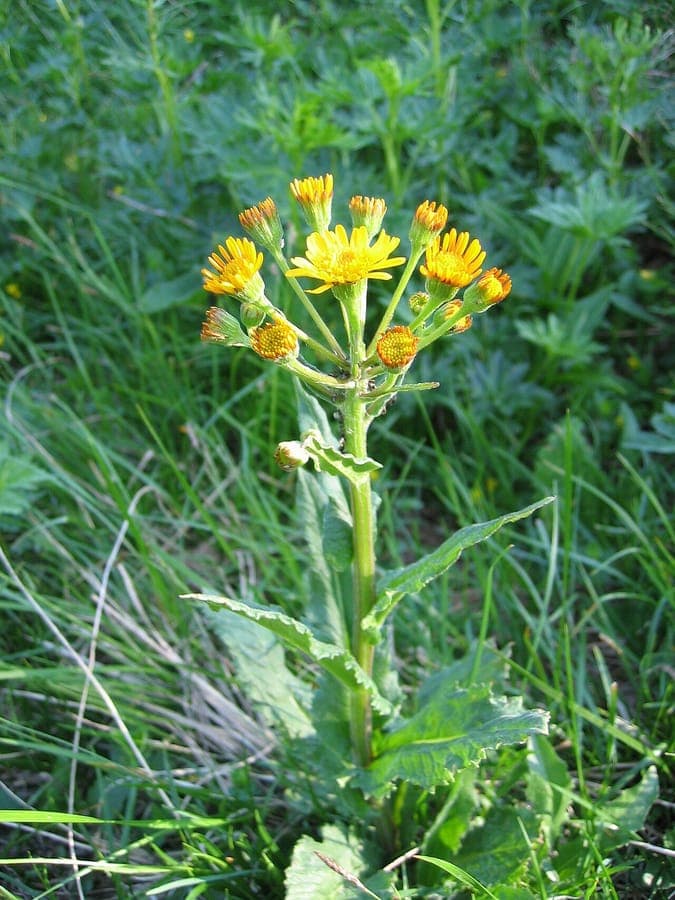
Marsh fleawort grows as a herb reaching approximately 30-60 cm in height. The plant produces densely clustered, yellow flowers in characteristic panicles. The flowering period extends from May to July, with the plant in full bloom. The stems are somewhat hairy and bear compound leaves with a grey-green color. After flowering, the plant develops characteristic seed pods with feathery fruits.
Ideal location
This plant requires a position in wet to very wet soil. Marsh fleawort thrives excellently in marshes, along waterbanks and in wetlands with permanent or semi-permanent water surplus. The plant prefers full sun to partial shade and tolerates shade less well. In designed gardens it works best in specially installed wet gardens.
Soil type
The plant grows optimally in clay and silt-rich soils with high moisture content. Marsh fleawort prefers slightly acidic to neutral soil with a pH between 6.5 and 7.0. The soil must be nutrient-rich and regularly saturated with water. Drainage should be limited; stagnant water is even preferable.
Free design
Want to see Marsh fleawort: complete guide in your garden? Make a free design now.
Watering
Watering is not an issue as this plant lives permanently in wet environments. Proper water management is critical - water surplus is essential. In natural marshes the plant experiences no drought. In cultivation, permanent soil moisture must be maintained.
Pruning
Pruning is unnecessary. After flowering, dead stems can be removed in autumn. The plant dies back in autumn to ground level and regrows in spring from underground parts.
Maintenance calendar
Maintenance of Marsh fleawort is minimal. Ensure adequate water supply during the growing season. After flowering, dead material can be cleaned up. The plant requires no fertilizer as marshes are naturally nutrient-poor.
Winter hardiness
Marsh fleawort is fully hardy to very cold-resistant. The plant thrives throughout the entire European temperate zone and far into the north. Winter temperatures down to -20 degrees Celsius are no problem.
Companion plants
Marsh fleawort grows well with other wetland herbs such as marsh marigold, kingcup and common reed. Sedges and rushes also form natural partners. In wet meadows combined with yellow iris and blue water violet a beautiful composition emerges.
Conclusion
Marsh fleawort is a valuable plant for anyone wanting to convert a wet spot in the garden into a vibrant biotope. The yellow flowers brighten dark water plants and attract pollinators. Discover more: gardenworld.app/en
Want to see Marsh fleawort: complete guide in your garden? Make a free design now.
Upload a photo, pick a style, and get a photorealistic design with plant list in under a minute.
No credit card required


Similar plants
Calendula stellata: complete guide
Calendula stellata
Complete guide to Calendula stellata, the star-flowered marigold from Sicily: location, soil, watering and companion planting tips.
Korean chrysanthemum: complete guide
Chrysanthemum x rubellum
Chrysanthemum x rubellum is a hardy autumn perennial with single pink to copper flowers from August to November. Care and combinations.
Helianthus divaricatus: complete guide
Helianthus divaricatus
Helianthus divaricatus is a North American woodland sunflower with yellow summer blooms, ideal for naturalistic borders and shady edges.