
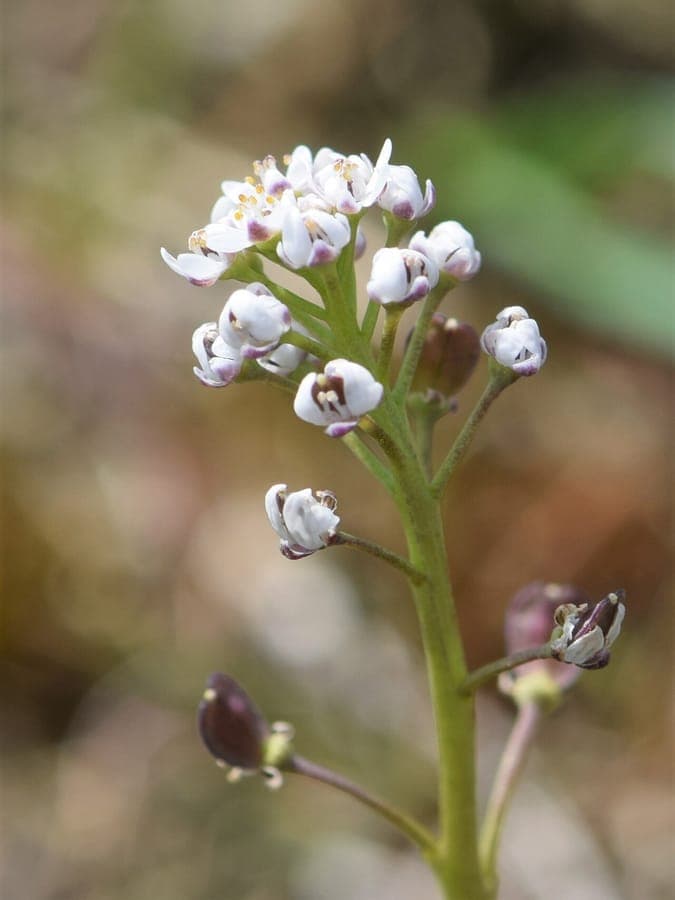
Krzysztof Ziarnek, Kenraiz / CC BY-SA 4.0, via Wikimedia Commons
Teesdalia nudicaulis: complete guide
Teesdalia nudicaulis
Want to see Teesdalia nudicaulis: complete guide in your garden?
1 minute, no credit card
Overview
Teesdalia nudicaulis, commonly known as barestem teesdalia or shepherd's cress, is an elegant biennial plant from the Brassicaceae family. This species originates from Europe and Morocco, thriving in natural habitats ranging from coastal areas to mountain terrains. The plant typically grows to 10-30 centimeters in height and features a characteristic naked stem with minimal basal foliage.
The plant holds historical significance in European horticulture and is valued for its subtle beauty and pollinator value. Teesdalia nudicaulis is perfect for front yard redesigns where you want to work naturally and informally. With its white flowers and airy growth pattern, it adds color and texture to gravel gardens and meadow-like plantings.
Appearance & Bloom
Teesdalia nudicaulis is distinctive in its growth habit. The plant is characterized by a minimal basal leaf rosette with seemingly naked stems rising above - hence the scientific name 'nudicaulis' (bare stem). These stems reach heights of 15-30 centimeters and bear small, delicate white flower clusters at their tips.
Flowers appear from April to June and are small but numerous, each with four white petals. They attract butterflies and honeybees and develop into small seed pods. The leaves are elongated and form a low rosette at the base, emphasizing the 'naked stem' effect.
After flowering, characteristic seed pods develop and eventually burst open to disperse seeds naturally.
Ideal Location
Teesdalia nudicaulis thrives best in locations with plenty of sunlight - at least 6-8 hours of direct sun daily. The plant is flexible and can also grow in partial shade, though flowering and vigor will be less vigorous.
Choose a spot with good visibility in your front yard, preferably sheltered from strong winds. The natural growth habit makes Teesdalia nudicaulis ideal for borders, gravel gardens, and mixed plantings with other spring bloomers. Plant in groups of 5-10 for maximum visual impact.
Soil
Soil preparation is crucial for success with Teesdalia nudicaulis. The plant prefers well-draining, moist but not waterlogged soil with a pH between 4 and 4.5, though it has some flexibility. Work in plenty of compost or leaf mold before planting.
Provide minimal nutrient requirements - add only moderate feeding. The plant actually grows better on poor soils than on over-enriched ones. If you have heavy clay soil, improve it thoroughly with sand and organic matter to prevent waterlogging.
Free design
Want to see Teesdalia nudicaulis: complete guide in your garden? Make a free design now.
Watering
Teesdalia nudicaulis has moderate water needs. Ensure soil remains moist but not waterlogged. During the growing season (spring), you'll need more water, but reduce moisture in summer when the plant goes dormant.
When giving supplemental water during dry periods, water in early morning to minimize evaporation. For container plants, regular watering is necessary, especially in warm periods. Water around the plant, not on leaves, to prevent fungal diseases.
Pruning
Teesdalia nudicaulis requires minimal pruning due to its compact, natural growth habit. After flowering, you can remove spent flowers to encourage seed production, though this is optional. Leave some fluffy seed heads for bird food.
If you want to prevent self-seeding (as the plant can spread), remove seed pods before they ripen. However, this also encourages longer flowering periods. For container plants, remove any weak or diseased shoots.
Maintenance Calendar
March: Sow seed or plant young specimens. Prepare soil with compost.
April-June: Enjoy flowering. Water regularly in dry weather. Remove spent flowers.
July-August: Plant enters dormancy. Ensure good drainage, don't overwater.
September-October: Sow seed in situ or in seed trays for next season.
November-February: Winter dormancy. Protect against severe frosts with mulch.
Winter Hardiness
Teesdalia nudicaulis is moderately winter hardy in temperate climates down to USDA zone 6. In northern regions, however, extra precautions are necessary. Mulch the plant in November with 5-10 centimeters of leaves or straw around the crown.
Combined with good drainage, the plant usually survives without protection, but severe winters may cause frost damage. If you live in northern Europe, consider container growing so you can move plants in hard frost.
Companion Plants
Teesdalia nudicaulis combines beautifully with other spring bloomers in front yard designs. Try planting it with:
- Other Brassicaceae such as Arabis and Alyssum for unified theme planting
- Ornamental grasses like Festuca for contrast
- Lavender and other thyme relatives for Mediterranean effects
- Helenium and rudbeckia for fall color
- Ground-covering plants like Sedum
Its low-growing character also makes it ideal for foreground plantings against taller background plants.
Closing
Teesdalia nudicaulis is a beautiful, underrated plant for front yard redesigns. With its white flowers, delicate growth habit, and pollinator value, it offers both beauty and ecological worth. With basic care and proper location selection, this European shepherd's cress will provide years of enjoyment.
Visit local growers for seeds and young plants. Teesdalia nudicaulis fits perfectly with the GardenWorld.app philosophy of sustainable, biodiverse front yard redesigns.
Want more information about front yard planting? Visit GardenWorld.app for professional custom advice!
Want to see Teesdalia nudicaulis: complete guide in your garden? Make a free design now.
Upload a photo, pick a style, and get a photorealistic design with plant list in under a minute.
No credit card required


Similar plants
Brassica cretica: complete guide
Brassica cretica
Brassica cretica, the Cretan cabbage, grows wild on Aegean cliffs. Discover how to grow this drought-tolerant, yellow-flowered Mediterranean perennial.
Corsican cabbage: complete guide
Brassica insularis
Corsican cabbage is a rare Mediterranean rock cabbage with white flowers and blue-green leaves. Location, soil and winter protection.
Prostrate cabbage: complete guide
Brassica procumbens
Prostrate cabbage is a creeping North African cliff plant with yellow flowers. Discover location, soil type and winter protection.