
Alpsdake / CC BY-SA 3.0, via Wikimedia Commons
Japanese yew: complete guide
Taxus cuspidata
Want to see Japanese yew: complete guide in your garden?
1 minute, no credit card
Overview
The Japanese yew (Taxus cuspidata) is a slow-growing, long-lived evergreen conifer prized for its dense foliage, adaptability, and resilience in garden landscapes. Native to Japan, Korea, and parts of northern China, this yew thrives in temperate climates and is widely used across Europe and North America for hedges, topiary, and specimen planting. With a lifespan that can exceed 100 years under proper conditions, it's a commitment to structure and green presence in the garden.
On gardenworld.app, you can design a layout where Japanese yew forms the backbone of your garden's winter interest, whether as a formal hedge or a sculpted focal point.
Appearance & bloom cycle
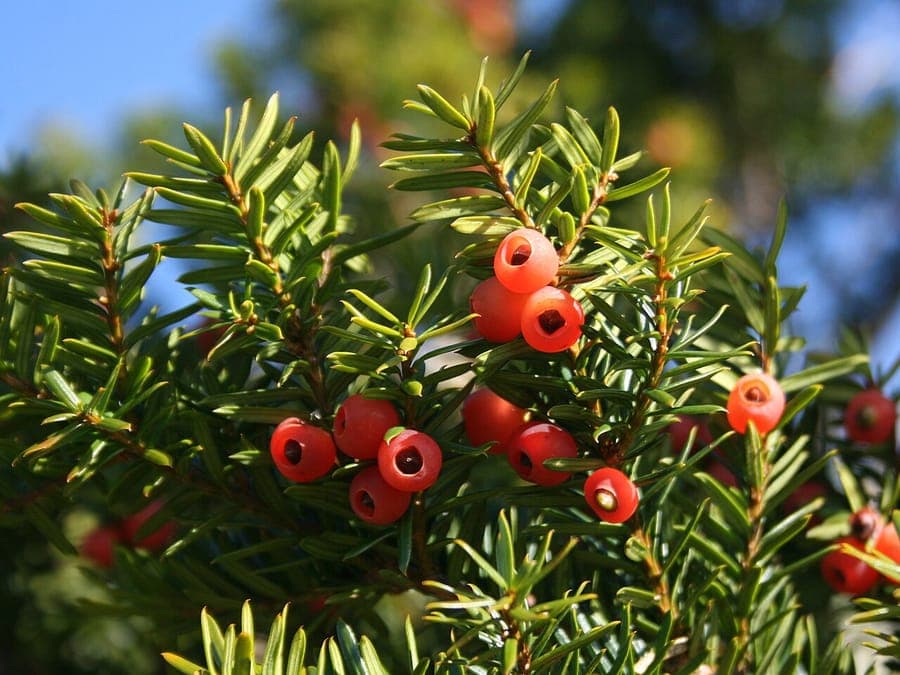
Taxus cuspidata typically grows 2–4 meters tall in cultivation, with a spread of 1.5–2.5 meters, depending on variety and pruning. Its natural growth habit is pyramidal to rounded, but it responds exceptionally well to pruning and can be trained into tight spheres, cones, or hedges. Needles are 1.5–2.5 cm long, flat, dark green above, and pale green beneath, with a slightly soft texture. They persist for 2–3 years, contributing to a consistently full appearance.
Flowers are inconspicuous, appearing in April and May. Male and female flowers grow on separate plants (dioecious), though some cultivars are monoecious. Female plants produce the distinctive red, cup-like arils around a single seed. While the fleshy aril is non-toxic, the seed inside is highly poisonous. Keep pets and children away from fallen fruit.
Ideal location
Japanese yew grows best in partial shade to full sun. In full sun, it develops denser foliage, but in hot southern exposures, it may suffer from winter burn, especially when young. A site sheltered from strong winds and intense afternoon sun is ideal. It's excellent for urban gardens due to its pollution tolerance and ability to thrive near buildings.
East or north-facing positions work well, especially in hotter zones. In deep shade, growth becomes leggy and sparse. For formal designs, plant in symmetrical rows along walkways or driveways. Spacing: 1–1.2 meters apart for hedges, 2.5+ meters for specimens.
Soil requirements
This yew adapts to a wide range of soil types-clay, loam, or sand-as long as drainage is adequate. The ideal pH is between 5.3 and 7.8, making it suitable for slightly acidic to slightly alkaline conditions. Avoid waterlogged soils, which can cause root rot.
When planting, dig a hole twice as wide as the root ball but no deeper. Backfill with native soil mixed with compost. Do not over-fertilize at planting-yews are light feeders. Mulch with organic material like bark or pine needles to conserve moisture and suppress weeds, but keep mulch away from the trunk to prevent rot.
Free design
Want to see Japanese yew: complete guide in your garden? Make a free design now.
Watering
Water deeply once a week during the first growing season, especially in dry spells (April–August). Provide at least 10 litres per plant weekly. After the first year, established plants are drought-tolerant but benefit from occasional watering in prolonged dry periods.
Avoid shallow, frequent watering. Instead, soak the root zone thoroughly. Use a soaker hose or drip irrigation for efficiency. During extended droughts, even mature yews may show stress-needle browning or drop-so monitor closely.
Pruning
One of the Japanese yew's greatest strengths is its ability to regenerate from old wood. You can cut it back hard, and it will resprout. For hedges, prune twice a year: late June and late August. This maintains density and shape. Use sharp shears or electric trimmers for clean cuts.
For topiary or formal shapes, start training early. Use wire frames to guide growth. Always wear gloves-yew sap can cause skin irritation. Never prune after mid-September, as new growth won't harden before winter.
Maintenance calendar
- Jan: Inspect for winter burn; remove dead or damaged branches
- Feb: Final check for frost damage
- Mar: Prepare for spring; amend soil if needed
- Apr: Light feeding; begin regular watering in dry weather
- May: Monitor for drought stress; optional light trim
- Jun: First hedge pruning; apply balanced slow-release fertiliser
- Jul: Deep watering during dry weeks
- Aug: Second hedge cut
- Sep: Last pruning; stop by early September
- Oct: Clear fallen needles; apply mulch
- Nov: Protect trunks from rodents; check for wildlife damage
- Dec: Inspect for snow load on branches
Winter hardiness
Japanese yew is hardy in USDA zones 4–7, tolerating temperatures down to -30°C. While cold-hardy, it can suffer from desiccation in exposed, sunny spots during winter. Evergreen needles lose moisture when frozen soil prevents uptake. Prevent this with anti-desiccant sprays or burlap screens for young or exposed plants.
Deer and rabbits may chew bark in winter. Use plastic tree guards or wire mesh around the base to protect trunks.
Companion plants
Due to its shallow root system, avoid planting heavy competitors near Japanese yew. Good companions include early spring bulbs like daffodils or snowdrops, which bloom before yew foliage shades the ground. Maintain at least 50 cm clearance.
For ground cover, consider Pachysandra or barrenwort (Epimedium). Or leave the base bare for a clean, architectural look. Avoid deep-rooted or thirsty perennials that compete for water.
Closing
Japanese yew is a steadfast, low-maintenance evergreen that adds structure and year-round interest. Its versatility in form, tolerance of pruning, and longevity make it a staple in both traditional and modern gardens. The main caution-its toxicity-requires responsible placement, especially around pets and children.
Buy Japanese yew at garden centres like B&Q, Wyevale, or local independents. For a tailored planting plan, use gardenworld.app to map out spacing, growth projections, and companion plants for a balanced, sustainable design.
Want to see Japanese yew: complete guide in your garden? Make a free design now.
Upload a photo, pick a style, and get a photorealistic design with plant list in under a minute.
No credit card required


Similar plants
Taxus chinensis: complete guide
Taxus chinensis
The Chinese yew is an elegant evergreen conifer with dense dark foliage. Discover cultivation tips, hardiness, and how it differs from other yew species for your garden.
Florida Torreya: Complete Guide to This Endangered Evergreen
Torreya taxifolia
Discover the Florida torreya (Torreya taxifolia), an endangered, elegant evergreen. Learn about care, habitat, and conservation importance.
Chinese Nutmeg Tree: complete guide
Torreya grandis
Learn everything about Torreya grandis, the Chinese nutmeg tree. Discover cultivation methods, care, and special characteristics of this rare tree.