
Jerzy Opioła / CC BY-SA 3.0, via Wikimedia Commons
Tamarisk: complete guide
Tamarix ramosissima
Want to see Tamarisk: complete guide in your garden?
1 minute, no credit card
Overview
Tamarisk (Tamarix ramosissima), commonly called salt-cedar, is an elegant deciduous shrub native to Southeastern Europe, Central Asia, and the Western Himalayas. This plant is renowned for its exceptional tolerance of dry and salty soil conditions, making it an ideal choice for challenging garden locations. With its fine foliage and abundant, delicate flowers, tamarisk adds a soft, airy character to any garden setting.
This plant has been valued for centuries in agriculture and horticulture throughout arid regions. Its name derives from its remarkable ability to filter salt from saline soils and deposit it on its leaves. In contemporary gardens, tamarisk is appreciated for its refined appearance and incredible resilience.
Appearance and Bloom
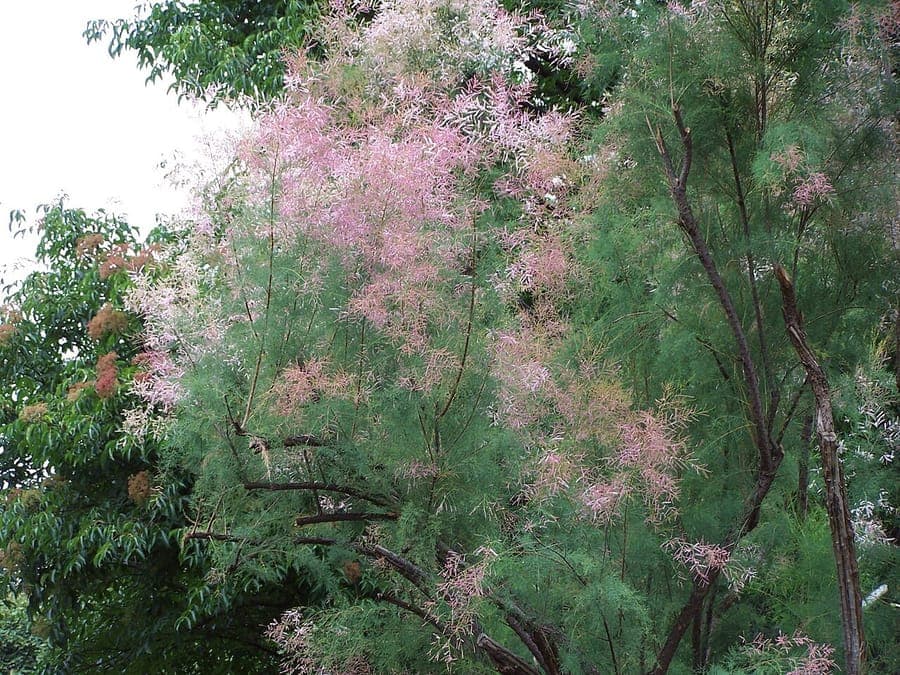
Tamarisk grows into a shrub reaching approximately 3 to 4 meters tall and 2 to 3 meters wide, though this varies considerably. The plant features extremely fine, gray-green needle-like leaves that appear nearly translucent, creating an exceptionally airy, graceful silhouette. This foliage gives the plant its characteristic, almost cloud-like appearance.
Flowers appear in long, slender, spike-like racemes and are predominantly pink to purple-pink in color. Some cultivars display white flowers with purple tinges. Blooming occurs from June through September, with new flowers continuously opening, providing an extended flowering period. After blooming, small dry seed pods develop.
The stem of mature specimens becomes dark brown to gray and develops an attractive flaking pattern. This bark characteristic adds visual interest, particularly during winter months.
Ideal Location
Tamarisk flourishes in locations receiving full sun. The plant requires at least 6 to 8 hours of direct sunlight daily to bloom optimally and maintain compact growth. In partial shade, the plant will grow but produce fewer flowers.
The plant tolerates windy conditions exceptionally well and thrives in coastal areas where salty sea breeze is present. This makes tamarisk an excellent choice for gardens near the sea.
Soil Requirements
Tamarisk is not demanding regarding soil type. The plant accepts poor, dry, salty, and even slightly alkaline soils. A pH between 7.0 and 7.5 is ideal. Excellent drainage is essential, as the plant cannot tolerate wet roots.
In gardens with very fertile soil, tamarisk will grow, but may become more lush and less compact in form. For optimal results, it is better to plant tamarisk in somewhat poorer, well-draining soil.
Free design
Want to see Tamarisk: complete guide in your garden? Make a free design now.
Watering
Once established, tamarisk is exceptionally drought-tolerant. Regular watering is important for young plants until fully established (first 1 to 2 seasons). Mature plants require minimal maintenance watering.
During prolonged drought, light irrigation can improve flower production, but this is not strictly necessary. The plant truly thrives on lean soils and will suffer in waterlogged conditions, potentially leading to root rot.
Pruning
Tamarisk responds well to pruning. To maintain a full, compact shape, prune after flowering (in autumn). Remove dead woody branches and shape the plant as desired.
Old wood can be cut back to strong buds in spring. This encourages new growth with more flowers. The plant can be cut back into old wood and will reliably regenerate.
Maintenance Calendar
Spring: Inspect for winter damage, prune to shape, fertilize if needed. Summer: Water regularly during establishment, watch for pests. Autumn: Prune after flowering, prepare for winter. Winter: Minimal maintenance; protect from extreme frost only in very cold regions.
Winter Hardiness
Tamarisk is reasonably winter hardy, tolerating temperatures to approximately -15 degrees Celsius. In colder climates, the plant may experience frost damage, especially on young shoots. In very cold regions, it is better to position tamarisk against a warm wall.
Companion Plants
Tamarisk works well alongside other drought-tolerant plants. Good plant companions include lavender, bergenia, barberry, and rocky groundcovers. The airy, light appearance of tamarisk creates a beautiful contrast with heavier-looking plants.
Closing Remarks
Tamarisk is a fascinating plant that proves elegance and strength can go hand in hand. With its refined appearance, extended flowering period, and exceptional adaptability, tamarisk is a valuable addition to any garden, especially for challenging locations. Whether you have a coastal garden, a dry spot in your yard, or simply seek an elegant ornamental shrub, tamarisk will not disappoint.
Find tamarisk at major garden centers for the best selection and advice.
Want to see Tamarisk: complete guide in your garden? Make a free design now.
Upload a photo, pick a style, and get a photorealistic design with plant list in under a minute.
No credit card required


Similar plants
Athel tamarisk: complete guide
Tamarix aphylla
Discover the Athel tamarisk, a remarkable desert tree with delicate feathery foliage and pink flowers. Highly drought and salt-tolerant, ideal for challenging landscapes and coastal gardens.
Four-Stamen Tamarisk: complete guide
Tamarix tetrandra
Tamarix tetrandra is an elegant shrub with fine, feathery white and purple flowers. Ideal for dry and salt-tolerant soils, this tamarisk offers year-round interest in gardens.
Tamarix chinensis: complete guide
Tamarix chinensis
Master the care of Tamarix chinensis (Chinese tamarisk) - an elegant shrub perfect for dry gardens with stunning pink flowers and minimal maintenance.