
Wikimedia Commons / Public domain, via Wikimedia Commons
Medusahead-rye: complete guide
Taeniatherum caput-medusae
Want to see Medusahead-rye: complete guide in your garden?
1 minute, no credit card
Overview
Taeniatherum caput-medusae, commonly known as Medusahead-rye or Medusa's-head, is an annual or winter annual grass native to the Mediterranean region and Near East. This striking ornamental grass is famous for its unusual awn structure - long, curled bristles that literally resemble the writhing snakes of the mythological Medusa.
While considered invasive in some regions, this fascinating grass deserves a place in adapted gardens where its dramatic texture can shine.
Appearance & Bloom
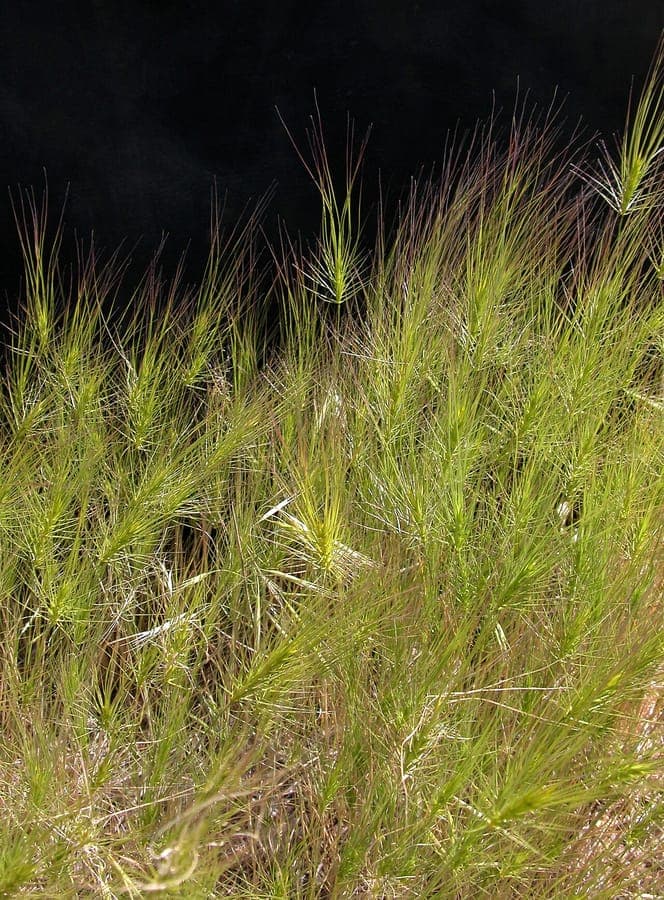
Medusahead grows as a loose tufting grass, reaching 30-50 cm in height. Leaves are narrow and green, typical of grasses. The real spectacle comes from the flowering spikes.
During bloom, long, thread-like awns appear that are curled and contorted. These can extend 5-8 cm and give the plant its characteristic appearance. Awns are initially green, turning brown as they mature. The naming directly references the mythological Medusa with her writhing serpents.
Flowering occurs in late spring through early summer, depending on climate.
Ideal Location
Medusahead prefers full sun locations. The plant grows best in open, warm spots receiving maximum light. This grass cannot perform well in shade and will be less spectacular under poor light.
The plant adapts to various terrains as long as it's sunny: slopes, dry beds, and even rocky places suit it well.
Soil
Medusahead grows well on dry to moderately dry soils. It prefers well-drained ground and cannot tolerate waterlogging. Poor to moderately fertile soils are suitable - it actually performs better on lean soils.
A pH between 6.5 and 8 is optimal. The plant is not particular and grows even on stony or sandy soils where other plants struggle.
Free design
Want to see Medusahead-rye: complete guide in your garden? Make a free design now.
Watering
Watering is minimal once the grass is established. During early growth, regular watering can be provided, but once established it tolerates dry periods well. Water only during persistent drought in the growing season.
Avoid waterlogging entirely. This grass is inherently drought-tolerant and can survive extended periods without water.
Pruning
Pruning is not necessary for living grass. After the growing season you can leave dried plumes standing for winter interest. If you want shorter grass for aesthetic reasons, cut it in early spring before growth begins.
Do not remove growing parts while the plant is actively developing.
Maintenance Calendar
- Spring: Sow seeds if propagating from seed. Keep surface moist but not waterlogged.
- Summer: Minimal watering. Enjoy the spectacular plumes.
- Autumn: Leave dried plumes standing for winter texture and interest.
- Winter: Plant dies back after seed set; new generation grows from seeds.
Winter Hardiness
Although Medusahead is annual, it spreads easily via self-seeding. Because it produces abundant seeds, it will likely re-appear next season. In milder climates it may also overwinter as a small seedling.
In colder regions it disappears completely after frost but re-germinates from seeds in spring.
Companion Plants
Medusahead combines well with:
- Other Mediterranean drought-tolerant plants
- Lavender and aromatic herbs
- Other ornamental grasses
- Rock gardens and xeriscaping
- Wildflower mixes for ecological gardens
Do not place beside moisture-loving plants.
Final Thoughts
Medusahead is one of the most spectacular grasses for those wanting something exotic and dramatic in their garden. The mythological naming reflects the genuine visual similarity to writhing serpents. While it can become invasive in some areas, a well-managed specimen can provide years of visual interest and texture.
Available from:
- Specialty garden centers (grass section)
- Ornamental grass specialists
- Gardenworld.app (for Mediterranean garden inspiration)
Want to see Medusahead-rye: complete guide in your garden? Make a free design now.
Upload a photo, pick a style, and get a photorealistic design with plant list in under a minute.
No credit card required


Similar plants
Sporobolus pungens: complete guide
Sporobolus pungens
Sporobolus pungens is a stoloniferous Mediterranean coastal grass with outstanding salt and drought tolerance, perfect for seaside and dry gardens.
Mediterranean aegilops: complete guide
Aegilops biuncialis
Everything about Aegilops biuncialis, a Mediterranean annual grass with ornamental spikes and outstanding drought tolerance for dry gardens.
Silver bluestem: complete guide
Bothriochloa saccharoides
Full guide to Bothriochloa saccharoides (silver bluestem): site, soil, watering, winter hardiness, pruning, and garden companions.