
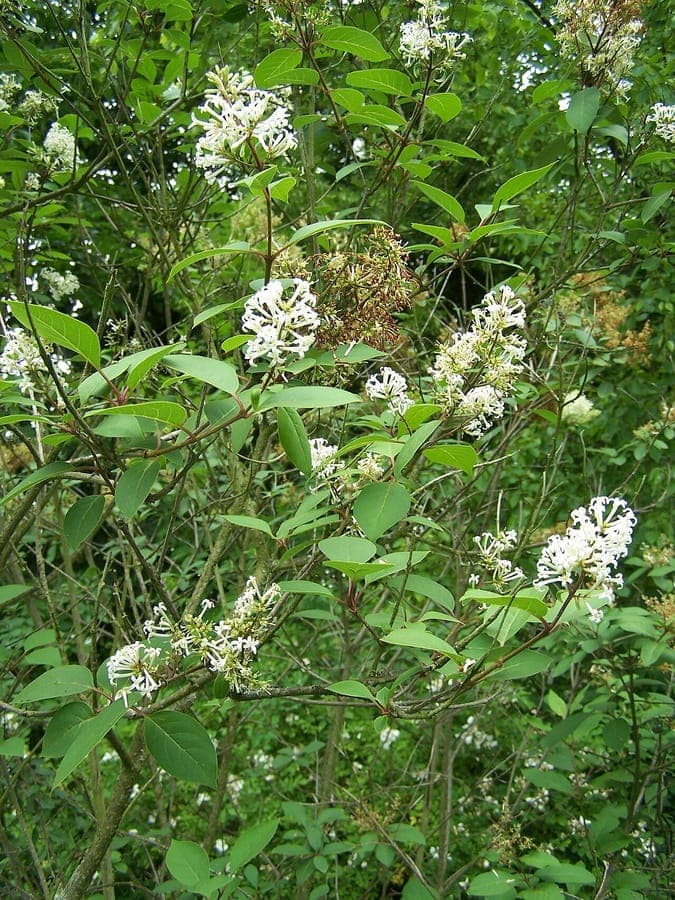
No machine-readable author provided. Valérie75 assumed (based on copyright claims). / CC BY-SA 3.0, via Wikimedia Commons
Syringa emodi: complete guide
Syringa emodi
Want to see Syringa emodi: complete guide in your garden?
1 minute, no credit card
Overview
The Syringa emodi, commonly known as the Himalayan lilac, is one of the most enchanting plants from the highlands of Pakistan to Nepal. This magnificent flowering shrub conquers hearts each spring with its abundant purple flowers and unforgettable fragrance. For those seeking reliable, long-term decoration that returns year after year, this is an ideal choice.
The Himalayan lilac grows into a substantial shrub of two to four meters height, delivering impressive performance in May and June. With dense clusters containing hundreds of tiny flowers, it provides maximum visual impact. Moreover, the plant is abundantly winter hardy and withstands frost without difficulty.
Appearance and bloom
The Syringa emodi features healthy green foliage that is elongated and pointed. The leaves are pleasantly glossy and very healthy-looking. From May to June, full flower clusters appear in a beautiful lilac or purple. Some cultivars feature lighter shades or nearly white flowers.
The flowers are small but arranged in massive pyramidal clusters reaching up to 20 centimeters height. They are intensely fragrant with a sweet, classic lilac scent that fills entire gardens. After blooming, green seed pods develop, opening in autumn.
Ideal location
The Himalayan lilac thrives best in full sun. Ensure it receives at least six to eight hours of direct sunlight daily. In partial shade it grows, but blooms less generously. Avoid deep shade under large trees.
Choose a wind-protected spot, but not stuffy enclosure. The shrub benefits from air circulation. For larger gardens, it works perfectly as a screening background for privacy and spring flower enjoyment. In smaller gardens, a well-pruned specimen serves as a focal point.
Soil
The Syringa emodi is not particularly fussy about soil composition. As long as it drains well and doesn't remain waterlogged, growth is good. The plant succeeds even in somewhat poorer soils, if not completely depleted. A neutral to slightly alkaline pH between 6.0 and 7.5 is actually preferable.
Work ripe compost or garden manure into the planting hole. This gives the plant a good starting position. Once established, minimal feeding is required; it's very self-sufficient.
Free design
Want to see Syringa emodi: complete guide in your garden? Make a free design now.
Watering
The Himalayan lilac initially requires regular water during its first growing season. Check that soil is moist to approximately 15 centimeters depth in early months. However, avoid muddy conditions.
From the second year onward, the plant is quite drought-tolerant. In normal rainfall it grows without problem. Only in very dry summers does supplemental water help, especially during the blooming period. Never maintain excessively wet conditions, as this causes root rot.
Pruning
The Syringa emodi must be pruned after flowering, ideally in early July. This stimulates richer branching next season. Remove spent flower clusters entirely down to a couple of good buds below.
Every three to four years apply more substantial pruning, consisting of removing older branches. This maintains vitality and shape. Pruning wounds heal well. Don't wait until spring for major pruning; this actually reduces your blooms.
Maintenance calendar
In March, check for winter damage and remove broken branches. This isn't the time for major pruning. In May, enjoy abundant blooming. Mark early July for your first pruning work immediately after flowering.
From August through October, leave the plant alone. In November, before severe frosts, you can apply mulch around the base for extra protection, especially for young plants. Winter itself requires no maintenance.
Winter hardiness
The Syringa emodi is excellent hardy to -25 to -30 degrees Celsius. This makes it suitable for all northern European gardens. Only in exceptional extreme cold do you sometimes encounter minor tip damage, but the plant survives easily.
Young plants may benefit from extra protection in their first winter in the form of leaf mulch around the base. Generally, this is optional.
Companion plants
The Himalayan lilac combines beautifully with early-blooming tulips and daffodils beneath. This extends blooming time in your garden. Also group flowering shrubs like Philadelphus or Deutzia nearby for an impressive spring spectacle.
Lower-growing plants like lavender, sage, and other herbaceous shrubs harmonize well. Ensure these less dominant species aren't overshadowed. Climbers like clematis can grow nicely through older lilac.
Closing thoughts
The Syringa emodi is an inseparable part of many successful gardens. Year after year, this reliable flowering shrub delivers maximum pleasure. For plant enthusiasts wanting continuous interest and unlimited blooming joy, this is truly a classic.
Available at garden centers year-round. Acquire your specimen in autumn through early spring for optimal rooting. With this guide, you have everything needed for many years of enjoyment!
Want to see Syringa emodi: complete guide in your garden? Make a free design now.
Upload a photo, pick a style, and get a photorealistic design with plant list in under a minute.
No credit card required


Similar plants
Rough menodora: complete guide
Menodora scabra
Full guide to Menodora scabra: a drought-tolerant desert subshrub with bright yellow flowers, ideal for rock gardens and xeriscapes.
Fraxinus dipetala: complete guide
Fraxinus dipetala
California ash or two-petal ash from southwestern USA. Beautiful spring flowers, drought-tolerant. Experimental choice for warm Mediterranean front gardens.
Syringa komarowii: complete guide
Syringa komarowii
Syringa komarowii is a striking lilac from central China with elegant flower spikes and lovely foliage. Discover the complete care guide here.