Aleph500Dadamz / CC BY-SA 4.0, via Wikimedia Commons
Stromanthe thalia 'Triostar': complete care guide
Stromanthe thalia
Want to see Stromanthe thalia 'Triostar': complete care guide in your garden?
Full design in HD: €7.99
Look after your Stromanthe thalia 'Triostar' with the GardenWorld app
Identify plants with your camera and get a care calendar with reminders for this plant.


Overview
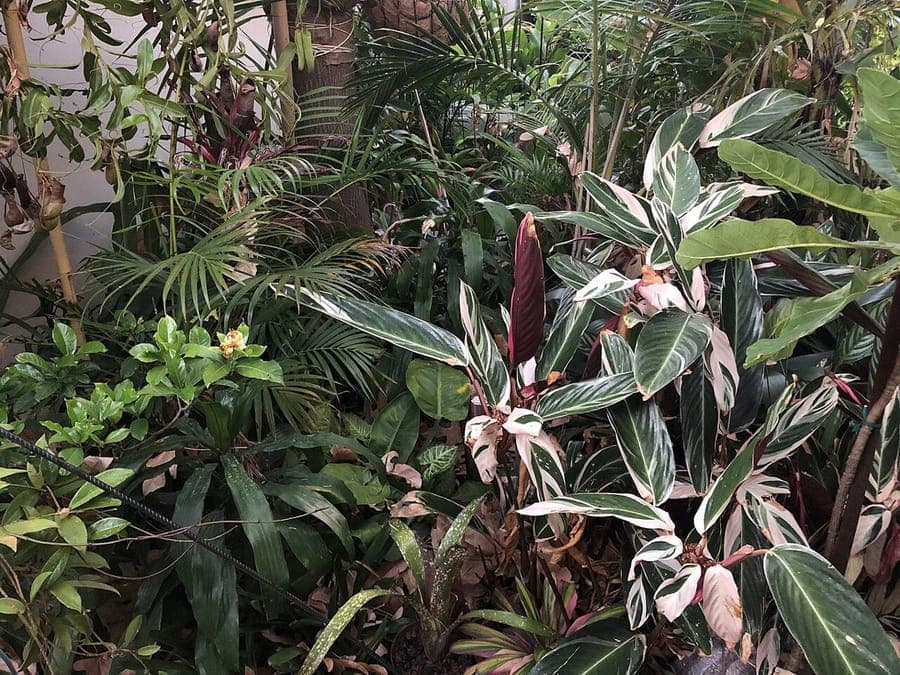
Few houseplants pack as much colour into their leaves as Stromanthe thalia. Each one is a small painting in dark green, cream and pink, with a deep magenta underside. Almost every plant on sale is the cultivar 'Triostar', and many people simply call it by that name. Older labels and many books still list it as Stromanthe sanguinea. Botanists now accept Stromanthe thalia as the correct name, but it is the same species.
Stromanthe comes from the Atlantic Forest of eastern and southern Brazil, where it grows along woodland edges and in light understorey on rich, moist, humus-laden soil. It belongs to the arrowroot family (Marantaceae), alongside calatheas and marantas. Compared with those relatives it is a little larger and more vigorous, and a touch more forgiving if your humidity is not always perfect.
Appearance and growth
The leaves are oblong to lance-shaped, 15 to 40 cm long, glossy on top and pointed at the tip. In 'Triostar' the variegation runs in irregular brushstrokes and streaks from the midrib towards the edge. No two leaves are alike: some are almost entirely green, others nearly white flushed with pink. In every form the undersides and leaf stalks are deep red to magenta, and when light shines through the leaves the whole plant seems to glow pink.
Indoors it reaches 60 to 90 cm in height and about as much across. In its natural habitat it can grow taller. It spreads by underground rhizomes and slowly builds a dense clump of many stems.
Like most members of its family, it moves its leaves with the daily rhythm. In the evening they rise and fold halfway, showing off their pink undersides; in the morning they drop open again. The movement is so marked that you can sometimes hear the leaves rustle. In the wild, panicles of bright red bracts and small white flowers appear in late winter or spring. Indoors that is a rare event.
Position in the home
Stromanthe needs room. Stand it on the floor or on a low plant table so the leaves can fan out and you can see their undersides. A living room or bedroom with a large window is ideal. Avoid draughts from outside doors and windows left on the latch, and keep it at least a metre away from radiators and stoves. Cold air currents and dry heat cause brown edges and curled leaves.
It looks its best in a group with larger green plants. The variegated leaves stand out more against plain green, and plants grouped together keep the air around them more humid.
Light
With a variegated plant, light is a balancing act. The white and pink parts of the leaf contain no chlorophyll and contribute nothing to growth, so the plant needs plenty of bright light: one to two metres from a south or west window, or right beside an east-facing one. Direct midday sun is too much. The pink fades and the white areas quickly scorch into brown, papery patches.
Kept too dark, the plant produces new leaves with more green and less pink, and the stalks become long and floppy. A grow light in the winter months helps to keep the colour.
Watering
From March to October, keep the compost lightly moist. Water as soon as the top 2 to 3 cm feel dry. A large stromanthe in a warm room drinks a lot in summer, sometimes twice a week. In winter, as growth slows, let the compost dry a little further, but never completely.
Wet feet are the biggest threat: root rot starts with water left standing in a decorative pot for days. Always tip away the excess. Use rainwater or filtered water at room temperature if you can. The plant is sensitive to lime and fluoride, which show up as brown leaf tips.
Humidity
Stromanthe thalia prefers humidity of 50 % or more, which is hard to achieve in a heated home in winter. A humidifier is the most dependable answer, especially if the plant lives in the sitting room. A tray of wet clay pebbles under the pot or a cluster of plants also helps. In a bright bathroom it often settles in straight away. Air that is too dry shows as leaves rolling up during the day and crisp brown edges.
Free preview
Want to see Stromanthe thalia 'Triostar': complete care guide in your garden? Make a free preview of your design.
Compost and repotting
Use an open, humus-rich compost that holds moisture without becoming airless. Houseplant compost mixed with a third perlite and some fine bark or coir makes a good base. A slightly acidic pH suits it.
The plant grows quickly and fills its pot with rhizomes within one or two years. Repot in April or May into a pot 3 to 5 cm wider. At the same time you can divide a large clump: cut off sections with a sharp knife, each with a few stems and roots of their own. Keep the divisions somewhere warm and sheltered with high humidity for a few weeks until they produce new leaves. Single leaves will not root as cuttings.
Care and pruning
From April to September, feed every three to four weeks with half-strength liquid houseplant fertiliser. Too much feed scorches the leaf edges, so err on the side of less.
Pruning is only needed to keep the plant tidy. Cut old or damaged leaves off low down at the base. Leaves that are entirely white grow poorly and soon turn brown, so you can remove them without worry. Wipe off dust with a damp cloth to keep the leaves glossy.
Spider mite is the main pest, especially in dry air. Look out for dull, speckled leaves and fine webbing underneath. Mealybug and thrips can also appear. Give the plant a lukewarm shower and raise the humidity, repeating a few times.
Care calendar
January to February: Quiet period. Less water, no feeding, no draughts. Use a grow light if light is poor.
March to April: Start feeding. Repot or divide if the pot is full.
May to August: Full growth. Water regularly and avoid midday sun. Check for spider mite every two weeks.
September to October: Taper off feeding. Bring the plant inside if it spent the summer outdoors.
November to December: Humidifier on, away from heating, slightly less water.
For a monthly overview of jobs for your houseplants and garden plants, take a look at the plant calendar on gardenworld.app.
Temperature and overwintering
Stromanthe is a tropical plant that can only overwinter indoors in our climate. It grows best between 18 and 27 °C. Below 15 °C it begins to suffer, and a few hours in the cold are enough to leave the leaves black and limp. A summer outdoors in a sheltered, shady spot is possible as long as nights stay above 15 °C, but bring it in well before autumn. Most growers keep it indoors all year.
Toxicity to pets
The ASPCA, the American animal welfare charity that runs its own poison control centre, has no separate entry for Stromanthe thalia. It does list the closely related genera Calathea and Maranta, from the same family, as non-toxic to dogs and cats. No toxic compounds are known from stromanthe, and it is widely regarded as safe for people and pets. As with any plant, a cat or dog that eats a lot of leaves may get a mild stomach upset. Keeping it out of reach also protects those beautiful leaves from damage.
Companion plants
Stromanthe looks its best next to plants with large, plain green leaves. The Swiss cheese plant (Monstera deliciosa) and Dracaena fragrans add height and calm. A fishbone fern (Nephrolepis cordifolia) fills the lower layer with fine, fresh fronds. Epipremnum pinnatum can trail beside the pot or climb a moss pole. The spider plant (Chlorophytum comosum) is a sturdy, light-coloured neighbour. All of them enjoy the same warm, humid conditions.
Final thoughts
Stromanthe thalia gives any room an instant tropical feel. With bright light but no harsh sun, soft water, humid air and a warm spot out of draughts, it stays colourful for years. Give it space and you will be rewarded with an impressive clump of leaves that stand to attention every evening. And if you would like to change things outdoors too, you can have a garden design made on gardenworld.app to suit your home.

See it in your garden
See Stromanthe thalia 'Triostar' in your garden
One photo of your garden and a few questions. You see the result in about a minute.
Try it with a photoIdentify this plant in your own garden. Identify a plant
Similar plants
Monstera deliciosa: complete guide
Monstera deliciosa
Discover the fruit-salad plant (Monstera deliciosa) - a popular houseplant with characteristic holes in leaves. Professional care and growing tips for success.
Nephrolepis cordifolia: complete guide
Nephrolepis cordifolia
Discover Nephrolepis cordifolia, an elegant ladder fern with graceful fronds. Read our cultivation guide for moist soil, indirect light, and care tips.
Dracaena fragrans: complete guide
Dracaena fragrans
Discover fragrant dracaena (Dracaena fragrans), a popular houseplant from tropical Africa, elegant and easy to care for.
