
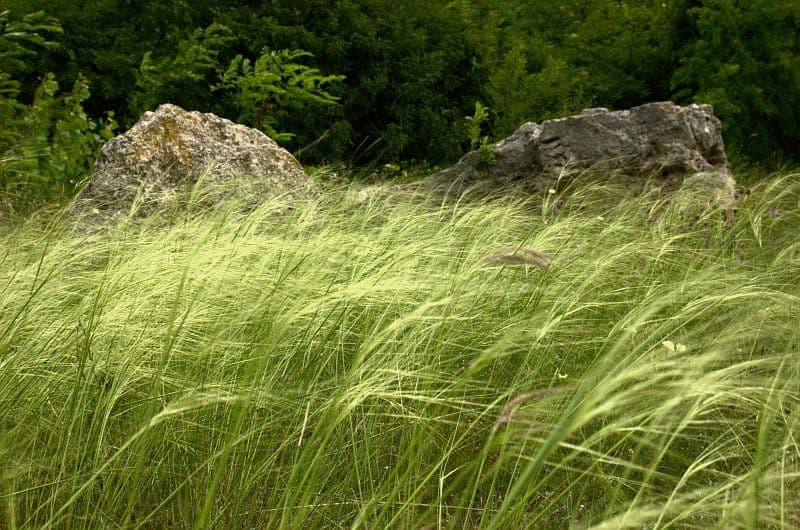
Stanislav Doronenko / CC BY 3.0, via Wikimedia Commons
European feather grass: complete guide
Stipa pennata
Want to see European feather grass: complete guide in your garden?
1 minute, no credit card
Overview
Stipa pennata, commonly known as European feather grass, is a slender, elegant perennial grass that brings soft motion and texture to the garden. Native to open grasslands across Central and Eastern Europe-from Austria to Russia and Bulgaria-it thrives in sunny, dry conditions. As a gardener, you'll appreciate its low demands and high visual impact. Reaching 60–90 cm in height, including its feathery flower plumes, this grass forms loose clumps and slowly spreads over time. It's a member of the Poaceae family and grows best in USDA zones 4–8.
With a light requirement of 8 out of 10, Stipa pennata needs full sun to develop strong stems and full plumes. It's perfect for naturalistic planting schemes, dry borders, and gravel gardens. If you're designing a new space, check gardenworld.app to visualise how this grass can flow through your borders, adding rhythm and softness.
Appearance & bloom cycle
The narrow, fine-textured leaves of Stipa pennata are bright green in spring, turning silvery-grey by late summer. From late June through August, tall, wiry stems rise above the foliage, each tipped with a delicate green flower that matures into a shimmering, golden-brown plume up to 20 cm long. These plumes catch the light and move gracefully in the breeze, creating a hypnotic effect in the garden.
The bloom period depends on local climate. In warmer springs, flowering begins in mid-June; in cooler areas, it may start in July. The plumes persist well into autumn and even winter, providing structure and habitat for overwintering insects. For best results, cut back old growth in early spring to make space for fresh shoots.
Ideal location
Plant Stipa pennata in full sun-aim for at least 8 hours of direct sunlight daily. It struggles in shade, becoming floppy and failing to flower. Choose open, airy spots where wind can pass through, enhancing its signature movement. Ideal locations include sunny slopes, rock gardens, meadow-style plantings, or as a focal point in a mixed border.
It also works in large containers, as long as the pot has excellent drainage. Use a gritty mix and avoid water-retentive composts. Before planting, use gardenworld.app to map sun exposure in your garden and identify the best microclimates for grasses like this.
Soil requirements
This grass demands well-drained soil. It cannot tolerate wet, compacted clay, especially in winter. The ideal pH is neutral to slightly alkaline (7.0–7.5). Sandy, loamy, or chalky soils are perfect. Avoid rich, moist soils-they promote weak growth and lodging.
When planting, amend heavy soil with grit or coarse sand to improve drainage. A top dressing of gravel helps keep the crown dry and suppresses weeds. Don't use organic mulch-too much fertility leads to lush, floppy growth.
Free design
Want to see European feather grass: complete guide in your garden? Make a free design now.
Watering
Once established, Stipa pennata is highly drought-tolerant. During the first growing season, water deeply but infrequently to encourage deep root development. After that, supplemental watering is rarely needed, even in dry summers. Overwatering is a common mistake-this grass evolved in dry steppes and doesn't need constant moisture.
In winter, it enters dormancy and requires no additional water.
Pruning
Prune in late winter or early spring, between February and March, before new growth emerges. Cut back the previous year's foliage and flower stems to about 15 cm above ground level. Use sharp shears or a pruning knife to avoid crushing the crown. Remove all dead material to prevent smothering new shoots.
Leave the plumes intact over winter-they add beauty and provide shelter for beneficial insects.
Maintenance calendar
- Jan: Dormant. No action needed.
- Feb: Cut back old growth to 15 cm.
- Mar: New shoots appear. Watch for slugs.
- Apr: No feeding. Soil should be dry.
- May: Prepare for flowering. No extra water.
- Jun: Bloom begins. Plumes emerge.
- Jul: Peak bloom. Grass looks best.
- Aug: Flowering fades. Plumes remain.
- Sep: No maintenance. Check young plants in drought.
- Oct: Leave plumes. Avoid wet conditions.
- Nov: No pruning. Dormancy starts.
- Dec: Fully dormant. Survives frost.
Winter hardiness
Stipa pennata is hardy to USDA zone 4 (-34°C). In the UK and Ireland (zones 7–8), it survives winter with no protection. Keep old foliage in place over winter-it insulates the crown. In areas with heavy winter rain, a light mulch of gravel can help prevent crown rot.
Companion plants
Pair with drought-tolerant perennials like Echinacea, Salvia nemorosa, Sedum 'Matrona', or Nepeta. The upright form and fine texture of feather grass contrast beautifully with bold blooms and bushy foliage. Avoid moisture-loving plants like hostas or astilbes.
Give each plant enough space-about 40–50 cm between clumps-for good airflow and to prevent overcrowding.
Closing
Stipa pennata is a low-effort, high-reward grass that brings year-round interest and movement to the garden. With full sun, sharp drainage, and a simple spring tidy-up, it will thrive for years. Plant it in drifts for maximum effect or use it as a soft accent. Available at most garden centres, or plan your layout on gardenworld.app to see how this grass can elevate your design.
Want to see European feather grass: complete guide in your garden? Make a free design now.
Upload a photo, pick a style, and get a photorealistic design with plant list in under a minute.
No credit card required


Similar plants
Sporobolus pungens: complete guide
Sporobolus pungens
Sporobolus pungens is a stoloniferous Mediterranean coastal grass with outstanding salt and drought tolerance, perfect for seaside and dry gardens.
Mediterranean aegilops: complete guide
Aegilops biuncialis
Everything about Aegilops biuncialis, a Mediterranean annual grass with ornamental spikes and outstanding drought tolerance for dry gardens.
Silver bluestem: complete guide
Bothriochloa saccharoides
Full guide to Bothriochloa saccharoides (silver bluestem): site, soil, watering, winter hardiness, pruning, and garden companions.