
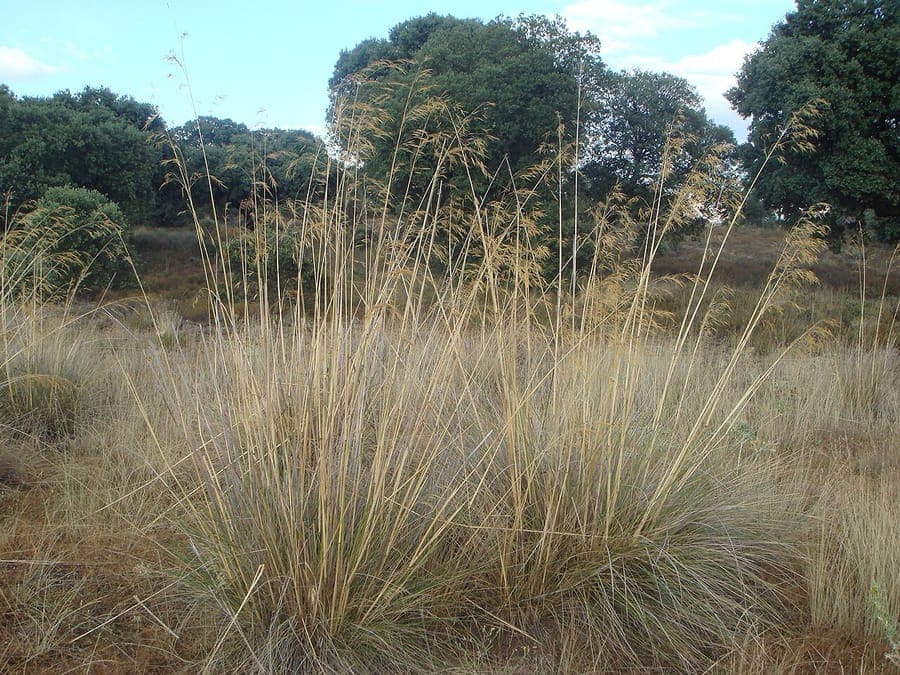
Xemenendura / CC BY-SA 4.0, via Wikimedia Commons
Stipa gigantea: complete guide
Stipa gigantea
Want to see Stipa gigantea: complete guide in your garden?
1 minute, no credit card
Overview
Stipa gigantea, commonly known as giant feather-grass or giant needle grass, is a stately ornamental grass from the Poaceae family. This grass grows in parts of Europe and suits modern gardens beautifully through its dramatic seed heads and golden shimmer. The grass is a classic element in Mediterranean and contemporary garden designs.
Appearance & Bloom
This grass forms dense, grey-green leaf clumps reaching up to 3 feet high. Its chief ornamental value lies in the seed heads (panicles) that develop in summer, soaring to 5 to 6.5 feet tall. These panicles are delicate and airy, beginning green and later adopting soft golden tones. Individual seeds bear long hairs conferring a feathery appearance. In sunlight, the panicles shimmer beautifully in gold.
Ideal Location
Giant feather-grass thrives in full sun locations. At least 6 to 8 hours of direct sunlight daily is essential. The grass can grow in partially shaded spots but will not achieve its full height and golden glow potential. A windy, open location enhances the golden shimmer effect.
Soil
This grass grows well in well-draining, somewhat lean soil. Heavy, nutrient-rich soil can result in excess foliage and fewer seed heads. A mixture of sand with some peat-based compost works well. The grass tolerates drought reasonably well. Leaner soil actually produces more attractive panicles.
Free design
Want to see Stipa gigantea: complete guide in your garden? Make a free design now.
Watering
Once established, giant feather-grass tolerates drought very well. Water regularly during the first year to promote rooting. Thereafter, water only in extreme drought. The grass may actually benefit from drier conditions for panicle formation.
Pruning
Cut back in early spring (March-April). Trim the dry, grey foliage close to the ground. This stimulates new green leaf growth at the base. Panicles develop on new stems.
Maintenance Calendar
March-April: Cut back old foliage. April-May: Growth period. June-September: Blooming and panicle development with nutrient uptake. October-February: Winter dormancy with dry panicles persisting.
Winter Hardiness
Giant feather-grass is winter-hardy to about 5 to -5 degrees Fahrenheit in temperate regions. The grass overwinters outdoors. In severe winters with heavy wet snow, provide protection. However, first cut old stems to ground level.
Companion Plants
Combine Stipa gigantea with other Mediterranean plants and ornamental grasses such as Festuca glauca, Lavandula, and Salvia. For contrast, add dark-foliaged plants like Sambucus nigra 'Black Lace'. Low-growing ornamental grasses around the base add a texture layer.
Conclusion
Stipa gigantea is a monumental grass bringing dramatic beauty through its golden panicles. This grass deserves a prominent position where its full beauty can be displayed. Young specimens are available from nurseries and garden centers. For gardenworld.app users, add these golden jewels to your garden design for lasting ornamental value and movement in the breeze.
Want to see Stipa gigantea: complete guide in your garden? Make a free design now.
Upload a photo, pick a style, and get a photorealistic design with plant list in under a minute.
No credit card required

