
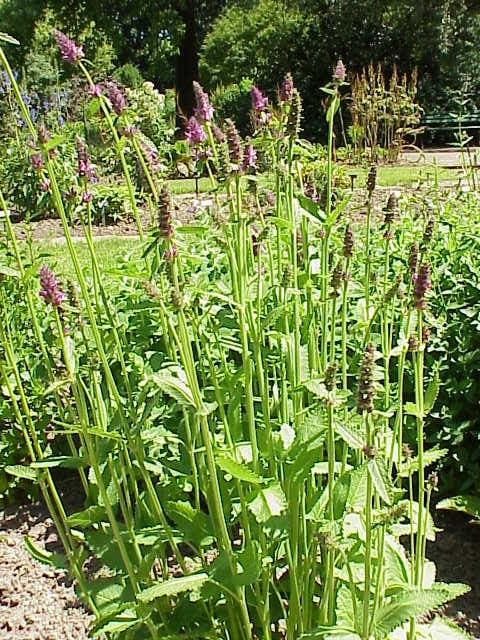
Wikimedia Commons / CC BY-SA 3.0, via Wikimedia Commons
Chinese-artichoke: complete guide
Stachys affinis
Want to see Chinese-artichoke: complete guide in your garden?
1 minute, no credit card
Overview
Chinese-artichoke (Stachys affinis), also known as Crosne, knotroot, or Japanese potato, is a food crop of Asian origin. This member of the Lamiaceae family (mint family) is particularly valued for its underground, pearl-white tubers with distinctive food value. For centuries, this crop has been cultivated in China and Japan, and now spreads to European gardens.
Appearance and Bloom
The plant grows 30 to 60 centimeters tall with dark green, hairy leaves. Summer through autumn displays purple to pink flowers in dense spikes. After the growing season, interesting, spirally-knotted tubers 3 to 5 centimeters long form underground. These tubers are smooth, yellow, and possess a sweet, nutty flavor.
Ideal Location
Sunny to partially shaded locations work well. The plant actually thrives better in light shade, as this promotes better tuber formation. Protection from strong wind is useful. Adequate moisture is essential.
Soil
Nutrient-rich soil with good organic matter content works best. Sand is favorable, as loose soil promotes tuber formation. Drainage must be good, without waterlogging. pH around 6 to 7 is ideal. Preparation with compost several weeks before planting delivers excellent results.
Watering
Regular watering is needed, especially during dry periods. Keep the soil moist but not waterlogged. When soil becomes dry, tuber formation can deteriorate. Water once weekly during growing season. In rainy periods, water minimally.
Free design
Want to see Chinese-artichoke: complete guide in your garden? Make a free design now.
Pruning
No pruning needed. Remove only damaged leaves or wild growth.
Maintenance Calendar
Spring (March-May): Plant tubers between late March and May. Ensure adequate spacing: at least 20 centimeters apart. Water regularly as shoots appear. Weed between young plants.
Summer (June-August): Plant grows rapidly. High water requirements. Monitor for pests. Flowers appear. Tuber formation begins underground.
Autumn (September-October): Tubers mature. Foliage dies back. Tubers are now ready for harvest. Harvesting can occur from October through January.
Winter (November-February): Soil is empty. Tubers are stored or left in soil as food storage for next year.
Winter Hardiness
The plant itself is not winter hardy: it dies with frost. Tubers can, however, overwinter underground and regrow in spring. In cold climates, mulching is necessary for protection.
Companion Plants
Good combinations include:
- Celery (Apium graveolens) - regular water requirements
- Onion (Allium cepa) - same growing period
- Cabbage (Brassica) - same crop production goals
- Oregano (Origanum) - aromatic benefit
Closing
Chinese-artichoke is a special addition to edible gardens for those seeking something different from standard vegetables. The tubers have interesting flavor and nutritional value, while the flowers are decorative. Via gardenworld.app you can discover how this food crop integrates into gardens. Try it in your edible section for a unique harvest.
Want to see Chinese-artichoke: complete guide in your garden? Make a free design now.
Upload a photo, pick a style, and get a photorealistic design with plant list in under a minute.
No credit card required


Similar plants
Apple mint (Mentha x villosa): complete guide
Mentha x villosa
Meet apple mint (Mentha x villosa): a fruity-scented kitchen herb with woolly leaves, perfect for tea and mojitos.
Salvia peyronii: complete guide
Salvia peyronii
Discover Salvia peyronii, a rare Lebanese mountain sage. Growing tips, hardiness, and companion planting for a Mediterranean gravel garden.
Bigleaf mint (Mentha x rotundifolia): complete guide
Mentha x rotundifolia
Discover bigleaf mint: cultivation, care tips, and garden uses. Learn how to grow this aromatic herb with soft, hairy leaves.