
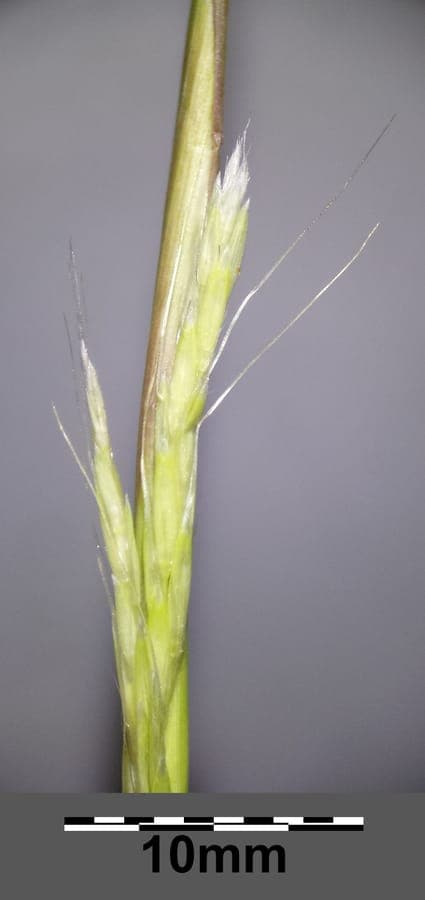
Stefan.lefnaer / CC BY-SA 4.0, via Wikimedia Commons
Annual Dropseed: complete guide
Sporobolus neglectus
Want to see Annual Dropseed: complete guide in your garden?
1 minute, no credit card
Overview
Sporobolus neglectus, commonly known as annual dropseed, puffsheath dropseed, or small dropseed, is a diminutive annual grass native to North America. This modest species ranges from Canada through the United States, inhabiting diverse regions from eastern seaboards to western mountains. Belonging to the Poaceae (grass) family, this species thrives in xeric and semi-arid grassland habitats across the Great Plains and Rocky Mountain regions.
Though small and frequently overlooked (hence "neglectus"), annual dropseed plays ecological roles in prairie and grassland communities. This species provides forage for grasshoppers and seeds for granivorous birds, maintaining biodiversity in grass-dominated ecosystems.
Appearance and Bloom
Sporobolus neglectus is a diminutive grass typically reaching 15 to 60 centimeters in height. The plant displays fine, thread-like leaves and unobtrusive, microscopic flowers. Stems and leaves are slender yet characteristically rigid.
Flowers are extremely reduced and inconspicuous, arranged in open panicles (flower clusters) measuring 5 to 15 centimeters long. Unlike showy ornamental grasses, flowers are greenish to light brown, entirely wind-pollinated. Flowering extends from June through October depending on latitude and growing season.
Following pollination, minute seeds (caryopses) develop, each barely 1 millimeter long. These seeds are wind-dispersed, capable of remaining viable in soil for years until germination conditions align.
Ideal Location
Sporobolus neglectus inhabits specific xeric microhabitats:
- Dry prairies and grasslands across North America
- Sunny, open sites with excellent drainage
- Preference for nutrient-poor, xeric substrates
- Full sunlight (6-8 hours minimum daily)
- Tolerance for extremely poor, degraded soils
In Netherlands gardens, annual dropseed can be cultivated as a self-sowing annual in dry borders or prairie-style plantings. The species demands minimal maintenance and intervention.
Free design
Want to see Annual Dropseed: complete guide in your garden? Make a free design now.
Soil Requirements
Soil preferences strongly favor this species:
- Xeric, nutrient-poor sand or clay
- Neutral to slightly alkaline pH (6.5-7.5)
- Excellent drainage without waterlogging
- Superior performance in impoverished soils
- Organic matter not essential
Sporobolus neglectus actually performs better in poor soils than enriched ones. This characteristic makes it invaluable for erosion control and revegetation of degraded or abandoned agricultural lands.
Watering
Watering requirements are minimal:
- Once established, extremely drought tolerant
- Minimal water needs in cultivation
- Supplemental irrigation actually reduces growth vigor
- Native range receives only 25-50 centimeters annual precipitation
- In temperate climates, additional water rarely necessary
Pruning
Pruning is unnecessary:
- Grass naturally remains small and compact
- Retain seed heads for natural self-sowing
- Mowing only after seed dispersal if desired
- Virtually maintenance-free
Maintenance Calendar
June-August: Flowering and seed production September-October: Seed dispersal November-May: Dormancy and preparations
Winter Hardiness
Sporobolus neglectus is an annual grass:
- Functions as annual in most climates
- Dies back in autumn in northerly regions
- Seeds overwinter in soil
- Extremely frost hardy, tolersating temperatures below minus 10 degrees Celsius
- In southern regions, may persist multiple seasons
Companion Plants
In natural dry grasslands, this species coexists with:
- Other Sporobolus species
- Bouteloua species (grama grasses)
- Buchloe species
- Aristida species
- Drought-tolerant forbs like Artemisia and Lupinus
- Small woody shrubs
Concluding Thoughts
Sporobolus neglectus demonstrates that not all garden plants need be large or visually prominent. Its adaptations to xeric, nutrient-poor conditions and ecological value make it an excellent subject for native grassland restoration and revegetation of degraded lands. For Dutch gardeners, this North American species offers opportunity to evoke prairie character while supporting native North American biodiversity patterns.
Want to see Annual Dropseed: complete guide in your garden? Make a free design now.
Upload a photo, pick a style, and get a photorealistic design with plant list in under a minute.
No credit card required


Similar plants
Sporobolus pungens: complete guide
Sporobolus pungens
Sporobolus pungens is a stoloniferous Mediterranean coastal grass with outstanding salt and drought tolerance, perfect for seaside and dry gardens.
Mediterranean aegilops: complete guide
Aegilops biuncialis
Everything about Aegilops biuncialis, a Mediterranean annual grass with ornamental spikes and outstanding drought tolerance for dry gardens.
Silver bluestem: complete guide
Bothriochloa saccharoides
Full guide to Bothriochloa saccharoides (silver bluestem): site, soil, watering, winter hardiness, pruning, and garden companions.