
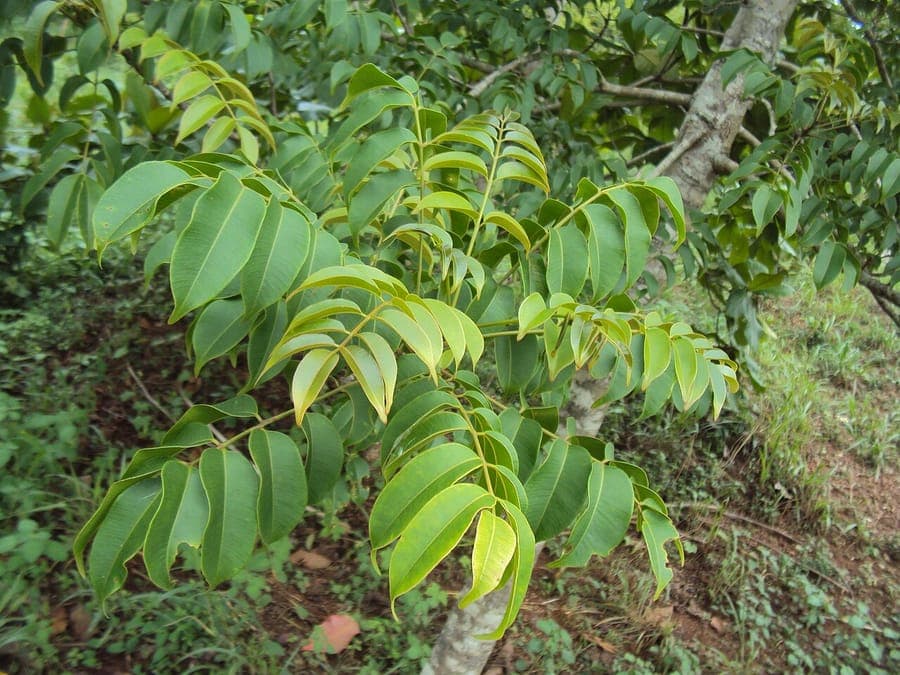
Vinayaraj / CC BY-SA 3.0, via Wikimedia Commons
Spondias pinnata: complete guide to Common Hog-plum
Spondias pinnata
Want to see Spondias pinnata: complete guide to Common Hog-plum in your garden?
1 minute, no credit card
Overview
Spondias pinnata, also known as Amra, Mango-plum, or Common hog-plum, is a tropical fruit tree native to the Indian subcontinent through to China. This tree is renowned for its feathered leaves and especially for its small, juicy fruits that can be eaten fresh or processed. In warm climates, this is a valuable fruit tree that provides food and shade.
Appearance and Bloom
Spondias pinnata grows into a substantial tree, usually 5 to 15 meters tall in its natural habitat. The leaves are feathered and composed of many smaller leaflets giving an airy appearance. In spring, small yellow to whitish flowers appear in panicles. The real attraction is the small yellow-orange fruits that form and have a pleasant sweet-sour taste.
Ideal Location
Spondias pinnata thrives best in full sun and warm environments. The tree needs a minimum of 6 to 8 hours of direct sunlight daily. This tree is only suitable for warm climates (zones 10-12) and cannot grow permanently outdoors in temperate climates. In cold climates, the tree can grow in a large container that is moved indoors in winter.
Soil
This tree grows well in diverse soil types. Sandy to loamy soil with good drainage works well. Spondias pinnata tolerates poor soil better than many cultivated fruits. pH can be neutral to acidic. Ensure good drainage; waterlogging is harmful.
Free design
Want to see Spondias pinnata: complete guide to Common Hog-plum in your garden? Make a free design now.
Watering
After planting, this tree needs regular water. In the first year, water daily to every other day. Afterward, water as needed, especially during the growing season. Water more during dry periods. After establishment, the tree tolerates drought fairly well.
Pruning
Pruning can be useful to keep the tree compact and promote productivity. Remove dead wood and crossing branches. Pruning after harvest helps the next season. You can also remove lower branches for better access.
Maintenance Calendar
Spring: Perform pruning sessions. Spring: Small yellow-whitish flowers appear. Summer: Monitor water needs and diseases. Fall: Fruits ripen. Winter: Bring indoors in cold areas.
Winter Hardiness
Spondias pinnata is tropical and cannot tolerate freezing. In temperate climates, the tree can only be outside during very warm periods. In cold climates, this tree should grow in a large container and be moved indoors for winter.
Companion Plants
In a tropical garden, Spondias pinnata combines well with other fruit trees and tropical plants. Plant alongside other timber and fruit trees for maximum food production. The tree canopy provides shade for understory planting.
Conclusion
Spondias pinnata is a fascinating choice for those living in a warm climate who want to grow tropical fruits. The combination of beautiful leaves, flowers, and edible fruits makes it a valuable addition to the garden. In cold countries, it can grow as a container plant. Discover more fruit tree guides on gardenworld.app for your garden.
Want to see Spondias pinnata: complete guide to Common Hog-plum in your garden? Make a free design now.
Upload a photo, pick a style, and get a photorealistic design with plant list in under a minute.
No credit card required


Similar plants
Skunkbush sumac: complete guide
Rhus trilobata
Everything about Rhus trilobata: siting, soil, autumn colour, pruning, and how this tough ornamental shrub earns a place in any garden.
Winged sumac: complete guide
Rhus copallinum
Everything about Rhus copallinum, the winged sumac with spectacular autumn colour. Location, pruning and garden value in full detail.
Aromatic sumac: complete guide
Rhus aromatica
Full guide to aromatic sumac (Rhus aromatica): planting, soil, care, pruning and companion plants for dry, sunny gardens and slope stabilisation.