
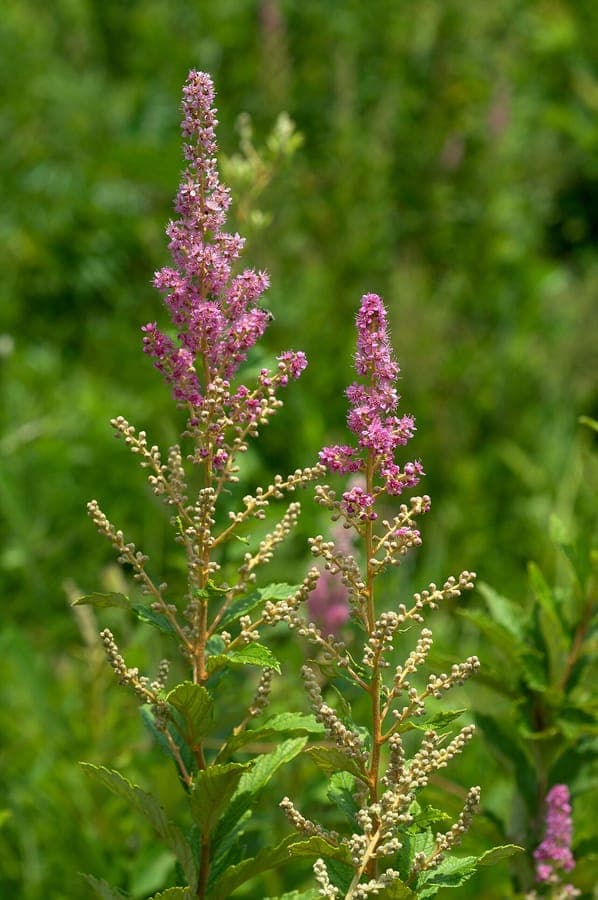
Eric Hunt / CC BY-SA 4.0, via Wikimedia Commons
Meadowsweet: complete guide
Spiraea tomentosa
Want to see Meadowsweet: complete guide in your garden?
1 minute, no credit card
Overview
Spiraea tomentosa, commonly known as Meadowsweet, is a rugged, upright shrub native to damp woodlands and meadows across eastern North America. Despite its modest size, it packs a punch in the garden with its long blooming season and ecological benefits. It thrives in moist conditions where many shrubs struggle, making it ideal for rain gardens, pond edges, or low-lying areas. This hardy plant reaches 2–3 feet tall and spreads about 2.5 feet wide, forming a neat, rounded shape. It's a quiet achiever-unassuming at first glance but deeply rewarding over time. On gardenworld.app, you can design a garden layout that highlights Meadowsweet's strengths, pairing it with complementary textures and bloom times.
Appearance & bloom cycle
Meadowsweet features narrow, lance-shaped leaves 1.5–3 inches long, with a soft, woolly underside that gives the plant its botanical name tomentosa. The foliage is medium green in sun, darkening slightly in shade. In late summer, leaves may turn reddish-bronze before dropping.
From July through September, dense, feathery panicles of tiny pink to deep rose flowers rise above the foliage. Each plume is 4–6 inches long and packed with dozens of star-shaped blooms. These attract a steady stream of pollinators-bees, butterflies, and hoverflies-making this shrub a valuable asset in any wildlife-friendly garden. Seed heads persist into winter, adding subtle structure to the dormant landscape.
Ideal location
Full sun to partial shade suits Meadowsweet best. For maximum flowering, aim for at least 6 hours of direct sunlight daily. In deep shade, growth becomes leggy and blooming diminishes. This plant loves moisture and does well in areas with poor drainage-think soggy corners, stream banks, or rain garden basins. Avoid dry, sandy spots unless you commit to regular watering.
Good air circulation is important to prevent powdery mildew, so don't crowd it among dense perennials. A spot with light breezes and morning sun helps keep foliage dry. It's also tolerant of urban conditions, including roadside runoff, as long as the soil stays consistently moist.
Soil requirements
Spiraea tomentosa prefers moist, humus-rich soil with a pH between 4.5 and 7.0. It tolerates clay and silt soils well, as long as they don't dry out completely. Sandy soils need amending with compost or leaf mold to improve water retention.
When planting, mix in a generous amount of compost or well-rotted manure into the planting hole. A 2–3 inch layer of organic mulch-like shredded bark or leaf litter-helps maintain moisture and suppress weeds. Avoid high-nitrogen fertilizers, which promote leafy growth at the expense of flowers.
Free design
Want to see Meadowsweet: complete guide in your garden? Make a free design now.
Watering
Keep the soil consistently moist, especially in the first two growing seasons. During dry spells, water deeply twice a week. Drip irrigation or soaker hoses work best, delivering water directly to the roots. Overhead watering can encourage fungal issues, so water at the base.
Once established, Meadowsweet is moderately drought-tolerant for short periods, but prolonged dryness leads to leaf drop and reduced flowering. If possible, use rainwater-this plant is sensitive to high calcium levels in tap water, which can cause chlorosis.
Pruning
Minimal pruning is needed. Since it blooms on new wood, prune in late winter or early spring (February to March). Remove dead, damaged, or crossing stems. You can shape the shrub lightly to maintain density, but avoid cutting into old wood, as it won't regrow well.
Leave the flower heads through winter-they add texture and shelter for overwintering insects. Cut them back in early spring before new growth emerges. Never prune in summer, as you'll remove developing flower buds.
Maintenance calendar
- January–February: Inspect for winter damage. Light pruning if needed.
- March: Plant or transplant. Apply compost and mulch.
- April–May: Watch for aphids or powdery mildew. Keep soil moist.
- June: Prepare for bloom. Increase watering during dry weeks.
- July–September: Peak flowering. No pruning. Support pollinators.
- October: Leave seed heads. Reduce watering as growth slows.
- November–December: Minimal care. Mulch young plants in colder zones.
Winter hardiness
Meadowsweet is hardy in USDA zones 4–8. It withstands winter temperatures down to -30°F (-34°C). In zone 7 and above, it requires no special protection. The stems die back slightly in harsh winters but resprout vigorously in spring from the base.
In zone 4 and 5, a light mulch around the root zone helps protect young plants during their first winter. Established shrubs are extremely resilient. On gardenworld.app, you can explore winter garden designs that incorporate Meadowsweet's persistent structure alongside evergreens and ornamental grasses.
Companion plants
Pair Meadowsweet with other moisture-loving natives: Joe-Pye weed (Eutrochium maculatum), Boneset (Eupatorium perfoliatum), or Blue Flag Iris (Iris versicolor). These share similar cultural needs and create a cohesive, low-maintenance planting.
For contrast, add switchgrass (Panicum virgatum 'Northwind') or Little Bluestem (Schizachyrium scoparium). Early bloomers like Columbine (Aquilegia canadensis) or Wild Geranium (Geranium maculatum) fill in the spring gap before Meadowsweet takes over.
Closing
Meadowsweet is a dependable, ecologically sound shrub that brings long-lasting color and pollinator activity to moist garden areas. It's low maintenance, cold hardy, and adapts well to challenging sites. Available at garden centres across the US and Canada, especially those specializing in native plants. Look for healthy root balls and avoid plants with yellowing leaves. With proper siting and consistent moisture, this Spiraea becomes a garden staple year after year.
Want to see Meadowsweet: complete guide in your garden? Make a free design now.
Upload a photo, pick a style, and get a photorealistic design with plant list in under a minute.
No credit card required


Similar plants
Siberian crab apple: complete guide
Malus x robusta
Complete guide to the Siberian crab apple (Malus x robusta): location, soil, pruning, winter hardiness and the best companion plants for your garden.
Chinese flowering crabapple (Malus x spectabilis): complete guide
Malus x spectabilis
Meet the Chinese flowering crabapple (Malus x spectabilis): a classic spring bloomer with carmine buds and pink blossom.
Potentilla crassinervia: complete guide
Potentilla crassinervia
Potentilla crassinervia, the Corsican cinquefoil, grows wild on Corsica and Sardinia's peaks. Discover how to grow this hardy alpine rock garden gem.