
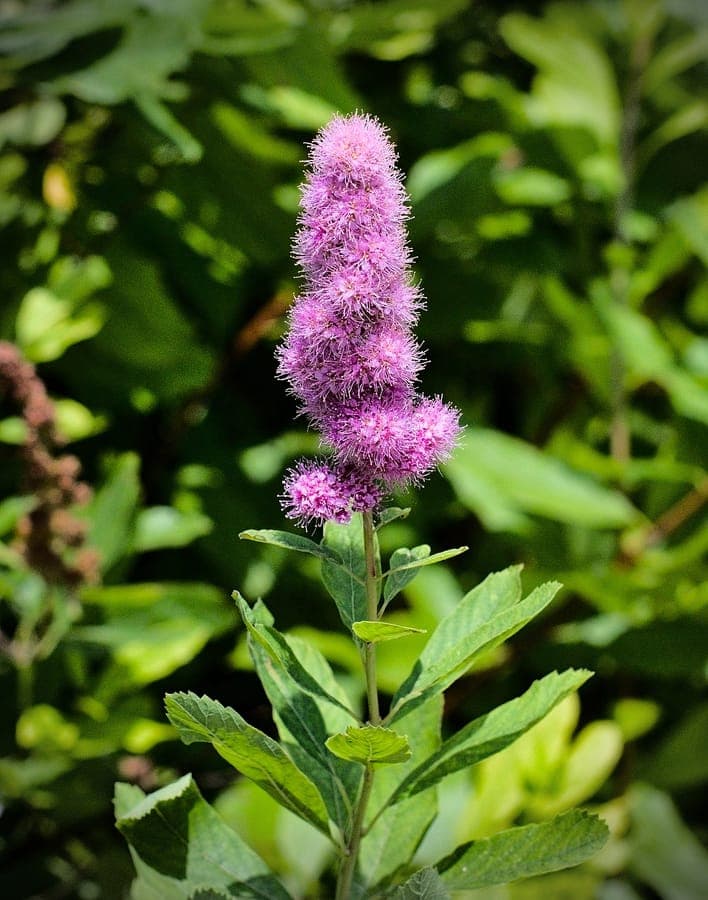
M0tty / CC BY-SA 3.0, via Wikimedia Commons
Bridewort: complete guide
Spiraea salicifolia
Want to see Bridewort: complete guide in your garden?
1 minute, no credit card
Overview
Bridewort (Spiraea salicifolia) is a graceful deciduous shrub from the Rosaceae family, native to regions across Central and Eastern Europe, Siberia, and parts of northern China. Reaching a height of 120–150 cm with a spread of up to 100 cm, it's a versatile plant for mid-sized borders or as a soft-textured filler in mixed shrub beds. Hardy in USDA zones 3 to 7, it tolerates winter lows down to -40°C, making it a solid choice for temperate and colder climates.
This shrub stands out for its upright, arching stems and narrow, lance-shaped leaves that resemble willow foliage-hence the species name salicifolia. It's not just ornamental; its blooms support pollinators, and its compact form requires minimal upkeep. On gardenworld.app, you can design a planting scheme that integrates Bridewort seamlessly with companion plants for year-round visual interest.
Appearance & bloom cycle
The foliage of Spiraea salicifolia is bright to medium green, with leaves growing 5–10 cm long and arranged alternately along the stems. In autumn, some plants develop subtle yellow or reddish tints, especially when grown in full sun.
Flowering occurs from early July to mid-August. The blooms appear in dense, feathery panicles that rise above the foliage, reaching 10–15 cm in length. Each panicle is made up of dozens of tiny, five-petaled flowers in soft pink to rosy pink shades. These airy clusters attract bees, hoverflies, and butterflies, adding ecological value to your garden.
Unlike many Spiraea species that bloom on old wood, this one flowers on new growth, which affects how and when you should prune.
Ideal location
Choose a spot that receives at least 5–6 hours of direct sunlight daily-ideally rated around 7/10 on the light scale. Bridewort can tolerate partial shade, but flowering diminishes significantly in deep shade, and stems may become leggy.
Allow at least 90 cm of space between plants to ensure good air circulation and prevent fungal issues. It works well in cottage-style gardens, informal hedges, or as a standalone feature in a sunny shrub border. When planning your layout, gardenworld.app helps you visualise spacing and companion planting for balanced growth and aesthetics.
Soil requirements
This shrub adapts to a range of soils but thrives best in moist, well-drained loam with a pH between 6.5 and 7.0. Avoid waterlogged clay or highly alkaline soils, which can stunt growth and lead to chlorosis.
Incorporate compost or well-rotted manure at planting time to boost organic content. If your soil is sandy and drains too quickly, add peat-free compost to improve moisture retention. Raised beds are a good option in areas with poor drainage.
Free design
Want to see Bridewort: complete guide in your garden? Make a free design now.
Watering
During the first growing season, provide consistent moisture-about 10–15 litres per plant weekly, especially during dry spells. Deep, infrequent watering encourages roots to grow downward, making the plant more drought-resilient over time.
Mature plants are moderately drought-tolerant but perform best with even soil moisture. In prolonged summer droughts, water deeply every 10–14 days. Avoid overhead watering to reduce the risk of powdery mildew.
Pruning
Since Bridewort blooms on new wood, prune it hard in late winter or early spring (February to March). Cut all stems back to 20–30 cm above ground level. This promotes vigorous new shoots and a bushy, compact habit.
Remove any dead, damaged, or crossing branches during pruning. Avoid pruning after May, as you risk cutting off flower buds forming on new growth. Regular pruning not only improves flowering but also reduces disease pressure by improving airflow.
Maintenance calendar
- Jan: Inspect for winter damage; prepare tools for pruning.
- Feb: Begin pruning; remove dead wood.
- Mar: Complete hard prune; apply compost mulch.
- Apr: Monitor new growth; apply balanced slow-release fertiliser if needed.
- May: Watch for aphids or mildew; water if soil dries.
- Jun: Maintain soil moisture; avoid disturbing new buds.
- Jul: Flowers emerge; peak bloom by mid-month.
- Aug: Flowering continues; avoid pruning.
- Sep: Seed heads form; cut back if desired for tidiness.
- Oct: Leaf drop begins; leave fallen leaves as natural mulch.
- Nov: Clean up garden debris; no further care needed.
- Dec: Dormant period; plant requires no maintenance.
Winter hardiness
Bridewort is exceptionally cold-hardy, surviving in USDA zones 3–7 without protection. In milder zones, it may retain some foliage into early winter. Young plants benefit from a 5–8 cm layer of mulch around the base to protect shallow roots from freeze-thaw cycles.
No winter wrapping or covering is necessary. The plant naturally sheds its leaves and enters dormancy, resuming growth in spring once temperatures rise.
Companion plants
Pair Bridewort with perennials that contrast in texture and bloom time. Good companions include Echinacea, tall grasses like Calamagrostis, or late-blooming Phlox. For front-of-border interest, use Nepeta or Salvia.
Other shrubs such as Hydrangea, Deutzia, or Viburnum complement its airy habit. Avoid invasive groundcovers that might compete for root space.
Closing
Bridewort is a low-fuss shrub that delivers high impact with its fluffy summer blooms and wildlife appeal. With a simple annual prune and basic watering during dry periods, it remains healthy and floriferous for years. Plant it in full sun, keep the soil well-drained, and you'll enjoy its soft pink plumes each summer.
You can find Spiraea salicifolia at garden centres across the UK and North America. When buying, check the plant's size and growth habit-on gardenworld.app, you can simulate how many shrubs you'll need for a full, balanced border without overcrowding.
Want to see Bridewort: complete guide in your garden? Make a free design now.
Upload a photo, pick a style, and get a photorealistic design with plant list in under a minute.
No credit card required


Similar plants
Siberian crab apple: complete guide
Malus x robusta
Complete guide to the Siberian crab apple (Malus x robusta): location, soil, pruning, winter hardiness and the best companion plants for your garden.
Chinese flowering crabapple (Malus x spectabilis): complete guide
Malus x spectabilis
Meet the Chinese flowering crabapple (Malus x spectabilis): a classic spring bloomer with carmine buds and pink blossom.
Potentilla crassinervia: complete guide
Potentilla crassinervia
Potentilla crassinervia, the Corsican cinquefoil, grows wild on Corsica and Sardinia's peaks. Discover how to grow this hardy alpine rock garden gem.