
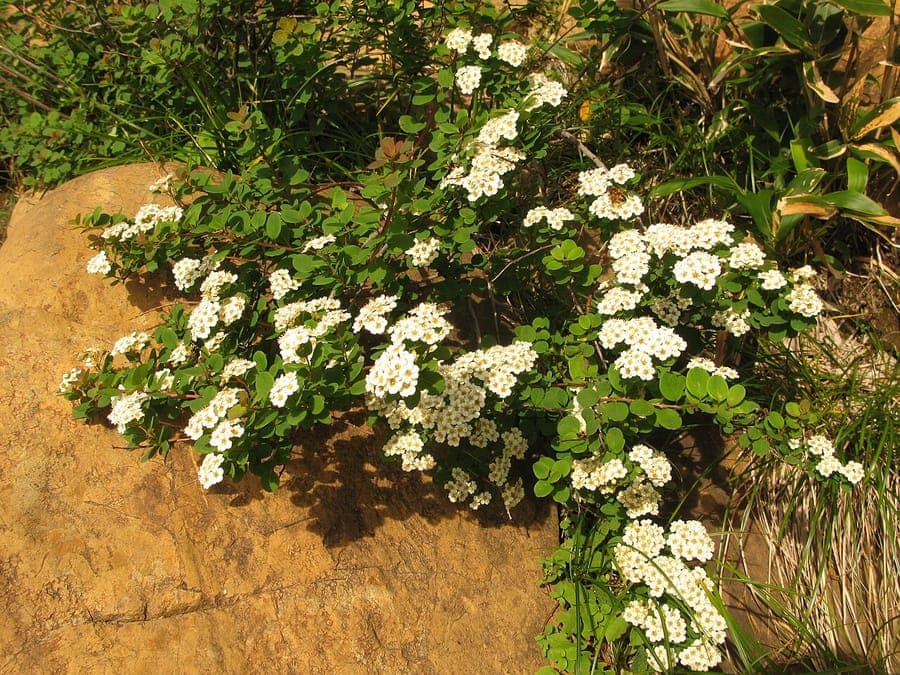
Qwert1234 / CC BY-SA 3.0, via Wikimedia Commons
Japanese spirea (Nippon spirea): complete guide
Spiraea nipponica
Want to see Japanese spirea (Nippon spirea): complete guide in your garden?
1 minute, no credit card
Overview
Japanese spirea (Spiraea nipponica), also known as Nippon spirea, is an elegant ornamental shrub from Japan. This plant belongs to the Rosaceae family and is renowned for its abundant, snow-white spring blooming. It's a popular garden plant in Europe due to its graceful growth habit and long history in horticulture.
It's a medium-sized, slightly arching shrub excellent for borders and specimen planting. With its fine, light blue-green foliage and abundant flowers, it adds considerable ornamental value. The plant is robust and relatively low-maintenance, making it popular among gardeners.
Appearance & Bloom
Japanese spirea grows as an elegant, slightly arching shrub with fine, densely branched stems. Leaves are oblong, glossy, and light green, creating a very graceful silhouette, especially before flowering.
Flowers are small, white, and profuse, appearing in dense, characteristic flower clusters along branches in May-June. They give the plant a snowy appearance. The flower clusters are highly attractive to bees and other pollinators. After blooming, small fruits appear, though these are less prominent.
The plant maintains its elegant silhouette year-round, thanks to its fine branch structure. Even in winter, the plant remains ornamentally interesting.
Ideal Location
Japanese spirea thrives best in sunny to half-shaded locations. Place it where it receives 4-6 hours direct sunlight daily. It also grows well in lighter shaded spots, though flowering is more abundant in full sun.
This shrub is suitable for borders, along garden paths, and as a specimen plant. It can also be used in hedging or topiary, though this approach somewhat limits its natural elegance.
The plant is hardy and tolerates considerable wind exposure. Place it where it can develop naturally without smothering nearby plants. In paved gardens, it fits well between stones and against walls.
Soil
Japanese spirea is undemanding and grows well in most soils. It prefers well-draining soil with pH 6.0-7.5, neutral to slightly acidic. In wet conditions, problems can arise.
For standard cultivation: incorporate some organic material before planting. The plant makes few demands regarding soil fertility. In very nutrient-poor soils, some compost can help, but excess feeding can limit blooming.
Ensure water doesn't stagnate. In very heavy clay soils, sand addition is advisable for better drainage.
Watering
Once well-established, Japanese spirea is fairly drought-tolerant. Nevertheless, it grows better with regular watering during the growing season. Young plants need more frequent watering than mature specimens.
Water when soil feels dry. During summer, this may be needed regularly, especially in very hot periods. In winter, when growth stops, minimize watering.
The plant tolerates dry periods better than wet conditions. However, excessive moisture can lead to disease, especially during cold periods.
Free design
Want to see Japanese spirea (Nippon spirea): complete guide in your garden? Make a free design now.
Pruning
Japanese spirea requires minimal pruning. However, it's useful to remove old, spent branches after flowering. This stimulates new growth and maintains the elegant silhouette.
Gentle pruning after blooming (June) helps maintain form and dense growth. Remove dead, diseased, or damaged branches annually. Avoid heavy pruning, as this can damage the natural form.
If the plant becomes too large, you can carefully remove some old stems from the base. This stimulates renewal without compromising the elegant form.
Maintenance Calendar
Spring (March-May): Begin growth stimulation. Plant young specimens. No pruning needed; allow blooming to occur.
Summer (June-August): Water regularly. Remove spent flowers (deadheading) to encourage growth. Minimal feeding. Check for possible fungal diseases in humid periods.
Autumn (September-October): Reduce watering. No feeding needed. Inspect shrub for damage.
Winter (November-February): Minimal care. No feeding. Check for frost damage or disease. Pruning if necessary.
Winter Hardiness
Japanese spirea is excellently hardy in Europe, to zone 5. This means reliable overwintering is possible in most of the Netherlands, Belgium, and France. The plant tolerates frost temperatures down to -20°C well.
In very severe winters, branch tips may suffer frost damage, but this doesn't cause plant death. The plant usually recovers without problems.
In southern regions, it grows without any winter protection. In northern zones, some mulch around the plant in November may be beneficial.
Companion Plants
Japanese spirea combines elegantly with other Japanese plants such as acer and mahonia. Also works well with dark green foliage plants like boxwood. Its white flowers create beautiful contrasts with red or purple foliage.
In borders, it combines well with perennials such as nepeta and salvia. Also provides contrast near low-growing groundcovers. Plant it not too close to other shrubs - it needs space for its elegant silhouette.
In Japanese-style gardens, spirea is a classic choice, alongside bamboo, stone lanterns, and water features.
Closing
Japanese spirea is a beautiful, elegant shrub that finds its place in almost any garden. With its snow-white flowers, robust nature, and low maintenance requirements, it's an excellent choice.
This is a plant offering years of beauty with minimal effort. Whether you source plants from quality nurseries, this guide helps you cultivate a healthy, floriferous specimen. Visit gardenworld.app for more inspiration on Japanese gardens and elegant garden structures. Simple, elegant, and reliable - Japanese spirea is a classic for good reason.
Want to see Japanese spirea (Nippon spirea): complete guide in your garden? Make a free design now.
Upload a photo, pick a style, and get a photorealistic design with plant list in under a minute.
No credit card required


Similar plants
Siberian crab apple: complete guide
Malus x robusta
Complete guide to the Siberian crab apple (Malus x robusta): location, soil, pruning, winter hardiness and the best companion plants for your garden.
Chinese flowering crabapple (Malus x spectabilis): complete guide
Malus x spectabilis
Meet the Chinese flowering crabapple (Malus x spectabilis): a classic spring bloomer with carmine buds and pink blossom.
Potentilla crassinervia: complete guide
Potentilla crassinervia
Potentilla crassinervia, the Corsican cinquefoil, grows wild on Corsica and Sardinia's peaks. Discover how to grow this hardy alpine rock garden gem.