
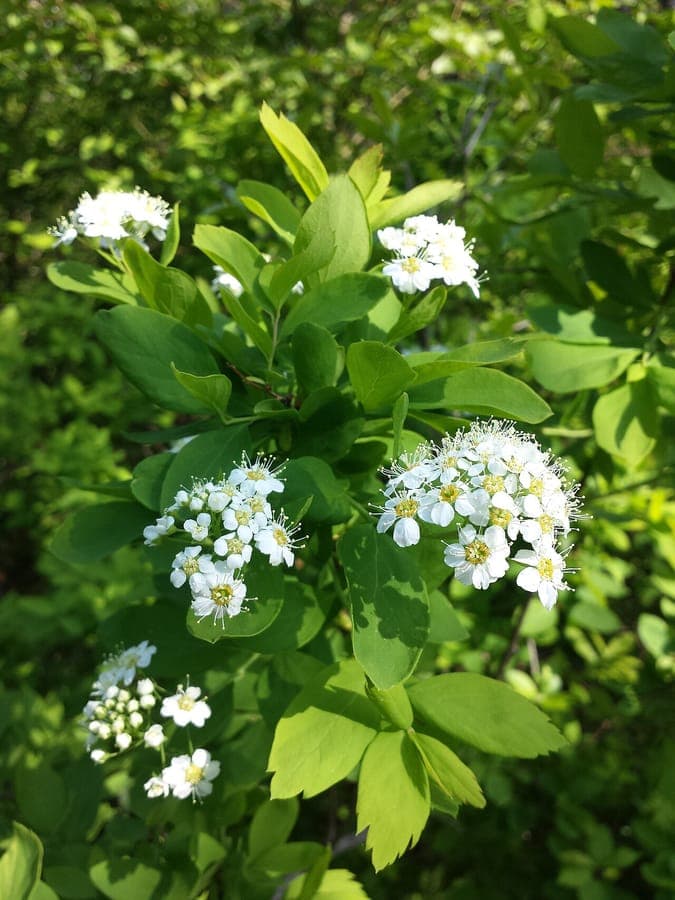
Stefan.lefnaer / CC BY-SA 4.0, via Wikimedia Commons
Russian spiraea: complete guide
Spiraea media
Want to see Russian spiraea: complete guide in your garden?
1 minute, no credit card
Overview
Spiraea media, commonly known as Russian spiraea, is a tough, deciduous shrub that brings quiet elegance to gardens across temperate zones. Belonging to the Rosaceae family, it's native to regions like the Altay Mountains, Amur, and parts of Central Europe and Asia. In UK and northern European gardens, it's becoming a go-to choice for low-maintenance borders, informal hedges, or as a structural plant in wildlife-friendly designs. Mature plants typically reach 80–120 cm in height and spread to about 100 cm, making it ideal for small to medium-sized plots where space is limited.
Hardy in USDA zones 4–8, Spiraea media handles cold winters well, surviving down to -34°C when established. It doesn't demand perfect conditions-just good drainage and a bit of sun. On gardenworld.app, you can visualise how this shrub fits into your garden layout, balancing height, bloom time, and seasonal interest.
Appearance & bloom cycle
Russian spiraea has a neat, upright to slightly spreading habit. Its slender stems carry small, ovate leaves with finely serrated edges. The foliage emerges bright green in spring, deepens to a rich dark green in summer, and sometimes turns soft yellow in autumn-nothing dramatic, but a gentle shift that adds warmth to the late-season garden.
From late June through July, it produces clusters of tiny white flowers in dense, feathery panicles 4–6 cm wide. These aren't showy like some spiraeas, but they're abundant and highly attractive to pollinators. Bees, hoverflies, and small butterflies regularly visit the blooms, making this shrub a quiet contributor to garden biodiversity.
Unlike Spiraea japonica, which blooms on new wood, Spiraea media flowers on one-year-old growth. This means any pruning must happen right after flowering, or you'll cut off next year's buds.
Ideal location
Full sun is best-aim for at least 6 hours daily. In partial shade, the plant will survive but may flower less and stretch for light. Choose a spot with good air circulation to prevent fungal issues, especially in humid summers. Avoid deep shade or areas under dense tree canopies where competition for water and nutrients is high.
It works well in cottage gardens, gravel beds, or as part of a mixed shrub border. Because it's compact, it's also suitable for narrow side borders or even large containers (minimum 40 cm diameter). On gardenworld.app, you can simulate different planting schemes to see how Russian spiraea complements other shrubs and perennials in your space.
Soil requirements
This shrub is adaptable but insists on well-drained soil. It tolerates a range from sandy loam to clay-loam, as long as water doesn't pool. Ideal pH is between 5.5 and 7.5. Heavy clay soils should be improved with grit or composted bark to enhance drainage.
Avoid waterlogged conditions, especially in winter-soggy roots lead to root rot. When planting, dig a hole twice as wide as the root ball and mix in garden compost. Don't over-fertilise; high-nitrogen feeds promote leafy growth at the expense of flowering.
Free design
Want to see Russian spiraea: complete guide in your garden? Make a free design now.
Watering
Young plants need regular watering in their first growing season, especially during dry spells. Give about 10–15 litres per week from May to August. Once established (after year two), Russian spiraea is drought-tolerant and rarely needs supplemental water unless there's a prolonged dry period (three weeks or more without rain).
Water at the base to keep foliage dry and reduce the risk of powdery mildew. A 5 cm layer of organic mulch helps retain moisture and suppress weeds.
Pruning
Prune right after flowering-late July to early August. Remove up to one-third of the oldest stems at ground level to encourage fresh growth. Cut back any straggly or crossing branches to maintain shape.
If the shrub becomes too dense or leggy, a hard prune to 30–40 cm can rejuvenate it. Note: this will sacrifice next year's flowers, so only do this if necessary. Use sharp, clean secateurs and disinfect between cuts to prevent disease spread.
Avoid spring pruning-this removes the flowering wood.
Maintenance calendar
- Jan: Check for winter dieback or rodent damage
- Feb: Plant bare-root specimens in well-drained soil
- Mar: Prepare tools for pruning; improve soil if needed
- Apr: Inspect for aphids or powdery mildew
- May: Water young plants weekly during dry spells
- Jun: Flowering begins; monitor for drought stress
- Jul: Peak bloom; prune immediately after flowering
- Aug: Top up mulch; check for pests
- Sep: Final planting window for container-grown shrubs
- Oct: Leaves may yellow; keep area tidy
- Nov: Stop watering; avoid fertilising
- Dec: Protect young plants with hessian in harsh winters
Winter hardiness
Spiraea media is fully hardy in USDA zones 4–8. In the UK and northern Europe, it withstands typical winter conditions without protection. Only first-year plants may benefit from a protective mulch around the base in areas with severe frosts. Avoid autumn feeding, as it can trigger tender new growth that won't survive freezing temperatures.
Companion plants
Pair Russian spiraea with other sun-loving shrubs like Caryopteris, Deutzia, or dwarf Buddleja. In mixed borders, it blends well with perennials such as Echinacea, Salvia, and Nepeta. For texture, combine with ornamental grasses like Calamagrostis or Molinia.
Avoid planting near moisture-hungry species like hostas or astilbes. Lavender (Lavandula angustifolia) is a great companion-both are drought-tolerant and repel pests naturally.
Closing
Spiraea media may not shout for attention, but it earns its place in the garden through reliability and quiet beauty. It supports wildlife, asks little in return, and fits seamlessly into a wide range of garden styles. Whether you're designing a low-water border or a pollinator-friendly space, this shrub delivers. Find planting ideas and layout tips on gardenworld.app, where real gardeners share designs featuring Russian spiraea in action.
Want to see Russian spiraea: complete guide in your garden? Make a free design now.
Upload a photo, pick a style, and get a photorealistic design with plant list in under a minute.
No credit card required


Similar plants
Siberian crab apple: complete guide
Malus x robusta
Complete guide to the Siberian crab apple (Malus x robusta): location, soil, pruning, winter hardiness and the best companion plants for your garden.
Chinese flowering crabapple (Malus x spectabilis): complete guide
Malus x spectabilis
Meet the Chinese flowering crabapple (Malus x spectabilis): a classic spring bloomer with carmine buds and pink blossom.
Potentilla crassinervia: complete guide
Potentilla crassinervia
Potentilla crassinervia, the Corsican cinquefoil, grows wild on Corsica and Sardinia's peaks. Discover how to grow this hardy alpine rock garden gem.